




Explorer
In Amit Shah second term, state units get a say
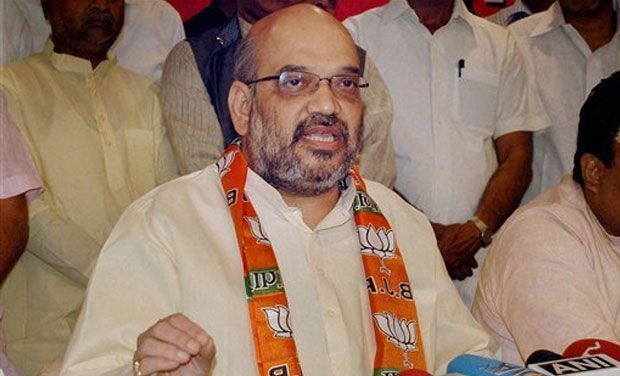
New Delhi: BJP president Amit Shah has changed course in his second innings after his first term's setbacks, hearing and factoring in views from the ground over opinions aired in party conference chambers and minimising central interventions in state elections. The amended strategies were reflected in the selection of five state unit presidents. BJP sources said he rooted for grassroot workers, which included a veteran like B.S. Yeddyurappa, and paid attention to their caste and "pro-Hindutva credentials" instead of picking "untested entities" from politically "insignificant" castes - as he had done earlier when he selected Devendra Fadnavis, Raghubar Das and Manohar Lal Khattar as chief ministers of Maharashtra, Jharkhand and Haryana. "Yeddyurappa belongs to the dominant caste (the Lingayats) of Karnataka, as do Vijay Sampla (Dalit) and K. Lakshman (backward caste Munuru Kapu) of Punjab and Telangana. So does Keshav Prasad Maurya (Uttar Pradesh). Contrast this with the chief ministers. At that time, (Narendra) Modiji and Shah wanted to prove the point that caste does not always matter when an election was won on the strength of a personality (Modi)," a BJP leader said. According to the leader, although Brahmins and Punjabis are a minuscule minority in Maharashtra and Haryana, the leadership had gone in for Fadnavis and Khattar. "Likewise, in Jharkhand, they experimented with a non-tribal (Das) although conventionally the state has had only tribal CMs. Modi and Shah learnt their lessons in Haryana when the Jats revolted against Khattar. In Jharkhand, tribals are resentful of Das and in Maharashtra, which has had mostly Maratha chief ministers, the group is bracing for a reservation movement against our government." Shah abandoned his experiments and rode along with conventional political wisdom in the first set of appointments he made as a second-time BJP chief. "Also, the choices indicate that the Modi wave is waning. The BJP has to go in for strong leaders in the states," the leader added. Likewise, in contrast to the practices he adopted in last year's Delhi and Bihar elections that were managed almost wholly by the central BJP, Shah has given regional leaders in the poll-bound Assam, Bengal and Kerala a free hand. This would have been the envy of their counterparts like Bihar's Sushil Modi and Delhi's Vijender Gupta - both ringed by an army of central ministers and party officials when they faced the polls. In Assam, it is learnt that Himanta Biswa Sarma - a chip of the Congress block that landed in the BJP before the elections - assembled the brass tacks on the perils of angering old hands like Ramen Deka and Rajen Gohain. "If Sarma was not around, we faced the prospect of being restricted to 30 (of the 126) seats," a BJP veteran said. Sarma became so integral to the BJP's political schemes that Delhi allowed him to give his nominees tickets, a "privilege" that even an entrenched leader like Bihar's Sushil Modi was not granted. Sarma took care to ensure the Assam veterans were not looped out. While chief ministerial candidate Sarbananda Sonowal was assigned the management of Upper Assam, central and south Assam were parcelled off to Gohain and Deka. For a large part of the run-up to the Assam polls, state minder and general secretary Ram Madhav was preoccupied with rebooting the BJP-PDP alliance in Jammu and Kashmir and toucheFbaned base in Guwahati only when necessary. In Bengal, national secretary and minder Sidharth Nath Singh subtly, but surely, steered the discourse back to aggression on the Saradha-Naradha controversies and Trinamul's alleged corruption after a long spell of tentativeness towards Mamata Banerjee, prodded by compulsions in Parliament. The BJP had concluded earlier that to pass GST and other key bills, Trinamul's backing was critical, though its MPs seldom played ball with the government. For the ongoing Bengal polls, Singh has supplied the talking points to central leaders, including Modi, when they campaigned. Like Madhav, the BJP's other minder for Bengal, Kailash Vijayvargiya, was busy sorting out the pieces in the Uttarakhand jigsaw puzzle that bobbed up after a few Congress MLAs revolted against chief minister Harish Rawat, leading eventually to central rule in the hill state. -The Telegraph Calcutta
Top Headlines
India

Rahul Gandhi, INDIA Bloc MPs Arrive At Supreme Court
India

Supreme Court To Hear All Petitions Against CEC Gyanesh Kumar Together On October 27
India

What Is INDIA Bloc's New Protest Strategy Against CEC Gyanesh Kumar?
India

No Blanket Ban On Diwali Firecrackers? SC To Consider Green Crackers, Timings






See Today's Weather 
powered by



