India Less Affected By Trump’s Tariffs Compared To Global Peers, Say Industry Leaders
Since most of American trading partners have planned to levy reciprocal tariffs, no country gets a winning advantage while consumers may end up paying more leading to inflationary pressures
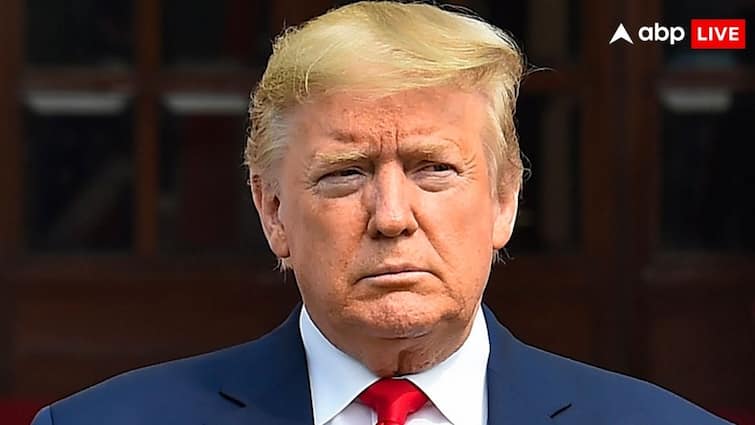
As US President Donald Trump announced reciprocal tariffs on dozens of countries, including India, industry experts said on Thursday that it appears India's export competitiveness to the US market stands far less impacted on a relative basis compared to global peers. Tariffs unveiled by Trump would bring a major realignment in global trade and manufacturing value chains.
“India has been placed somewhere in the middle of the tariff rates at 26 per cent in addition to 10 per cent baseline duties, which needs to be assessed for real impact", said Assocham President, Sanjay Nayar.
''Net-net, it appears India's export competitiveness to the US market stands far less impacted on a relative basis. Yet our industry should make concerted efforts to increase export efficiency and value addition, to mitigate impact of these tariffs," he said in a statement.
Since most of American trading partners have planned to levy reciprocal tariffs, no country gets a winning advantage while consumers may end up paying more leading to inflationary pressures.
“While we wait and watch for global reaction, for India, the way forward could be a quick preferential trade deal keeping in view that President Trump still respects leadership of PM Narendra Modi", said Nayar, adding that India Inc would work closely with the government towards this matter.
Arsh Mogre, an economist with PL Capital Institutional Equities Research, said the US imposition of a 26 per cent uniform tariff on Indian exports marks a significant yet strategic recalibration of trade dynamics towards bilateralism and the end of multilateralism — less an act of protectionism, more a high-stakes gambit in trade negotiations.
“While the near-term impact on India’s $75–78 billion US-bound exports is non-trivial, the disruption is sectorally uneven and contextually mitigated by India’s emergent relative tariff advantage over Asian peers,” he noted.
For high-exposure verticals like textiles, footwear, and electronics, the move paradoxically enhances India’s competitiveness in a post-China+1 global sourcing landscape — where Vietnam, Cambodia, and Thailand now face 10–20 percentage-point steeper barriers.
Moreover, in sectors like auto components, chemicals, and electronics, India retains cost resilience versus China, which now contends with a prohibitive 54 per cent effective tariff wall, Mogre noted.
(This report has been published as part of the auto-generated syndicate wire feed. Apart from the headline, no editing has been done in the copy by ABP Live.)
Top Headlines