





The Privacy Display is a hardware-level innovation built into the OLED panel that restricts the viewing angle of the screen, making it harder for others to see content from the sides.
Explorer
Samsung Galaxy S26 Ultra Sets New Standard With Privacy Display, Rivals May Have to Follow: Here's How It Works
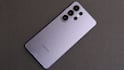
Samsung Galaxy S26 Ultra introduces hardware-based Privacy Display that limits side viewing angles, and it could push the entire smartphone industry to rethink screen privacy.

Privacy filters have long been available as add-on screen protectors, but Samsung Galaxy S26 Ultra embeds privacy filters directly into display hardware.
Source : ABP Live/Shayak Majumder
- Galaxy S26 Ultra features hardware-level Privacy Display technology.
- OLED panel uses Narrow and Wide pixels to control viewing angles.
- Feature activates manually or automatically for specific apps.
- Integrated privacy eliminates need for external screen protectors.
Samsung Galaxy S26 Ultra Privacy Display: Ever tried checking your bank balance in a crowded metro and felt like half the coach was reading along? Samsung seems to have noticed. With the Galaxy S26 Ultra, the Korean tech giant is pushing a feature that quietly solves a very modern problem: shoulder surfing. The new Privacy Display feature is not just a software trick. It is a hardware-level innovation built directly into the screen. And if this works as seamlessly as promised, other smartphone makers may soon feel the pressure to respond.
Let's dig a little deeper into how this Privacy Display technology works. But before we do that, let's understand why this is not just another glorified privacy screen cover slapped on your phone.
What traditional privacy covers do is limit the angle of light emitted from your screen from wide to narrow, effectively limiting the field of view (FoV) so that only the person holding the phone right in front of you will be able to see the content on your screen. What this does is eventually ruin the brightness of your display, often making the screen illegible in bright light. You also need to keep your screen's brightness level high, which drains battery.
Even for gamers, there is a noticeable dip in touch response when you use a privacy screen. Samsung decided to rectify the issue by not working on any external cover, but to make fine changes within the OLED panel to control which parts of the screen to have a wide FoV and which parts can have a narrow FoV, which basically means that parts of your screen are now widely visible, while some sensitive parts are not.
ALSO READ: Samsung Galaxy S26 Ultra First Impressions
What Exactly Is Privacy Display?
Samsung’s Galaxy S series has long been a testing ground for display breakthroughs. On the Galaxy S26 Ultra, the spotlight falls on a new OLED panel developed by Samsung Display. At the heart of this panel is a technology called Flex Magic Pixel.
Instead of relying on a simple dimming filter or software blur, the display uses two different kinds of pixels: Narrow and Wide. The distinction lies in how they spread light.
When Privacy Display is switched off, both Narrow and Wide pixels function normally. Light spreads in multiple directions, which means people sitting beside you can view the screen clearly. It behaves like any other premium OLED panel with wide viewing angles.
The magic begins when you toggle the feature on.
The Pixel Trick That Shrinks Viewing Angles

The display is actually on in the above photo. Were you able to tell?
Once Privacy Display is activated, the screen changes how it distributes light. The Narrow pixels stay active, while the Wide pixels scale back to a minimal level. This dramatically restricts how much of the screen can be seen from the side.
From straight on, the display remains crisp and vibrant for the user. From an angle, however, the content becomes significantly harder to decipher. Sensitive information like passwords, OTPs, banking details or private chats stays private.
Because the feature is hardware-driven, you can turn it on or off whenever you want. That means you are not locked into a permanent privacy mode. You can activate it while entering a PIN, accessing financial apps, or handling confidential documents, then switch back to full viewing angles when sharing photos or watching videos with friends.
Smart Controls & Extra Protection
Samsung has built flexibility into the experience. You can enable Privacy Display manually through a Quick Settings toggle in the Quick Panel. Alternatively, you can configure it to activate automatically for selected apps, such as banking services.
There is also an option to restrict notification pop-ups, ensuring only the primary user can see incoming alerts. 
For those who want even tighter control, the Galaxy S26 Ultra includes a Maximum Privacy Protection setting that further reduces side visibility.
Importantly, this privacy mode works in both portrait and landscape orientations. Even better, it does not compromise brightness, colour accuracy or overall image quality for the person holding the device.
Could This Become The Next Big Smartphone Trend?
Privacy filters have existed as physical screen protectors for years. But integrating the functionality directly into the display hardware changes the game. If consumers embrace the convenience of one-tap privacy without sacrificing display quality, rival brands may be forced to innovate in a similar direction.
In a world where smartphones double as wallets, ID cards and workstations, privacy is no longer optional. With the Galaxy S26 Ultra, Samsung is betting that screen privacy will soon be as essential as camera upgrades or faster charging. And this time, the real headline might not be megapixels, but who cannot see them.
Frequently Asked Questions
What is the Privacy Display feature on the Galaxy S26 Ultra?
How does Samsung's Privacy Display work differently from traditional privacy screen covers?
Unlike physical covers that dim the screen and reduce brightness, Privacy Display uses two types of pixels (Narrow and Wide) to selectively control the viewing angle without compromising display quality for the user.
Can I turn the Privacy Display on and off, and does it affect screen quality?
Yes, the feature is hardware-driven and can be toggled on or off manually or automatically. It does not compromise brightness, color accuracy, or image quality for the primary user.
Are there smart controls for the Privacy Display?
Yes, you can manually activate it via a Quick Settings toggle or configure it to automatically activate for selected apps like banking services. It also has a Maximum Privacy Protection setting.

Top Headlines
Technology

PM Modi Pitches 6G, AI, Cybersecurity As Next Digital Frontier: Decoding His India Mobile Congress Address
Technology

Amazon Great Indian Festival 2026 Now Live: How To Refresh Your Home Without Overspending
Technology

Amazon Layoffs Hit India: Fresh Job Cuts Across Markets Amid Great Indian Festival Sale
Technology

Festive Photography Guide: How To Shoot Pandals, Diyas, & Fireworks With A Mirrorless Camera








See Today's Weather 
powered by



