President Droupadi Murmu accepted Ravneet Singh Bittu's resignation from the Union Council of Ministers. The acceptance was effective immediately based on the Prime Minister's advice.
Explorer
President Accepts Ravneet Bittu's Resignation; Likely To Focus On Punjab Polls
The decision was taken on the advice of the Prime Minister under Clause (2) of Article 75 of the Constitution of India.
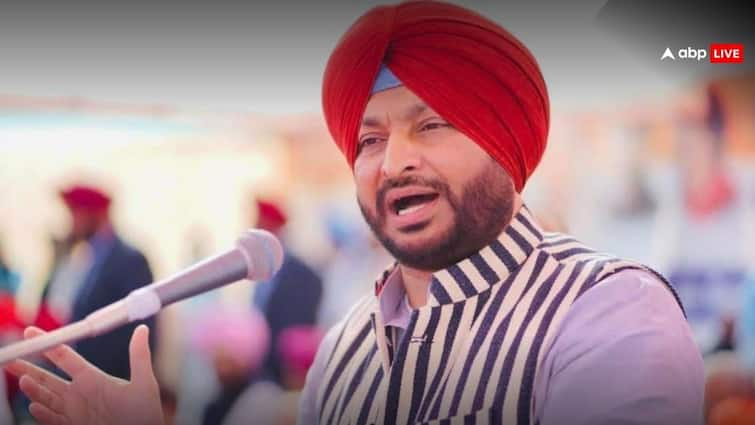
Before his resignation, Bittu was serving as the Union Minister of State for Railways and Food Processing Industries.
Source : X/@RavneetBittu
- President Droupadi Murmu accepted Ravneet Singh Bittu's Union Council resignation.
- Bittu served as Union Minister of State until his tenure ended.
- He is expected to contest upcoming Punjab Assembly elections next year.
President Droupadi Murmu has accepted the resignation of Ravneet Singh Bittu from the Union Council of Ministers with immediate effect, according to a press communique issued by Rashtrapati Bhavan.
The decision was taken on the advice of the Prime Minister under Clause (2) of Article 75 of the Constitution of India.
Resignation Accepted With Immediate Effect
The official communique stated, "The President of India, as advised by the Prime Minister, has accepted the resignation of Shri Ravneet Singh from the Union Council of Ministers, with immediate effect, under clause (2) of Article 75 of the Constitution of India."
Served As Minister Of State
Before his resignation, Bittu was serving as the Union Minister of State for Railways and Food Processing Industries.
His tenure as a Rajya Sabha MP had already ended in June.
ALSO READ: 10-Year Jail, Rs 10 Crore Fine: What's In The Modi Government's New Paper Leak Bill?
Ravneet Singh's Post On X
Ravneet Singh also took to X to write, " I express my heartfelt gratitude to Hon’ble President Smt. Droupadi Murmu Ji and Hon’ble Prime Minister Shri
@narendramodi Ji for giving me the opportunity to serve the nation as Minister of State in the Government of India.
It has been an honour to serve the people of India, especially my beloved Punjab. I remain committed to the ideals of service, nationalism, and the vision of a Viksit Bharat under the leadership of Hon’ble Prime Minister Shri Narendra Modi Ji."
I express my heartfelt gratitude to Hon’ble President Smt. Droupadi Murmu Ji and Hon’ble Prime Minister Shri @narendramodi Ji for giving me the opportunity to serve the nation as Minister of State in the Government of India.
— Ravneet Singh Bittu (@RavneetBittu) July 24, 2026
It has been an honour to serve the people of India,…
My journey of public service continues with renewed dedication.
Likely To Contest Punjab Assembly Elections
Bittu is likely to contest the Punjab Assembly elections, which are due next year, sources said.
According to the sources, he has been closely involved in preparing the Bharatiya Janata Party's groundwork for a comeback in Punjab, which is currently governed by the Aam Aadmi Party (AAP).
Recently Criticised 'Satluj'
In recent weeks, Bittu had publicly criticised the Diljit Dosanjh-starrer 'Satluj', calling it an attempt to "light a fire".
His remarks came at a time when many Sikh leaders, irrespective of their political affiliation, had adopted a cautious approach towards the sensitive film.
ALSO READ: PM Modi Gains 1 Million Followers On Instagram After Selfie Video On NEET Paper Leak
Before You Go
Twisha Sharma Case: CBI Chargesheet Says Death Was Suicide
Frequently Asked Questions
Who accepted Ravneet Singh Bittu's resignation?
What ministerial positions did Ravneet Singh Bittu hold?
Before his resignation, Ravneet Singh Bittu served as the Union Minister of State for Railways and Food Processing Industries. His tenure as a Rajya Sabha MP also concluded in June.
What are Ravneet Singh Bittu's likely political plans after resigning?
Sources indicate Ravneet Singh Bittu is likely to contest the Punjab Assembly elections next year. He has been involved in preparing the BJP's groundwork for a comeback in Punjab.
Under what constitutional provision was Ravneet Singh Bittu's resignation accepted?
His resignation was accepted under Clause (2) of Article 75 of the Constitution of India. This decision was made on the advice of the Prime Minister.

Advertisement
Top Headlines
India

‘Dimagi Naxal Party’ Emerges Online After PM Modi’s Remark, Gains 1.8 Lakh Instagram Followers
India

Why Is NTA Conducting UGC-NET Re-Exam For 3 Subjects? Officials Explain
India

Census 2027 Begins: Self Enumeration Starts Today; Check How To Fill Census Form Online
India

‘Students’ Demands Are Justified’: Rahul Gandhi Urges Hemant Soren To Meet Jharkhand Protestors




Advertisement





Advertisement