Don’t Plug That In! The Viral 'Red Box' That Won’t Actually Cut Your Electricity Bill
Viral "power saver" devices promise to cut your electricity bill by up to 40%. But do they work, or are you being misled? Check out the science behind these red box claims.

If you’ve scrolled through Instagram lately, and if, like me, you watch a lot of nerdy and tech-y Reels as well, chances are you’ve come across flashy videos of so-called tech experts peddling small red boxes that promise to slash your electricity bill by up to 40 per cent. These "power saver" devices, which plug into any household socket, have gone viral, and not just among influencers. I even spotted a reputed tech media outlet that has joined the chorus, amplifying claims that remain largely untested.
Curious and sceptical, I decided to dig into these claims, trace the science, and find out if there’s any watt of truth behind the hype.
Cheap, Available, and Suspiciously Identical
A quick search on Amazon and Flipkart for “Power Saver Electricity Home” throws up dozens of listings. The prices are tempting, ranging from just Rs 299 to Rs 599, with brand names like Ozix, Super MAXX, DFEET, LOOOOTNEST and JeoPoom. I must admit I have never heard of these brands before.

Most listings claim the products are "Made in India", but a closer look reveals something odd: many of the product images are identical, just rebranded with different names.
If that doesn’t set off alarm bells, maybe this will: the actual effectiveness of these devices is highly questionable.
What the Science Actually Says
So, how are these devices supposed to work? According to explanations from Electrical Engineering Portal (EEP) and similar sources, these power savers use capacitors to smoothen the flow of electricity. The claim is that they store excess current during voltage spikes and release it during drops, stabilising the power supply and preventing energy loss in the form of heat. Some even claim to remove "carbon" from the circuit, an idea that is more marketing jargon than science.
In theory, the concept is based on something called power factor correction. This involves aligning the current and voltage in AC-powered appliances so that energy is used more efficiently.
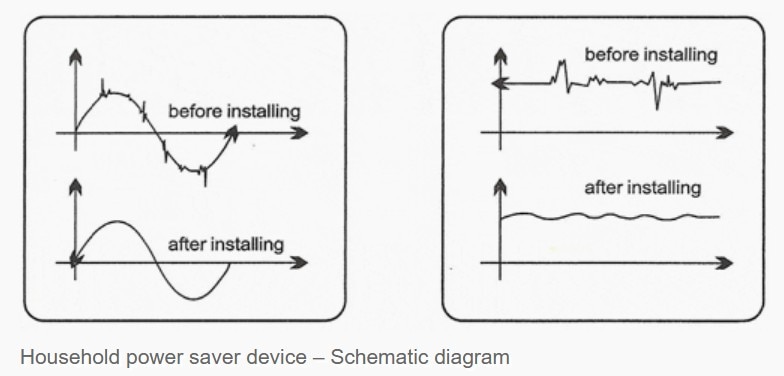
Credit: Electrical Engineering Portal
While this works in industrial setups where companies are charged for apparent power (KVA), residential users are only billed for real power (KW), which means such corrections don’t affect your electricity bill.
Reducing current consumption does not reduce the power bills of household consumers, notes EEP. Real-world examples back this up. For instance, if a refrigerator with a power factor of 0.6 uses 0.75 amps, installing a power saver might improve the power factor to 0.9, bringing usage down to 0.5 amps. But in both cases, the power consumed remains 100 watts, so your bill doesn’t budge.
Why It’s a Problem, And Not Just for Your Wallet
Power factor correction devices improve power quality but do not generally improve energy efficiency, as per EEP. That’s because domestic electricity meters don’t register reactive power (the kind these devices claim to ‘save’).
The only scenario where these devices could theoretically help is when installed directly next to a reactive load, like a running motor, and only when that load is in use. And even then, the maximum energy savings would hover below 3 per cent.
What's worse, improper installation can cause voltage surges or resonance issues, especially in homes with fluctuating loads. These problems aren’t just technical nuisances; they could end up damaging your appliances.
In short, unless you’re running an industrial facility with low power factor penalties from your utility provider, these devices offer no meaningful financial benefit.
So the next time you see an influencer hyping a power-saving plug as the secret to slashing your bill, think twice. You may be better off just turning off unused appliances the old-fashioned way.


Top Headlines