Unusual New Pterosaur Species With Over 400 Teeth Like Comb Prongs Identified In Germany
The newly identified pterosaur has been named Balaenognathus maeuseri, the study said. The generic name means whale mouth. The pterosaur was named so because of its filtering feeding style.
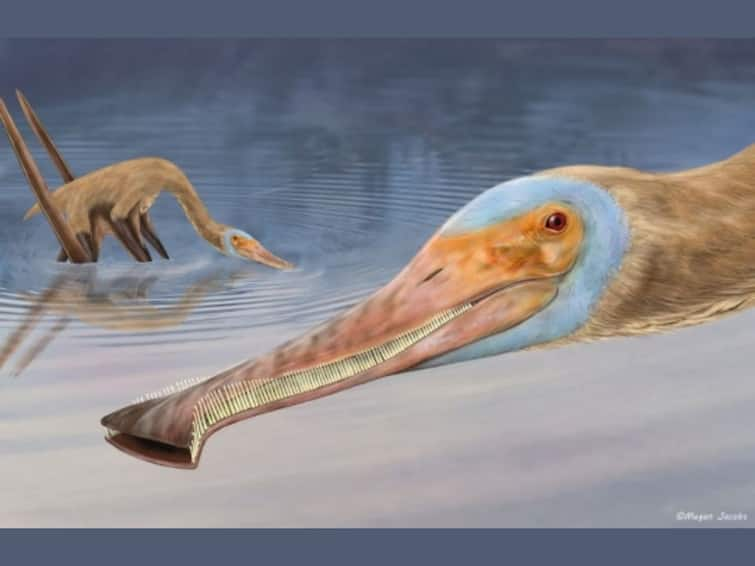
Researchers have identified an unusual new species of pterosaur in Germany. The pterosaur species had over 400 teeth similar to the prongs of a nit comb. Palaeontologists from England, Germany and Mexico discovered the fossil in a German quarry.
The study, led by the University of Portsmouth, and titled 'A new pterodactyloid pterosaur with a unique filter-feeding apparatus from the Late Jurassic of Germany', was published January 21 in the journal PalZ. The pterosaur specimen is currently on display in the Bamberg Natural History Museum in Bamberg, Germany.
Where was the pterosaur fossil discovered?
The scientists were excavating a large block of limestone containing crocodile bones, which is when they accidentally discovered the pterosaur fossil. The block of limestone was found in Bavaria, Germany.
What family is the newly identified pterosaur a part of?
The newly identified pterosaur belongs to a family of pterosaurs called Ctenochasmatidae. This family is known from the limestone in Bavaria. A pterosaur was identified for the first time in the 18th century, from the limestone in Bavaria. Since then, scientists have discovered hundreds of remains of these flying reptiles.
The quarries of the Franconian Jura in Bavaria are considered to be some of the richest pterosaur localities in the world.
What is the name of the newly identified pterosaur?
The newly identified pterosaur has been named Balaenognathus maeuseri, the study said. The generic name means whale mouth. The pterosaur was named so because of its filtering feeding style. The specific name of the pterosaur is after Matthias Mäuser, one of the co-authors on the paper, who passed away during the writing of the paper.
What did the teeth of the pterosaur look like?
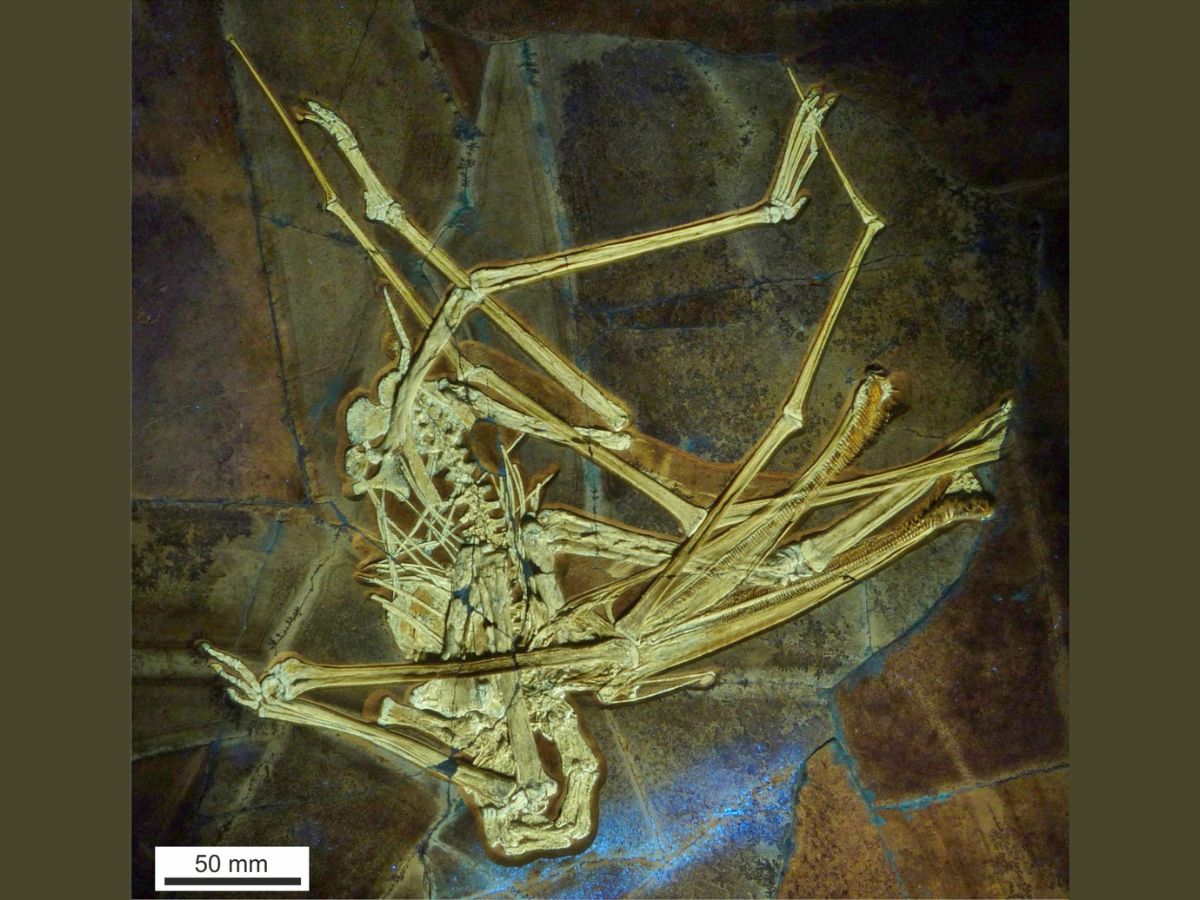
In a statement released by the University of Portsmouth, Professor David Martill, lead author on the paper, said the nearly complete skeleton was found in a very finely layered limestone that preserves fossils beautifully. He added that the jaws of the pterosaur are really long and lined with small, fine-hooked teeth, with tiny spaces between them like a nit comb.
Martill explained that the long jaw is curved upwards like an avocet, and at the end, the jaw flares out like a spoonbill. The pterosaur had no teeth at the end of its mouth, but there were teeth all the way along both jaws right to the back of the flying reptile's smile.
How did the pterosaur’s teeth help it hunt its prey?
Martill further said that some of the teeth have a hook on the end, which the researchers had never seen before in a pterosaur ever. He explained that the small hooks would have been used to catch the tiny shrimp the pterosaur likely fed on, making sure they went down its throat and were not squeezed between the teeth.
Martill also said this was a rather serendipitous discovery of a well-preserved skeleton with near perfect articulation, which suggests the carcass must have been at a very early stage of decay with all joints, including their ligaments, still viable. The pterosaur must have been buried in sediment almost as soon as it had died.
The pterosaur's upper and lower jaws are a mirror image of each other, Martill said. Pterodaustro from Argentina is an example of a pterosaur with more teeth than Balaenognathus maeuseri. However, Pterodaustro had stubby teeth in its upper jaw and even longer teeth in its lower jaw. Therefore, the new specimen is different from other ctenochasmatids.
According to the study, the pterosaur's teeth suggest the species had an extraordinary feeding mechanism while it waded through water. The pterosaur probably used its spoon-shaped beak to funnel the water and then its teeth to squeeze out excess liquid, leaving prey trapped in its mouth.
The authors believe that the pterosaur probably dabbled as it waded through shallow lagoons, in order to suck in tiny water shrimps and copepods. Then, the pterosaur filtered the prey out through its teeth just like ducks and flamingos.

Top Headlines