What Would Death Be Like In Space? These Professors From England Explain
"The remains would still appear human as the full process of decomposition that we see here on Earth would not occur. Our bodies would be the aliens in space", the professors say.
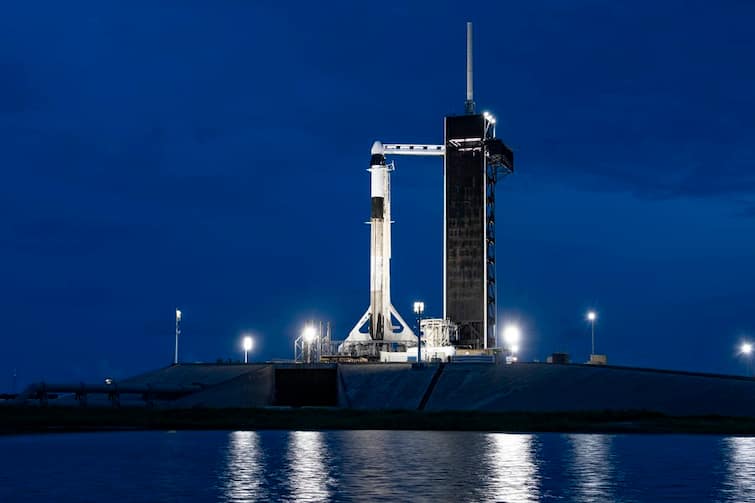
New Delhi: With recreational becoming a real possibility every day, travelling to space for holidays or living on other planets could be seen in the future. Jeff Bezos' commercial space company Blue Origin has already started sending paying customers on sub-orbital flights.
Meanwhile, Elon Musk's SpaceX hopes to start a base on Mars. This begs the question, what will it be like for the human body to live there and what will death be like.
ALSO READ: NASA's Lucy Mission, The First To The Jupiter Trojan Asteroids | EXPLAINED
Tim Thompson, Dean of Health & Life Sciences & Professor of Applied Biological Anthropology from the Teesside University in Middlesbrough, England recently published a paper in The Conversation that explains what death could be like in space.
On Earth, the human body goes through a number of stages of decomposition.
Internal factors:
First, the blood stops flowing and begins to pool as a result of gravity, a process known as livor mortis. But in other planets, the different gravity will impact the livor mortis stage, and the lack of gravity while floating in space would mean that blood would not pool.
This is then followed by algor mortis when the body cool, and the muscles stiffen due to uncontrolled build-up of calcium in the muscle fibres.
"This is the state of rigor mortis. Next enzymes, proteins speed up chemical reactions, break down cell walls releasing their contents. At the same time, the bacteria in our gut escape and spread throughout the body. They devour the soft tissues - putrefaction - and the gases they release cause the body to swell. Rigor mortis is undone as the muscles are destroyed, strong smells are emitted and the soft tissues are broken down."
However, in space, inside a spacesuit, rigor mortis would still occur since it is the result of the cessation of bodily functions. And bacteria from the gut would still devour the soft tissues. But these bacteria need oxygen to function properly and so limited supplies of air would significantly slow down the process.
External Factors:
Decomposition is not only dependent on intrinsic factors, according to scientists, external factors which influence the process of decomposition, including temperature, insect activity, burying or wrapping a body, and the presence of fire or water. But in most cases, the soft tissues will ultimately disappear to reveal the skeleton. These hard tissues are much more resilient and can survive for thousands of years.
When the body is alive it the bones are living matter as well, comprising both organic materials like blood vessels and collagen and inorganic materials in a crystal structure. After the body decomposes what remains in the inorganic matter. However, in case the planet has acid soil, the reverse can happen and the inorganic component can disappear leaving only the soft tissues.
The scientists believe, environments on different planets will not have evolved to make use of our bodies in the same efficient way as it does in the earth. Insects and scavenging animals are not present on other planets in our system.
'The dry desert-like conditions of Mars might mean that the soft tissues dry out, and perhaps the windblown sediment would erode and damage the skeleton in a way that we see here on Earth.'
Temperature, which is also a key factor in decomposition for example, on the Moon, the temperatures can range from 120 C to -170 C. Bodies could therefore show signs of heat-induced change or freezing damage.
"But I think it is likely that remains would still appear human as the full process of decomposition that we see here on Earth would not occur. Our bodies would be the aliens in space", they were quoted by The Conversation.
Top Headlines