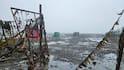
Iran Rejects Ceasefire, Supreme Leader Says ‘Assassinations Won’t Affect Armed Forces’
US-Israeli strikes across Iran have killed at least 34 people, including six children, as tensions escalate amid ongoing conflict.

- Iran proposes 10-clause plan for permanent resolution.
- Plan includes safe passage, sanctions relief, reconstruction.
- Foreign minister accuses U.S./Israel of bombing universities.
Iran has proposed a 10-clause framework that goes beyond a temporary ceasefire, outlining broader conditions aimed at ending the conflict and addressing long-term regional and economic concerns. The plan focuses on securing a permanent resolution, including ensuring safe passage through the Strait of Hormuz, lifting sanctions, and initiating reconstruction efforts. The proposal signals Tehran’s push to shift negotiations from short-term de-escalation to a more comprehensive settlement aligned with its strategic interests.
The framework also calls for an end to wider regional conflicts and emphasises economic recovery measures, indicating Iran’s intent to link ceasefire discussions with structural geopolitical changes.
Supreme Leader Issues Warning
Iran’s new Supreme Leader, Mojtaba Khamenei, has pushed back against US threats of further military escalation, asserting that recent targeted attacks have not weakened the country’s armed forces.
In a message posted on Telegram, Khamenei said “assassinations and crimes” would not disrupt military operations, emphasizing that Iran’s command structure remains intact. He underscored that the country retains full capability to respond, despite strikes by the US and Israel aimed at senior military leadership.
Escalation Rhetoric
Amid the diplomatic push, Iranian Foreign Minister Seyed Abbas Araghchi accused Israel and the United States of targeting academic institutions.
Israeli-U.S. aggressors have bombed the MIT of Iran. This follows attacks on other universities.
— Seyed Abbas Araghchi (@araghchi) April 6, 2026
1,400 years ago, Prophet Muhammad (PBUH) said that even if knowledge was situated in the distant Pleiades, Iranians would be capable of attaining it.
Aggressors will see our might. pic.twitter.com/Dn3hSCaBNv
“Israeli-U.S. aggressors have bombed the MIT of Iran… Aggressors will see our might,” he said in a social media post, alleging attacks on universities and warning of retaliation.
The remarks reflect a sharp escalation in rhetoric, as tensions continue to rise alongside ongoing military exchanges.
All Eyes On Strait Of Hormuz
Earlier, Iran said that it will allow ships from select “friendly” nations to pass through the Strait of Hormuz in exchange for security fees, an Iranian official told Al Jazeera. The move is seen as part of Tehran’s broader plan to secure war compensation, while warning of a strong response to any attacks on key infrastructure. The development highlights Iran’s attempt to leverage its control over a critical global energy route to influence maritime movement during the ongoing conflict.
- Iran will allow ships from “friendly” nations to pass through the Strait of Hormuz for a fee
- The fees are aimed at securing war compensation, based on decisions by top state bodies
- Tehran has warned of a forceful response if Mahshahr facilities are targeted
- Ships from India, Pakistan, Turkey and France have reportedly received passage permits
US-Israeli strikes across Iran have killed at least 34 people, including six children, according to reports.
Before You Go
Political flash: Amit Shah targets Congress over Vande Mataram controversy in Rajasthan


Top Headlines