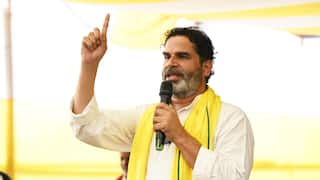
Dhruv Rathee argues that Dhurandhar 2 is not primarily for entertainment but serves as an expensive political advertisement for the BJP. He believes it is designed to influence perception rather than just tell a story.
Explorer
Dhruv Rathee Slams ‘Dhurandhar 2’ As ‘Expensive Advertisement’, Calls Film Political ‘Gaslighting’
Dhruv Rathee critiques Dhurandhar 2, calling it political gaslighting and an expensive advertisement. Here’s what he said in his detailed analysis.

Dhruv Rathee sparks debate with sharp critique of Dhurandhar 2’s narrative and political undertones.
Source : Twitter/@FayanExpress, @TGVCinemas
- YouTuber Dhruv Rathee critiques film, calling it political advertisement.
- Rathee questions film's use of real faces, names, and footage.
- Film allegedly uses emotional cues and villains to spread messages.
- Rathee describes film's approach as large-scale gaslighting.
Even as Dhurandhar: The Revenge continues its record-breaking run and garners praise across the industry, the film has also ignited a parallel conversation around its perceived political messaging. Amid this growing debate, YouTuber Dhruv Rathee has stepped in with a detailed critique, intensifying the discourse.
Rathee, who had earlier voiced concerns about the franchise, has now analysed the sequel in depth. According to him, the issues he previously pointed out appear more pronounced this time, prompting him to question the film’s intent and narrative approach.
ALSO READ: Dhurandhar 2 Box Office Collection: Ranveer Singh Film Crosses Rs 1100 Cr Mark Despite 56.7% Drop
‘Not Entertainment, But A Political Instrument’
In his video breakdown, Rathee firmly argued that the film operates beyond conventional storytelling. He stated, “Dhurandhar 2 is not a film made for entertainment… it is the BJP’s most expensive election advertisement, for which you pay Rs 500 to watch,” while also criticising director Aditya Dhar.
His remarks position the film as a tool designed to influence perception rather than purely entertain, a claim that has further fuelled online discussions among viewers and critics alike.
Blurring Lines Between Fiction And Reality
Rathee also raised concerns about the film’s portrayal of real-world elements. He questioned its framing as a fictional story inspired by true events, especially when it incorporates recognisable faces, names and archival visuals.
He remarked, “You show Narendra Modi’s real face and real footage… use real names like Dawood Ibrahim… and then say it’s all coincidental?” He went on to describe such disclaimers as “a legal cheat code used to manipulate the audience so they cannot tell where truth ends and imagination begins.”
Emotional Cues And Narrative Influence
A significant part of Rathee’s critique focused on what he described as emotional manipulation within the film. He suggested that certain sequences are crafted specifically to provoke strong reactions, shaping how audiences interpret the story.
Calling this technique “emotional priming”, he explained, “First generate emotion, then build your narrative on top of it.” He further illustrated his point with a striking analogy: “It’s like feeding someone an extremely spicy chili so their tongue burns, and then they are forced to buy sweets. Aditya Dhar burns the audience emotionally so they easily consume whatever propaganda is served afterward.”
When Villains Deliver The Message
Another aspect highlighted in the video was the strategic use of antagonists to reinforce certain ideas. Rathee pointed to scenes where villains appear to praise leadership, calling it a calculated narrative device.
He said, “If the hero praises someone, it has less impact. But if the biggest villain does it, the audience gets convinced at another level.” According to him, such storytelling choices subtly influence audience perception in powerful ways.
Real Events And Cinematic Interpretation
Rathee also examined how the film references real incidents. He argued that events like the 2016 demonetisation are presented through a selective lens, portraying them as focused national security measures while minimising broader consequences.
He further noted that a character portrayed by Arjun Rampal is based on a real individual who passed away in 2011. Additionally, he referenced a sequence inspired by the killing of Atiq Ahmed, suggesting that its depiction differs from actual events.
‘Gaslighting At Scale,’ Says Rathee
Summing up his analysis, Rathee described the film’s overall approach as “gaslighting” on a large scale. He warned about the impact of such storytelling when consumed widely.
He said, “When this kind of gaslighting happens on a massive scale… it stops being just a film. It becomes a weapon.”
Concluding his critique, he labelled Dhurandhar 2 as “peak advertising” rather than “peak cinema”, reinforcing his stance that the film’s influence extends far beyond entertainment.
Frequently Asked Questions
What is Dhruv Rathee's main criticism of Dhurandhar 2?
How does Dhruv Rathee feel about the film blurring fiction and reality?
Rathee criticizes the film for incorporating real faces, names, and footage while claiming to be fictional. He views disclaimers as a legal tactic to confuse the audience about truth versus imagination.
What is 'emotional priming' according to Dhruv Rathee's critique?
Emotional priming is a technique where the film first evokes strong emotions in the audience. This emotional state is then used to make them more receptive to the narrative or propaganda presented afterward.
Why does Dhruv Rathee believe villains praising leadership is significant?
Rathee suggests that when antagonists praise leadership, it has a greater impact on the audience than if the hero did. This narrative choice aims to convince viewers on a different level.
How does Dhruv Rathee describe the film's overall approach?
Rathee describes the film's approach as large-scale 'gaslighting.' He warns that when this kind of storytelling is widely consumed, it becomes a weapon rather than just entertainment.

Top Headlines
Entertainment

‘Don’t Know If Ranbir Will Be Accepted As Rama’: Ramanand Sagar’s Grandson On ‘Ramayana’ Casting
Entertainment

'Sleep With Me 5-6 Times A Month': Akanksha Choudhary Makes Shocking Casting Couch Claim
Entertainment

‘You Deserve A Special Place In Hell’: Ashish Chanchlani Reacts After AI Video Of Sara Tendulkar Goes Viral
Entertainment

Jennifer Winget's Unseen Haldi Photos With William Ishmael Go Viral; Actress Dances With Friends











See Today's Weather 
powered by