Pune’s Green Lungs Are Shrinking: MIT-WPU Study Sounds Alarm On Urbanisation’s Carbon Cost
With climate change tightening its grip and Indian cities swelling by the year, the study serves as a timely reminder of what’s at stake.

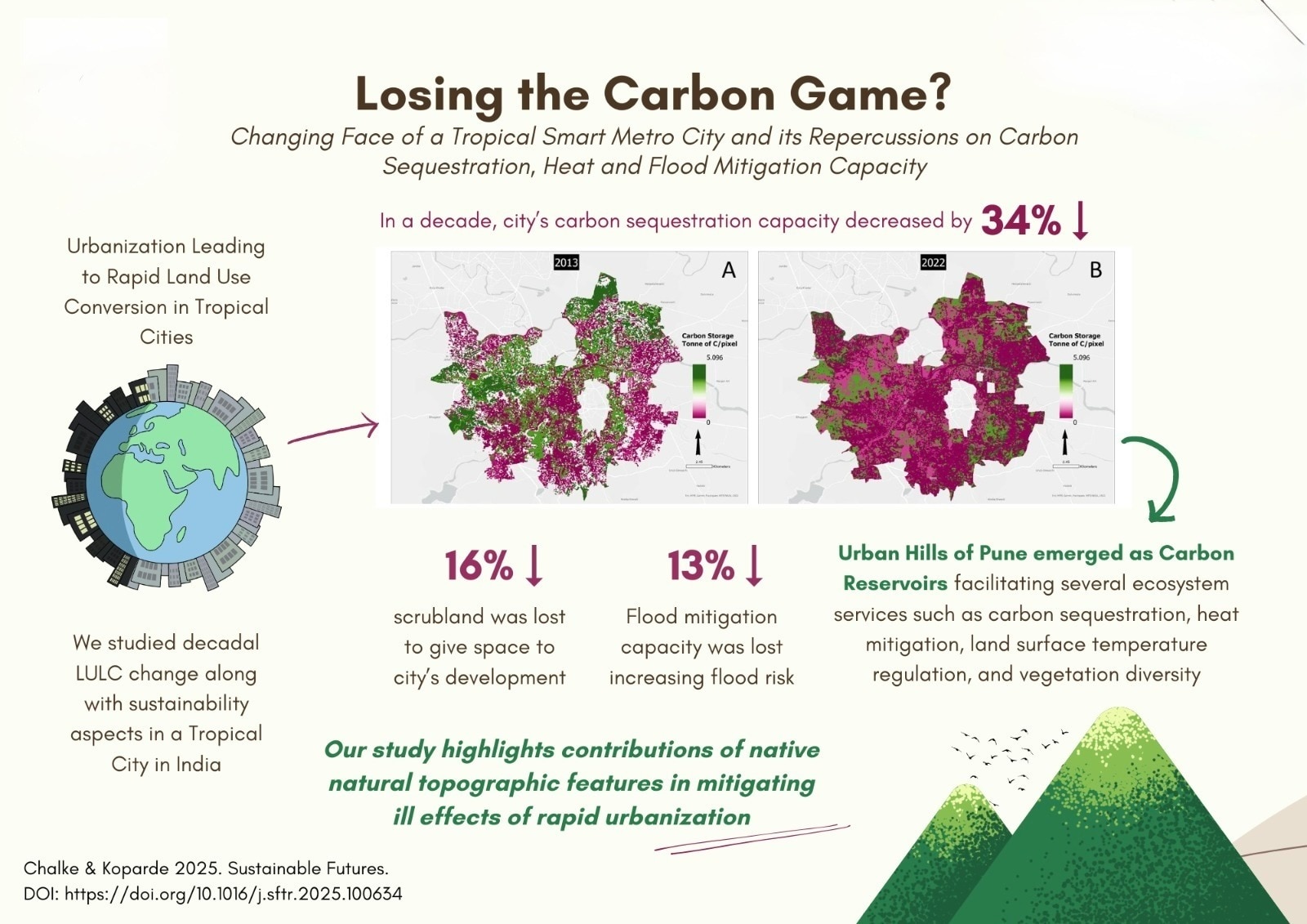
Pune’s unchecked urban sprawl has come at a steep environmental cost, with a new study revealing a sharp 34 per cent dip in the city’s carbon absorption capacity over the past decade. This alarming decline is tied directly to the city’s 12 per cent surge in built-up areas from 2013 to 2022, according to a research paper led by Dr. Pankaj Koparde of MIT-World Peace University (MIT-WPU) in collaboration with Pratiksha Chalke of Sustaina Greens LLP.
The peer-reviewed study, titled “Losing the Carbon Game? Changing Face of a Tropical Smart Metro City and its Repercussions on Carbon Sequestration, Heat and Flood Mitigation Capacity,” was published in the journal Sustainable Futures. It paints a sobering picture of how rapid, unregulated construction has depleted Pune’s green cover and crippled its natural capacity to sequester carbon dioxide — a major greenhouse gas contributing to global warming.
Flood Defences Weakened
But the damage doesn’t stop at carbon capture. The researchers also found a 13 per cent drop in Pune’s flood mitigation capacity. The culprits? Disrupted natural drainage channels and rampant construction along ecologically sensitive zones like riversides and floodplains. As the city’s landscape undergoes aggressive alterations, the study warns of growing vulnerability to floods, especially given Pune’s increasingly erratic monsoon behaviour.
Dr. Koparde stressed the urgency of protecting the city’s native ecological assets: “Our results underline the irreplaceable role of native geological and ecological features such as urban hills and wetlands in maintaining urban environmental health. As tropical metro cities like Pune expand, sustainable development can only be achieved by leveraging these native assets rather than undermining them.”
A Call for Policy Overhaul
The research doesn’t just highlight the problems — it calls for action. Dr. Koparde advocates immediate policy interventions, emphasising the restoration and protection of urban hills, wetlands, and green buffers along rivers. “We strongly advocate for urgent policy interventions, including the protection and restoration of urban hills, wetlands, and riverside green buffers. Tools like ecosystem service valuation models and integrated urban planning frameworks must be adopted to ensure that future growth is ecologically balanced and informed by data,” he said.
Backing the findings, MIT-WPU’s Vice Chancellor Dr. R. M. Chitnis framed the study as a wake-up call for policymakers and urban planners alike. “This landmark study reflects MIT-World Peace University’s unwavering commitment to research that directly informs and impacts society. The findings on Pune’s shrinking carbon absorption capacity are not just alarming—they are a wake-up call for all rapidly urbanising cities in India. As educators and thought leaders, we believe that science must guide policy, and sustainability must be central to all development. It is imperative that urban planning prioritises ecological preservation alongside progress,” Dr. Chitnis said.
Lessons for India’s Urban Future
With climate change tightening its grip and Indian cities swelling by the year, the study serves as a timely reminder of what’s at stake. Pune’s trajectory could mirror that of many other urban centres if environmentally responsible development does not become the norm. The study urges governments, city planners, and citizens to embrace integrated, data-driven planning that safeguards natural ecosystems while accommodating growth.
As cities across the Global South face rising temperatures and chaotic weather patterns, Pune’s story could be a cautionary tale — or a blueprint for smarter, greener urban futures.



Top Headlines