Will Earth’s Mini-Moon With Mahabharata Connection Be Visible To Naked Eye? ISRO Answers
Asteroid 2024 PT5, discovered on August 7th, will become a temporary mini-moon orbiting Earth from September 29th to November 25th.
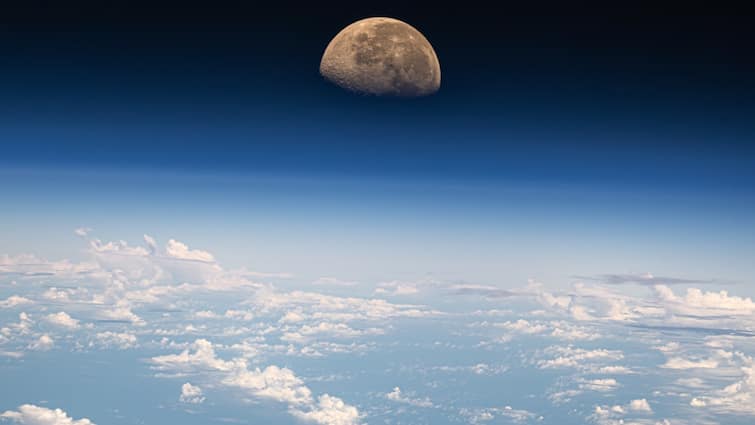
The temporary mini-moon, called 2024 PT5, which will orbit Earth for 53 days, will not be visible to the naked eye, confirmed Dr. AK Anil Kumar, head of ISRO's Network for Space Objects Tracking and Analysis (NETRA).
The asteroid, measuring just 10 meters in diameter, is 350,000 times smaller than the regular moon, which has a diameter of 3,476 kilometres, making it too small to detect without specialised equipment.
ALSO READ | Earth To Get New 'Mini-Moon': All About Asteroid 2024 PT5 Set To Join Orbit For 2 Months
According to NDTV report, NETRA is closely monitoring 2024 PT5 and has assured that it poses no threat of collision with Earth. The mini-moon is to begin orbiting Earth on September 29 and remain in orbit until November 25, after which it will break away and return to space. This means that Earth will have two moons for a brief period of nearly two months.
Asteroid Connections With Mahabharata
The asteroid, discovered on August 7 by NASA-funded ATLAS (Asteroid Terrestrial-impact Last Alert System), also has a connection with the Hindu epic Mahabharata. According to a report in the Research Notes of the American Astronomical Society (RNAAS), its orbital properties resemble asteroids from the Arjuna group, "a sparsely resonant population of small NEOs." Dr. Kumar also confirmed that 2024 PT5 belongs to this grouping.
The Arjuna asteroids, named after the Mahabharata character Arjuna, are known for their swift and unpredictable movements through the solar system, much like Arjuna’s arrows. The group’s name was proposed by astronomer Robert H. McNaught after discovering the asteroid '1991 VG' in 1991, and it was accepted officially by the International Astronomical Union (IAU).
In Hindu mythology, Arjuna is quite popular for his bravery, unmatching archery skills, and wisdom. The name depicts the swift passage of asteroids through the solar system, like the swift arrows of Arjuna, and its unpredictable nature.
Top Headlines