




Explorer
New security plan for Prime Minister Narendra Modi
Sending clear guidelines to all states, the ministry said there has been "all-time high" threat to Prime Minister and he is "most valuable target" in the run-up to the 2019 general elections.
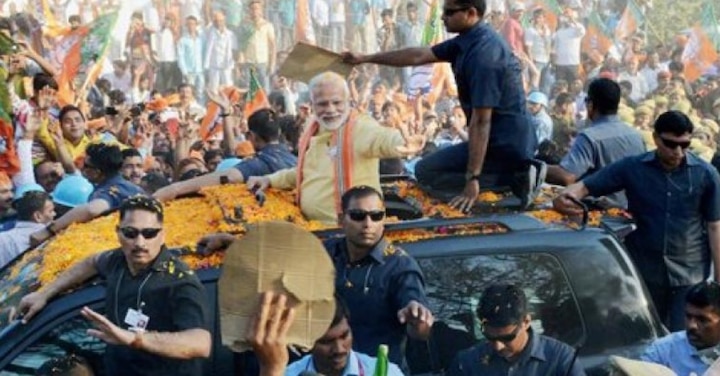
image courtesy: PTI
New Delhi: In the wake of speculations regarding plot to ‘assassinate’ PM Modi, the security agency responsible for his safety have chalked out a new security plan to kill any room for doubts. As per the new plan, no one, not even ministers and officers would be allowed to come closer to Prime Minister Narendra Modi, unless cleared by the Special Protection Group (SPG), responsible for his security. Sending clear guidelines to all states, the ministry said there has been "all-time high" threat to Prime Minister and he is "most valuable target" in the run-up to the 2019 general elections. The prime minister's security apparatus was reviewed threadbare recently after Pune Police told a court on June 7 that they had seized a "letter" from the Delhi residence of one of the five people arrested for having alleged "links" with the banned CPI (Maoist). The purported letter allegedly mentioned a plan to "assassinate" Modi in "another Rajiv Gandhi-type incident", the police had told the court. This came after a man reached PM Modi in West-Bengal and touched his feet by breaking through six layers of security, making the security agencies tizzy. Following the two developments, on June 11, Home Minister Rajnath Singh held a meeting with National Security Advisor Ajit Doval, Union Home Secretary Rajiv Gauba and Director Intelligence Bureau Rajiv to review the Prime Minister's security in the wake of inputs about threat to the Prime Minister's life. In that meeting, the Home Minister had directed that all necessary measures be taken in consultation with other agencies to suitably strengthen the security arrangements for the prime minister. The SPG is believed to have advised Modi, who is the main campaigner for the ruling BJP, to cut down on road shows, which invite bigger threat, in the run up to the 2019 general elections, and instead address public rallies, which are easier to manage, another official said. The close protection team (CPT) of the Prime Minister's security has been briefed about the new set of rules and the threat assessment and instructed them to frisk even a minister or an officer, if necessary. Maoist-hit states like Chhattisgarh, Jharkhand, Madhya Pradesh, Odisha, West Bengal were termed as sensitive by the home ministry and the police chiefs of these states were told to be extra careful when the prime minister visits their states, the official said. The security agencies are believed to be specially monitoring the Kerala-based Popular Front of India (PFI), an outfit that the government believes is a front for radical groups.
Top Headlines
India

CJP's Saurav Das, Ashutosh Ranka Booked After Climbing Gate To Enter Jantar Mantar
India

Delhi Driver Dies After Brutal Nightclub Assault Over Beer Spill; Manager, Wife Held
India

‘Congress Has Been Losing Polls Under Rahul Gandhi’: Amit Shah Slams Rahul Gandhi
India

‘Modi, Amit Shah Must Answer’: INDIA Bloc Leaders Target CEC Gyanesh Kumar





See Today's Weather 
powered by



