Explorer
How cyclone Fani was named and what it means
Cyclone Fani rolled through Odisha on Friday, packing rain and windstorm that gusted up to 175 kmph, leaving at least three people dead, blowing away thatched houses, and swamping towns and villages.
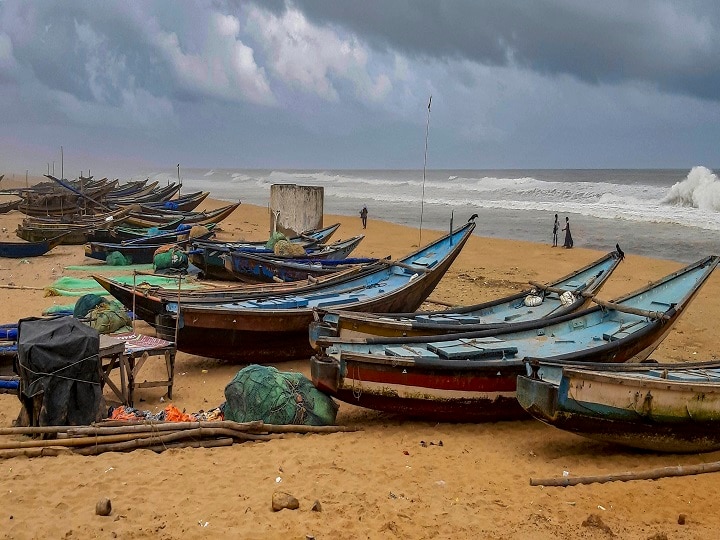
Cyclone Fani rolled through Odisha on Friday, packing rain and windstorm that gusted up to 175 kmph, leaving at least three people dead, blowing away thatched houses, and swamping towns and villages. Photo: PTI
NEW DELHI: Cyclone Fani rolled through Odisha on Friday, packing rain and windstorm that gusted up to 175 kmph, leaving at least three people dead, blowing away thatched houses, and swamping towns and villages. The extremely severe cyclonic storm Fani made landfall around 8 a.m. in Puri, with roaring winds flattening huts, enveloping the pilgrim town in sheets of rain, and submerging homes in residential areas. How Cyclone Fani got its name Cyclones derive their names through a systematic procedure laid down by the World Meteorological Organisation (WMO) and the United Nations Economic and Social Commission for Asia and the Pacific (ESCAP). Eight north Indian Ocean countries - Bangladesh, India, the Maldives, Myanmar, Oman, Pakistan, Sri Lanka and Thailand - have prepared a list of 64 names. When a hurricane hits these countries, the Regional Specialised Meteorological Centre (RSMC), housed in the IMD office in New Delhi picks up the name next on the list. The RSMC has been set up in Delhi by the WMO for forecasting tropical cyclones in the Arabian Sea and Bay of Bengal. The name ‘Fani’ was decided from the list of 64 names. Fani, pronounced as ‘Foni’ was suggested by Bangladesh. It means 'Snake' or 'hood of snake'. India also has suggested many names including Agni, Akash, Bijli, Jal, Lehar, Megh, Sagar and Vayu. The next cyclone will be named Vayu. 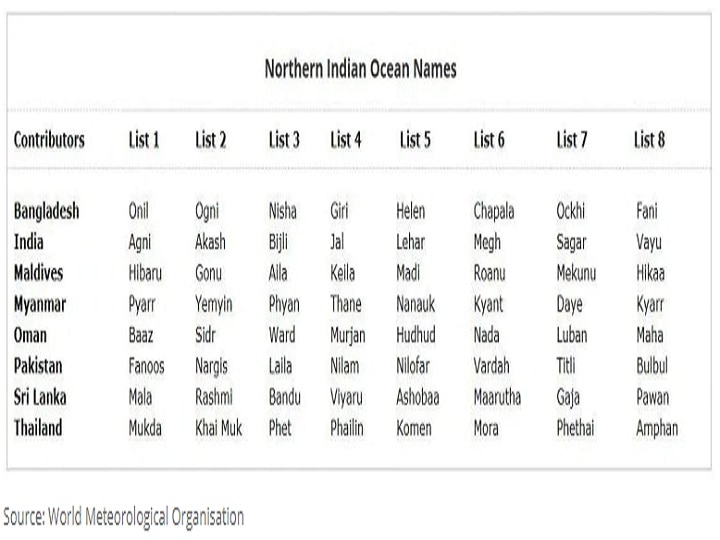 The practice of naming storms (tropical cyclones) began years ago to help in their quick identification while issuing warnings because names are presumed to be far easier to remember than numbers or technical terms. In the 1970s, the WMO in Geneva asked some countries around the Pacific Ocean to prepare a list of names. The decision to name the cyclones in the Indian Ocean was taken at a meeting of WMO/ESCAP in 2000. Why name cyclones? The practice of naming storms (tropical cyclones) began years ago in order to help in the quick identification of storms in warning messages because names are presumed to be far easier to remember than the numbers and technical terms. Many agree that appending names to storms makes it easier for the media to report on tropical cyclones, heightens interest in warnings and increases community preparedness. Importance for naming tropical cyclones 1: It would help identify each individual tropical cyclone. 2: It helps the public to become fully aware of its development. 3: Local and international media become focused to the tropical cyclone. 4: It does not confuse the public when there is more than one tropical cyclone in the same area. 5: The name of the tropical cyclone is well remembered by millions of people as it is an unforgettable event. 6: Warnings reach a much wider audience very rapidly. (With inputs from agencies and RSMC)
The practice of naming storms (tropical cyclones) began years ago to help in their quick identification while issuing warnings because names are presumed to be far easier to remember than numbers or technical terms. In the 1970s, the WMO in Geneva asked some countries around the Pacific Ocean to prepare a list of names. The decision to name the cyclones in the Indian Ocean was taken at a meeting of WMO/ESCAP in 2000. Why name cyclones? The practice of naming storms (tropical cyclones) began years ago in order to help in the quick identification of storms in warning messages because names are presumed to be far easier to remember than the numbers and technical terms. Many agree that appending names to storms makes it easier for the media to report on tropical cyclones, heightens interest in warnings and increases community preparedness. Importance for naming tropical cyclones 1: It would help identify each individual tropical cyclone. 2: It helps the public to become fully aware of its development. 3: Local and international media become focused to the tropical cyclone. 4: It does not confuse the public when there is more than one tropical cyclone in the same area. 5: The name of the tropical cyclone is well remembered by millions of people as it is an unforgettable event. 6: Warnings reach a much wider audience very rapidly. (With inputs from agencies and RSMC) Before You Go
Political flash: Amit Shah targets Congress over Vande Mataram controversy in Rajasthan
Top Headlines
India

Arunachal Student Found Dead With Rope Around Neck In Kerala, Minister Promises Detailed Probe
India

Navy Sailor, Wife, 2 Children Found Dead At Mumbai Home; Murder-Suicide Suspected
India

Farmers’ Delhi March Begins Today: Haryana-Punjab Khanauri Border Sealed Ahead Of 228-Km Protest
India

'Proud To Be Dimagi Naxal': P Chidambaram Hits Back At PM Modi Amid I-Day Speech Row






See Today's Weather 
powered by