



Office spaces can drain energy by forcing constant adjustments to surroundings, leading to irritability and mental fog. This happens through unavoidable distractions and micro-adjustments.
Explorer
The Office Design Mistake That’s Quietly Draining Your Team’s Energy And The Simple Fix No One Talks About
How small office design changes can dramatically improve employee wellbeing, focus and productivity, according to workplace design expert Maanoj Tomar.

Small changes in office layout and furniture design can create a powerful shift in employee wellbeing, focus and long-term productivity.
Source : ABPLIVE AI
- Office spaces drain energy through constant environmental negotiation.
- Spatial planning impacts focus, reducing cognitive and physical fatigue.
- Unpredictable sound and poor sightlines increase mental effort.
- Nature, inclusive design, and simple changes boost energy and business value.
{By: Maanoj Tomar}
When people talk about workplace performance, they usually start with motivation, culture, or leadership. Very few begin with something far more basic: how much energy a person quietly loses just by existing inside a space for eight hours a day. Not dramatic losses nothing you can point to but the slow, cumulative drain that shows up as irritability, mental fog, or the sense of being tired without having done anything particularly difficult. Most offices don’t exhaust people because of workload. They exhaust them because the brain is constantly negotiating its surroundings. Every time someone has to refocus after a passer-by, adjust to a noise spike, search for a meeting room, or visually filter clutter, a small amount of cognitive energy is spent. Individually these moments are negligible.
Over a day, they are not. Studies in cognitive science show that decision fatigue and environmental distraction significantly reduce sustained attention long before people realise it is happening.
ALSO READ: Comfort That Works Overtime: 10 Ergonomic Chairs Designed For Work-From-Home
How Space Quietly Shapes Mental And Physical Energy
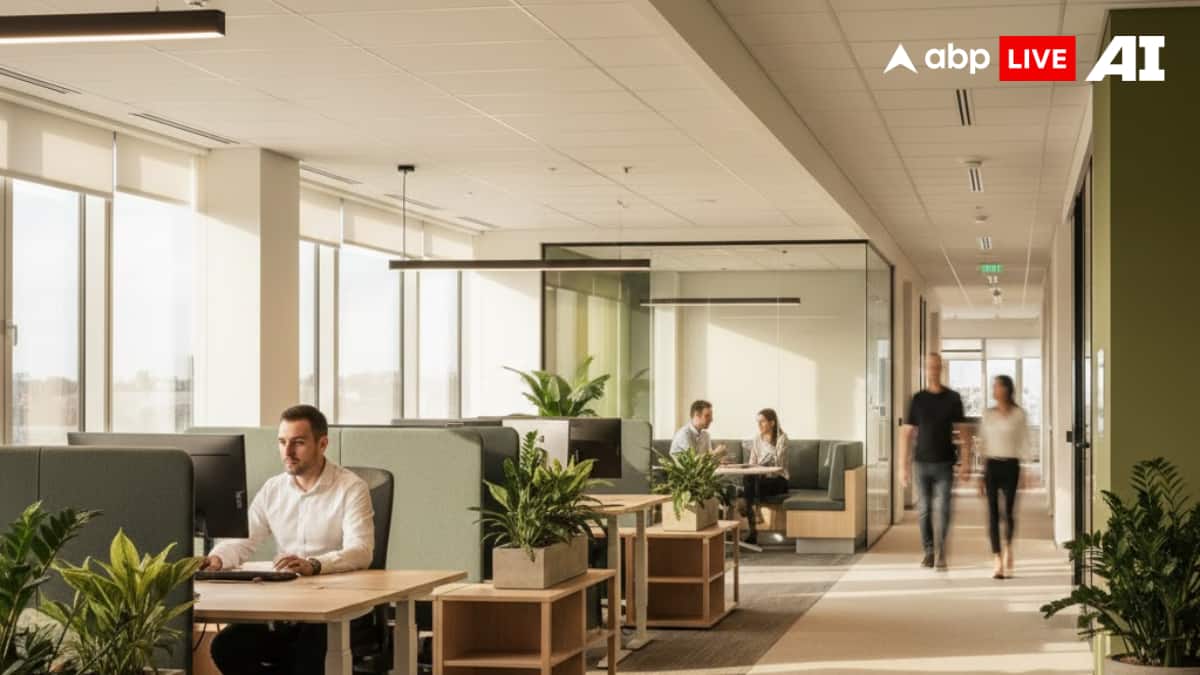
This is where spatial planning quietly becomes a performance variable. When different modes of work bleed into one another focus desks placed along busy walkways or collaborative areas embedded deep inside task zones the brain is forced to stay semi-alert all the time. Separating these functions, even subtly, allows the mind to downshift when deep focus is required and upshift only when interaction is intended. The absence of constant micro-adjustment is what creates mental clarity, not silence or isolation. Physical fatigue follows a similar pattern. Excessive walking in offices is often mistaken for healthy movement, but data from workplace ergonomics suggests otherwise. Repetitive, non-optional movement walking long distances just to attend routine meetings or access basic amenities adds to physical wear without delivering health benefits. Thoughtful proximity between frequently used spaces reduces this friction. At the same time, environments that are too compact discourage movement altogether, increasing sedentary strain. The most effective layouts sit in a narrow middle ground: they remove unnecessary steps while encouraging purposeful, low-effort movement through the day.
Sound, Sight, And The Invisible Load On The Brain
Sound, too, behaves differently than we assume. Noise itself is not always the problem, unpredictability is. When the brain cannot anticipate sound patterns, stress levels rise. Positioning collaborative zones where sound naturally dissipates and using spatial transitions as buffers allows noise to fade gradually rather than interrupt abruptly. This softens the mental impact far more effectively than relying solely on acoustic materials.
Visual strain is another invisible cost. Poor sightlines, constant motion in peripheral vision, and uneven light force the eyes to work harder than necessary. Over time, this leads to headaches, reduced focus, and lower tolerance for complex tasks. Clear visual fields, balanced desk orientation, and access to daylight reduce this effort. The improvement is not dramatic in the moment, but it compounds across weeks and months.
Why These Small Changes Create Big Business Value
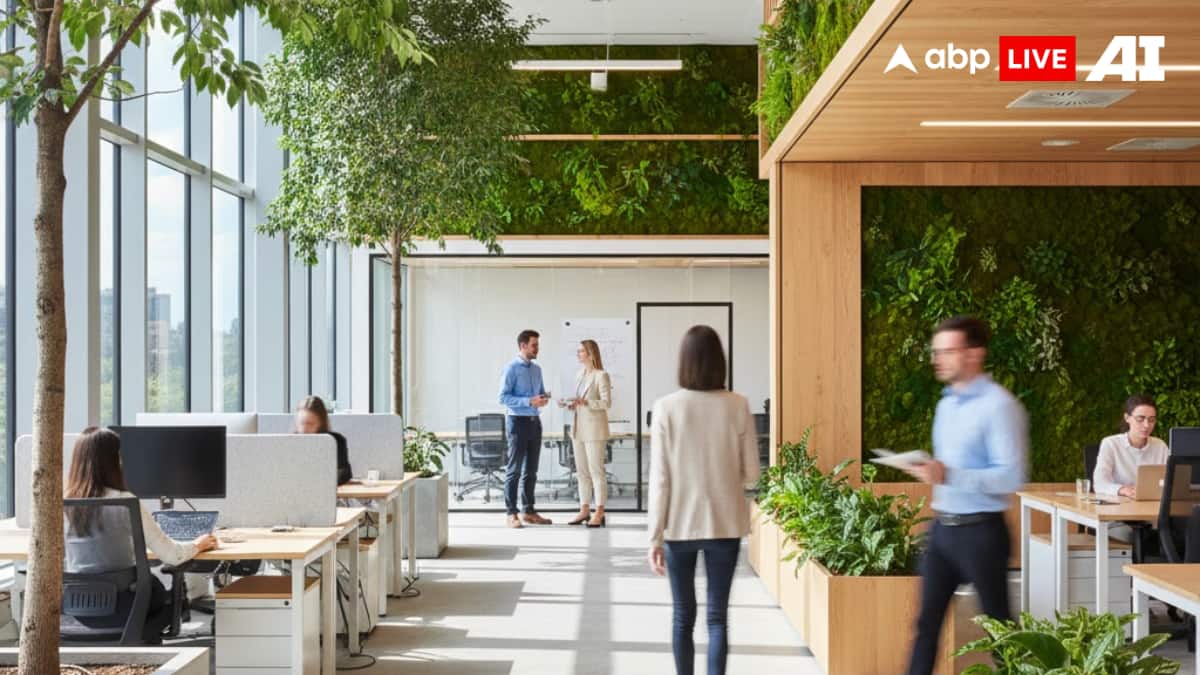
Even limited exposure to natural elements has measurable psychological effects. The presence of greenery in spaces people pass through rather than just decorative corners creates moments of subconscious relief. Neuroscience research shows that these brief visual resets lower cortisol levels and improve emotional regulation, which directly influences how people respond to pressure.
What ties all of this together is inclusivity. Spaces that are easy to navigate, forgiving in scale, and intuitive in flow reduce cognitive demand for everyone, not only those with specific physical needs. When people don’t have to think about how to move through a space, they have more capacity to think about their work.
The most interesting insight, however, is economic. These changes do not require major construction or long shutdowns. Small, targeted spatial decisions often deliver faster and more measurable returns than large redesigns. They work not because they look impressive, but because they respect a simple truth - human energy is finite, and space either preserves it or slowly spends it without permission. That, more than aesthetics or square footage, is what will define the next chapter of how we work.
The author, Maanoj Tomar, is the Founder – AFC Furniture Solutions.
Frequently Asked Questions
How does the physical office space impact employee energy levels?
What is the role of spatial planning in workplace performance?
Thoughtful spatial planning separates work modes, allowing the brain to downshift for focus and upshift for interaction. This reduces constant micro-adjustments, leading to mental clarity.
How does noise affect employees, and how can it be mitigated?
Unpredictable noise is more stressful than constant noise. Positioning collaborative zones where sound dissipates and using spatial buffers can soften its mental impact.
What are the effects of visual strain in the workplace?
Poor sightlines and constant motion cause visual strain, leading to headaches and reduced focus. Clear visual fields and balanced lighting can reduce this effort.
What are the economic benefits of improving office spaces?
Small, targeted spatial changes can offer faster returns than major redesigns. They preserve human energy, which is a finite resource, leading to better performance.

Top Headlines
Lifestyle

Can You Date, Party And Play Garba During Navratri? Know What The Traditions Say
Lifestyle

Navratri 2026: Best Garba And Dandiya Nights In Delhi-NCR To Enjoy With Friends And Family
Lifestyle

Horoscope Tomorrow Friday, 9 October, 2026: Astrological Predictions For All Zodiac Signs (Aries To Pisces)
Lifestyle

Why Shami Leaves Are Exchanged On Dussehra: The Kautilya Strategy And Maratha Tradition Behind Them


See Today's Weather 
powered by



