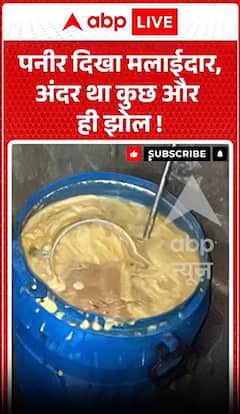
States like Maharashtra and Madhya Pradesh are taking action due to increased surveillance and concerns about food composition, labelling, and consumer awareness. This occurs when analogue paneer is presented as genuine milk-based paneer without proper disclosure.
Explorer
‘Analogue Paneer’ - Sounds Like Paneer, But What Exactly Is It?
Analogue paneer is made using non-milk ingredients to resemble traditional paneer. Know what it is, how it differs from real paneer and why states are acting against it.

Analogue paneer is designed to resemble traditional paneer but is made using ingredients that may not come from milk.
Source : ABPLIVE AI
- States ban analogue paneer over composition and labeling concerns.
The term ‘analogue’ refers to a food product created to replicate another familiar food. In simple terms, when the food industry makes a product that resembles an existing food in its appearance, texture, taste or cooking properties but uses a different formulation, it is called an analogue. So, analogue paneer is not the only example. Meat analogues, egg analogues and other dairy analogues are also available in the market. The common idea is that these products are designed to offer characteristics similar to a conventional food while using different ingredients.
The easiest way to understand the term is to think of an analogue as a food replica or alternative. Traditional paneer is made from milk, while analogue paneer is formulated to recreate some of the qualities of paneer using non-milk ingredients. Similarly, meat analogues are designed to resemble meat, while egg analogues can be formulated to perform certain functions of eggs in food preparation. The ingredients and nutritional composition can vary from one product to another. Importantly, ‘analogue’ does not automatically mean ‘fake’ or unsafe. It describes what the product is and how it is formulated. The concern arises when an analogue is presented as the original food without clearly informing consumers about its composition.
Why Is Paneer Called An Analogue?
According to the Food Safety and Standards Authority of India (FSSAI), a dairy analogue is a product in which some or all milk constituents are replaced by constituents that do not come from milk, while the finished product resembles a milk product in terms of its sensory or functional characteristics. Depending on the formulation, analogue paneer may contain ingredients such as vegetable fats, oils, starches or plant-based proteins. These ingredients can be used to recreate characteristics such as firmness, texture and cooking behaviour associated with conventional paneer. So, when a product is described as analogue paneer, it essentially means a paneer-like product created using a formulation different from traditional milk-based paneer
ALSO READ | FSSAI Flags ‘Fresh’ And ‘Healthy’ Claims On Paneer Packets - Know If Your Paneer Is Really Healthy
What Other Food Analogues Are Available?
Paneer is part of a much wider category of food analogues. Meat analogues are among the most familiar examples and are designed to replicate products such as meat pieces, mince or patties, often using plant proteins. There are also egg alternatives or egg analogues, which are developed to replicate certain functions of eggs, such as binding, emulsification or texture, particularly in processed foods and plant-based products. The market also includes various dairy analogues, including alternatives designed to resemble cheese, milk-based products and other dairy foods. The purpose can vary. Some products are developed for people looking for plant-based alternatives, while others may be created for reasons related to formulation, cost, availability, shelf life or specific food-processing requirements.
Is Analogue Paneer The Same As Fake Paneer?
Not necessarily. The terms ‘analogue’ and ‘fake’ should not be treated as interchangeable. An analogue can be a distinct food product when it is manufactured and labelled according to applicable regulations. The issue arises when a non-dairy product is sold or served as genuine milk-based paneer without proper disclosure. This can leave consumers unaware of what they are actually purchasing or eating.
ALSO READ | Maharashtra Imposes Complete Ban On Analogue Paneer; Violators To Face Jail, Rs 1 Lakh Fine
Why Are States Cracking Down On Analogue Paneer?
The issue has gained attention as food-safety authorities have increased surveillance and raised concerns about food composition, labelling and consumer awareness. Maharashtra has imposed a ban on the manufacture, processing, packaging, storage, transportation, distribution and sale of analogue or non-dairy paneer across the state. Madhya Pradesh has now also joined the states taking action against analogue paneer. For consumers, the key takeaway is simple: analogue means a product designed to resemble another food; it does not automatically mean fake or unsafe. Checking the product name, ingredient list and label can help distinguish traditional paneer from a dairy analogue and understand exactly what is being consumed.
Check out below Health Tools-
Calculate Your Body Mass Index ( BMI )
Frequently Asked Questions
Why are some Indian states cracking down on analogue paneer?

Advertisement
Top Headlines
Health

‘Analogue Paneer’ - Sounds Like Paneer, But What Exactly Is It?
Health

ABP LIVE Doc Talk | Why Oral Health Matters During Cancer Treatment And Hospitalisation
Health

Bengaluru Food Safety Raid: How Spoiled Food Can Trigger Serious Health Problems
Health

ABP Live Doc Talk | Hepatitis Risk During Monsoon: How To Protect Your Liver From Infection




Advertisement








Advertisement