Madras HC Upholds Tamil Nadu’s Online Gaming Regulations: Know Key Clarifications
The Madras High Court upheld the Tamil Nadu Online Gaming Authority's power to regulate money-based online games, citing public health concerns.Onl
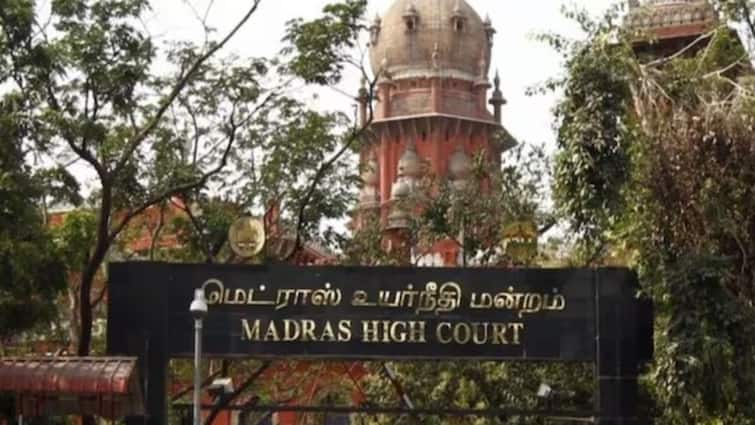
The Madras High Court has upheld the powers of the Tamil Nadu Online Gaming Authority to regulate and restrict money-based online games. The court ruled that such games pose a serious threat to public health, rejecting petitions filed by several gaming companies.
The verdict was delivered by a division bench of Justices S.M. Subramaniam and K. Rajasheker in a case filed by online gaming companies challenging Sections 5(2) and 14(1)(c) of the Tamil Nadu Prohibition of Online Gambling and Regulation of Online Games Act, 2022.
This ruling has drawn criticism from various quarters, with many arguing that it could deal a significant blow to India's rapidly growing digital economy. Critics also claim that the verdict infringes upon individual freedoms and exceeds the jurisdiction defined for courts under the Constitution. However, the court prioritised public welfare over economic and individual liberty arguments before arriving at its decision.
ALSO READ | A Midnight Ban On Choice Madras High Court Judgment On Online Gaming Raises More Questions
Under Sections 5(2) and 14(1)(c) of the aforementioned Act, the Tamil Nadu Online Gaming Authority is empowered to: Impose time-based restrictions on money-based online games, regulate the amount that can be staked in such games, and prohibit persons below a certain age from participating in money-based online gaming.
Gaming companies argued that these provisions were unconstitutional and sought a ban on their enforcement.
Doubts & Clarifications On Online Gaming Legislation
1. Does the government have the power to regulate online gaming?
Yes. The Indian Constitution grants states the authority to legislate on matters related to public health and trade within the state under List II (State List), entries 6 and 26 of the Seventh Schedule. Based on this, Tamil Nadu enacted the Tamil Nadu Online Gaming (Regulation of Money-Based Games) Act, 2025.
2. Was the law enacted without sufficient evidence?
No. The law was based on findings from a committee led by former judge Chandru, which concluded that money-based online games, such as rummy and poker, pose serious risks to public health, affecting both psychological and physical well-being.
3. Do these games pose a real threat to people?
Yes. The 2022 Act introduced a midnight-to-morning ban (12 a.m.–5 a.m.) on money-based online gaming. This was backed by studies showing that self-control is lowest during these hours and that dopamine levels, linked to reward-seeking behaviour, tend to spike at night. The court relied on this data in support of the ban.
Additionally, between 2019 and 2024, 47 individuals in Tamil Nadu reportedly died by suicide due to gaming addiction. This data, presented by the Tamil Nadu government, played a key role in the court’s verdict.
4. Does the ruling violate the right to do business?
No. While the Constitution guarantees the right to carry out a profession or business, it also allows reasonable restrictions in the public interest. The court ruled that citizens’ right to life outweighs businesses’ right to operate. This decision could set a precedent for future cases where governments regulate online gaming to protect public welfare.

Top Headlines