Is The Universe Hitting The Brakes? 'Dark Energy' Finding Could Upend Human Understanding Of Cosmos
Data collected by the Dark Energy Spectroscopic Instrument (Desi) at Kitt Peak National Observatory in Arizona, US, suggests that dark energy may not be constant as once believed.
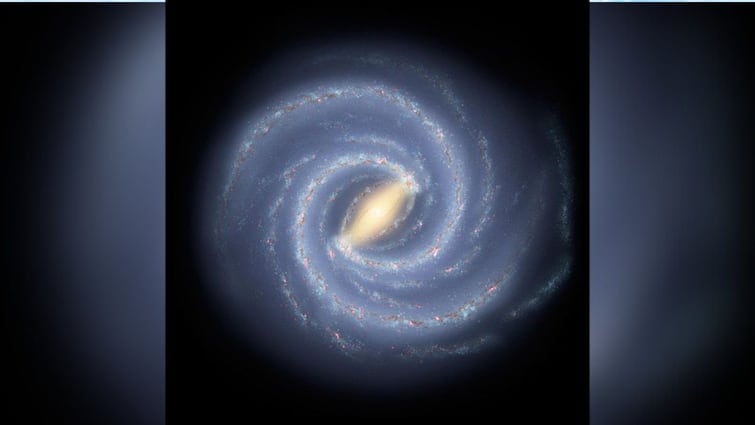
For decades, scientists believed the universe was not just expanding but doing so at an ever-increasing pace, thanks to an invisible force known as dark energy. This strange and little-understood phenomenon was first identified in the late 1990s when astronomers observed that distant supernovae were moving away faster than expected. This finding revolutionised cosmology, leading to the widely accepted theory that dark energy makes up about 70% of the universe and is the dominant force driving cosmic expansion.
Now, something strange appears to be happening. Data collected by the Dark Energy Spectroscopic Instrument (Desi) at Kitt Peak National Observatory in Arizona, US, suggests that dark energy may not be constant as once believed. The study, which examined 15 million galaxies spanning 11 billion years of cosmic history, says dark energy peaked when the universe was about 70% of its current age and has since weakened by roughly 10%. In other words, the study suggests the force that keeps the universe expanding might be gradually losing strength — although the theory is not incontrovertible yet.
What Happens If Dark Energy Keeps Weakening?
If dark energy continues to fade, it could completely rewrite our understanding of the universe’s fate. Until now, scientists believed that the cosmos would either expand forever in a ‘Big Freeze’, where galaxies drift apart until everything becomes dark and cold, or that expansion might eventually slow down but never stop. However, a weakening dark energy could lead to the exact opposite scenario — a ‘Big Crunch’.
‘The Big Crunch’: Could The Universe Collapse On Itself?
The ‘Big Crunch’ is a theoretical idea first proposed by Russian physicist Alexander Friedmann in 1922. It suggests that if the universe had enough density, gravity could eventually overpower expansion, pulling everything back together.
If dark energy continues to weaken, it might allow gravity to reverse cosmic expansion, leading to a scenario where galaxies stop moving apart and instead begin to fall back towards one another. This would mean that, instead of expanding indefinitely, the universe could contract, eventually collapsing into an ultra-dense state — possibly giving birth to a new universe in another Big Bang. Dark energy could lead to a second (and third, and fourth) Big Bang.
Scientists Are Both Excited And Cautious
The findings have sparked intense debate among cosmologists. Some, like Professor Carlos Frenk from Durham University, are convinced that this discovery is real: “To me, this is a robust result. We’re witnessing the overthrow of the old paradigm and the emergence of a new one,” he said, as quoted in the British daily Guardian. Others, like Professor George Efstathiou of Cambridge, urge caution, pointing out that while the evidence is intriguing, it has not yet reached the “gold standard” level of certainty in physics, according to the same Guardian report. The Desi project continues collecting more data.
What’s Next For Cosmology?
If this discovery holds up, it could lead to one of the biggest shake-ups in modern physics. It could mean that the fundamental laws of the universe are changing, or that our understanding of dark energy is missing a crucial piece. Regardless of the final outcome, this research reminds us that the universe is still full of surprises, and the cosmic story is far from finished.
Will the universe freeze, crunch, or do something entirely unexpected? Only time — and more data — will tell.
The writer is a senior independent journalist.
Top Headlines