Iran's Revolutionary Guard Corps has announced the closure of the Strait of Hormuz. Any vessel attempting to cross this waterway will be attacked.
Explorer
What Is Strait Of Hormuz? The Vital Oil Route Iran Has Closed, Threatening Energy Price Spikes
Israel-Iran war live updates: The Strait of Hormuz facilitates the trade of one-fifth of global oil consumption.

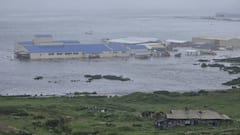
Iran has announced the closure of the Strait of Hormuz, a narrow waterway critical for oil trade.
Source : Social Media
Iran’s powerful Islamic Revolutionary Guard Corps has announced the closure of the Strait of Hormuz, one of the world’s most critical energy corridors, dramatically escalating tensions in the region.
The declaration came on Monday as a senior commander warned that any vessel attempting to cross the strategic waterway would be attacked. The move marks one of the most serious geopolitical flashpoints yet in the ongoing confrontation between Iran on one side and Israel and the United States on the other.
A Direct Warning From the Guards
Brigadier General Sardar Ebrahim Jabari, senior adviser to the commander-in-chief of the Islamic Revolutionary Guard Corps, announced the decision, according to Iranian state media.
“The strait is closed. If anyone tries to pass, the heroes of the Revolutionary Guards and the regular navy will set those ships ablaze,” Jabari was quoted as saying.
For years, Tehran has repeatedly signalled that it could shut the waterway in response to military pressure. However, despite periods of heightened confrontation, it has previously stopped short of enforcing a prolonged blockade.
What Is the Strait of Hormuz?
The Strait of Hormuz is a narrow maritime passage between Iran and Oman. It connects the Gulf to the Gulf of Oman and, beyond that, the Arabian Sea.
At its narrowest point, the strait measures just 21 miles (33 kilometres) across. The shipping lanes are even tighter, only about 2 miles (3 kilometres) wide in each direction, making it a chokepoint for global energy supplies.
Why It Matters to the World
Roughly one-fifth of global oil consumption passes through this corridor, underscoring its strategic weight. Data from analytics firm Vortexa shows that more than 20 million barrels of crude, condensate and fuel moved through the strait each day on average last year.
Several members of the Organisation of the Petroleum Exporting Countries, including Saudi Arabia, Iran, the United Arab Emirates, Kuwait and Iraq, ship most of their crude exports through Hormuz, primarily to Asian markets.
Qatar, one of the world’s largest exporters of liquefied natural gas, also relies heavily on the route, sending nearly all of its LNG cargoes through the strait.
Contingency Plans and Military Presence
Top producers within OPEC+, particularly Saudi Arabia and the United Arab Emirates, have increased oil exports in recent days as part of contingency planning.
Both countries have invested in alternative pipeline routes to reduce reliance on the strait. According to the U.S. Energy Information Administration, around 2.6 million barrels per day of spare capacity from existing UAE and Saudi pipelines could potentially bypass Hormuz.
Meanwhile, the United States Fifth Fleet, based in Bahrain, remains tasked with safeguarding commercial shipping in the region.
Related Video
Middle East Crisis: Iran’s Ballistic Missile Strike on UAE Escalates War, Casualties Reported in Abu Dhabi
Frequently Asked Questions
What has Iran's Islamic Revolutionary Guard Corps announced regarding the Strait of Hormuz?
What is the Strait of Hormuz and why is it important?
The Strait of Hormuz is a narrow passage between Iran and Oman connecting the Persian Gulf to the Gulf of Oman. It's a critical chokepoint for global energy supplies, with about one-fifth of global oil consumption passing through it daily.
Which countries rely on the Strait of Hormuz for their energy exports?
Several OPEC members, including Saudi Arabia, Iran, the UAE, Kuwait, and Iraq, ship most of their crude exports through Hormuz. Qatar also relies heavily on the route for its LNG cargoes.
What contingency plans are in place due to the Strait of Hormuz closure?
Top producers like Saudi Arabia and the UAE have increased oil exports and invested in alternative pipeline routes to reduce reliance on the strait. The US Fifth Fleet is tasked with safeguarding commercial shipping.

Advertisement
Top Headlines
World

Trump Says Iran Floated Him As Supreme Leader Amid Talks Row; ‘No, Thank You,’ He Quips
World

Iran Claims It Targeted US F-18, Releases Video; Pentagon Says 'No Aircraft Was Hit'
World

'India Can't Be A Broker Nation Like Pakistan': Jaishankar At All-Party Meet
World

Melania Trump presents humanoid AI robot that speaks Bengali, 10 other languages


Advertisement








Advertisement
See Today's Weather 
powered by

Dr Prosenjit NathThe writer is a technocrat, political analyst, and author.
Opinion