Op Sindoor: 96 Hours — When India Hit Pakistan's Deep State, Triggered US, And China Watched
Operation Sindoor will go down in history as a chapter in bilateral ties between India & Pakistan that drew yet another line over and above the Radcliffe Line, thereby defining on ground the meaning of zero tolerance.

Operation Sindoor: In a span of 96 hours, India has drawn a red line when it comes to dealing with Pakistan — with the launch of Operation Sindoor, a military intervention that began on May 7 and put on hold on May 10. India has refused to call it a “ceasefire” even as it has set a “new normal” with its western neighbour, the preparation for which began in 2016 with Uri attacks. The road ahead will, however, be arduous as India will now face an internal security threat emanating once again for Kashmir as it continues to target the Pakistani deep state, ABP Live has learnt.
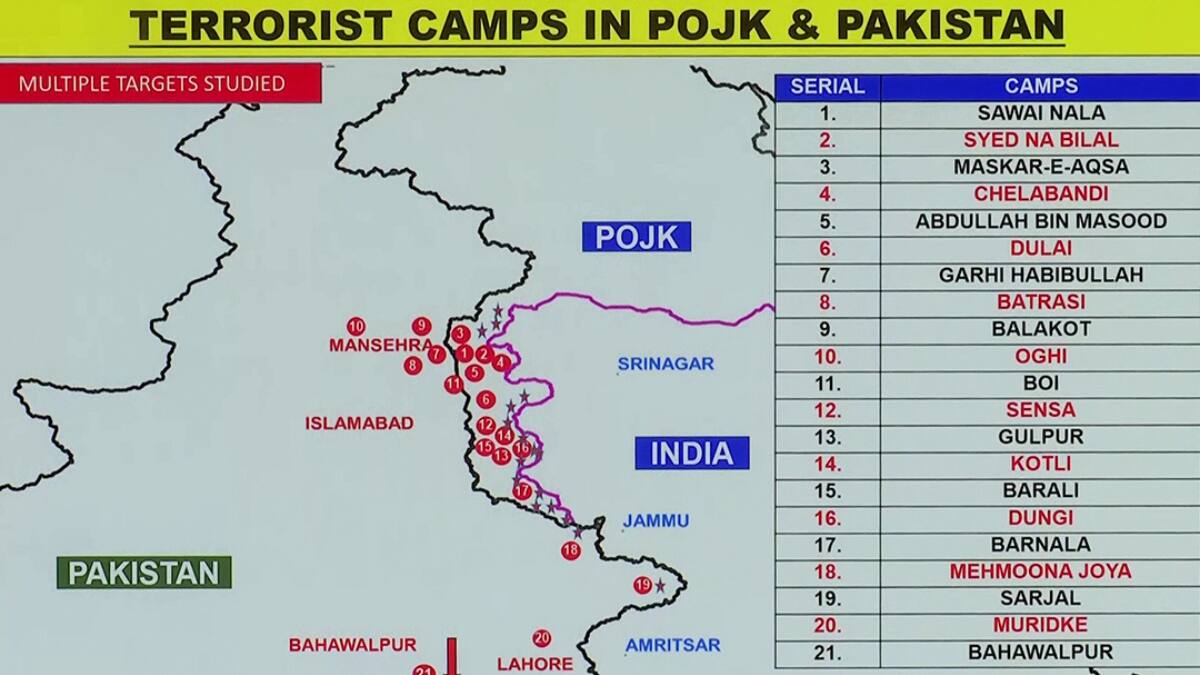
On May 7, in response to the Pahalgam attack, India launched ‘Operation Sindoor’, striking deep inside Pakistan — significantly upping the ante in its fight against cross-border terrorism with Pakistan.
In 2016, India conducted surgical strikes on terror launchpads located right across the Line of Control (LoC) as terrorists attacked an Indian Army base in Uri. Thereafter, in 2019, India took this fight a notch higher by striking inside Pakistan — first time since 1971 War — with the Balakot airstrikes, to avenge the Pulwama attack that killed 40 Indian paramilitary personnel. Balakot is in Pakistan's Khyber Pakhtunkhwa province. In both these incidents, a joint operation of the Indian Army and the Indian Air Force (IAF) were launched.
However, during Operation Sindoor, the Indian Navy was mobilised too against Pakistan even as New Delhi hit deep inside Pakistan’s Punjab province because it has been Rawalpindi’s strategy "to send heartland Punjabi Muslims from Pakistan to go and carry out” terrorist attacks like what has happened in Pahalgam and much before that, according to top-level government sources.
The government this time, said a highly placed source, had chalked out a war strategy against Pakistan that traces back to the 1970s and early 1980s when Afghan Jihad began to gain grounds with the Soviet occupation of Afghanistan, which eventually gave rise to the creation of terrorist organisations like Harkat-ul-Jihad Islami (HUJI), Harkat ul-Ansar (HUA) and Harkat-ul-Mujahideen (HuM).
These groups, after fighting in Afghanistan, made Jammu and Kashmir their target and operated under the common banner HUA, while being aided and funded by Pakistani deep state, added the source, hinting at the Pakistani Army headquarters of Rawalpindi and Aabpara, where Pakistan’s Inter-Services Intelligence (ISI) is based.
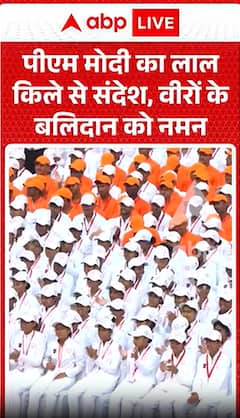
During his address to the nation for the first time since Operation Sindoor commenced, Prime Minister Narendra Modi said: “We will not differentiate between a government that harbours terror and the terrorists themselves. During Operation Sindoor, the world saw Pakistan’s ugly truth once again — how senior Pakistani military officers rushed to bid farewell to slain terrorists. This is strong evidence of state-sponsored terrorism. We will continue to take decisive steps to protect India and our citizens from every threat.”
He also said: “India’s three armed forces — Air Force, Army, and Navy — as well as our Border Security Force and paramilitary units, remain on high alert. After surgical strikes and air strikes, Operation Sindoor now defines India’s new counter-terrorism policy. It has set a new benchmark — a new normal.”

Pakistan has denied any involvement in the Pahalgam attacks. Islamabad also rejected the PM's speech and said: “Indian actions set a dangerous precedent for aggression, dragging the entire region to the brink of a disaster.”
“This is not the first time we have targeted Pakistan like this. It was done even during Kargil. Hitting terrorists and their hubs is one thing but it is completely another thing to target those who create a Masood Azhar or a Hafiz Saeed,” Avinash Mohananey, former Intelligence Bureau Officer who served in J&K and Pakistan, told ABP Live.
"The only new aspect this time is that, under this operation, we have killed the terrorists inside their own dens. There is no doubt in the fact that we have killed more than 100 terrorists there. But what about those who are inside Kashmir or will continue to come? They are inside Kashmir and will carry out attacks when required. They are there to die, they will not go back to Pakistan,” added Mohananey, who also served as the Director General of Sikkim Police.
OPINION | PoJK, CPEC, And Regional Dynamics — Understanding The China Factor In India-Pak Tensions
Kashmir Internationalised?
US President Donald Trump, on the other hand, has taken the credit for “brokering” a “full and immediate”, and a “permanent”, ceasefire between the warring nuclear-armed neighbours.
“My administration helped broker a full and immediate ceasefire, I think a permanent one between India and Pakistan ending a dangerous conflict of two nations with lots of nuclear weapons and they were going at it hot and heavy and it was seemingly not going to stop,” Trump said during a press conference Monday even as PM Modi addressed the nation the same day.
Three days before that, on May 10, when both sides agreed to de-escalate the conflict, a press readout issued by the US Department of State said it has conducted a “US-brokered ceasefire”, which New Delhi has vehemently rejected.
Speaking to journalists during a briefing, Randhir Jaiswal, Spokesperson and Additional Secretary, Ministry of External Affairs (MEA), said: “We have a longstanding national position that any issues pertaining to the Indian Union Territory of Jammu and Kashmir have to be addressed by India and Pakistan bilaterally. That stated policy has not changed. As you are aware, the outstanding matter is the vacation of illegally occupied Indian territory by Pakistan.”
When asked if the matter had been raised with the US, Jaiswal declined to comment.
However, he alluded to the April 25 press statement issued by the UN Security Council (UNSC), of which the US is a permanent member, which specified the "the need to hold perpetrators, organizers, financiers and sponsors of this reprehensible act of terrorism accountable and bring them to justice", and also said stressed that "those responsible for these killings should be held accountable”.
Pakistan, meanwhile, was able to manage for itself a $1 billion loan disbursed by the International Monetary Fund (IMF). US President Trump also said Washington will soon be negotiating a trade deal with Islamabad.
Speaking to ABP Live, Sharat Sabharwal, who was India’s High Commissioner to Islamabad, said: “US has been acting as a global monitor for decades and they have been taking up this role to safeguard their own interests.”
Sabharwal also did not rule out the possibility of “behind the curtain” talks between India and Pakistan at a “neutral site” as directed by the US. But he said the role played by the UAE and Saudi Arabia also needs to be considered here.
"The success of abrogation of Article 370 was played up by all stakeholders and the equilibrium had to break somewhere. We need to handle Kashmir very carefully. Now that we have given the message to Pakistan, we need to focus on internal security,” he highlighted.
The United Nations (UN) has been involved in the Kashmir issue since the late 1940s, proposing resolutions for a plebiscite to allow the people of Kashmir to decide their future. India has consistently maintained that the Kashmir issue is a bilateral matter between itself and Pakistan, resisting calls for international mediation. This stance is rooted in the belief that external interference could complicate the situation further.
This stemmed from the Simla Agreement, signed after the 1971 Indo-Pakistani War, that did not explicitly internationalise Kashmir. Instead, it established the Line of Control (LoC) as the ceasefire line in Jammu and Kashmir, signifying that the region was a bilateral matter between India and Pakistan, thereby also ruling out any third-party mediation by other countries, including close ally the US.
But now Pakistan has said it has put the agreement into abeyance in response to India putting a temporary hold on the Indus Water Treaty (IWT).
Derek Grossman, Senior Defence Analyst at California-based RAND Corp., said: "India wants to maintain a close strategic partnership with the US, and despite their disagreement on Kashmir, it appears New Delhi is willing to countenance public chatter about international mediation so as to avoid upsetting the Trump administration in its early days, and particularly amid sensitive trade talks. But in reality, there is zero appetite in New Delhi to see this move forward.”
ALSO READ ON ABP LIVE | Truman To Trump: How 14 US Presidents Approached Kashmir ‘Dispute’
India-Pakistan DGMOs' Role & Off-Ramp Offer
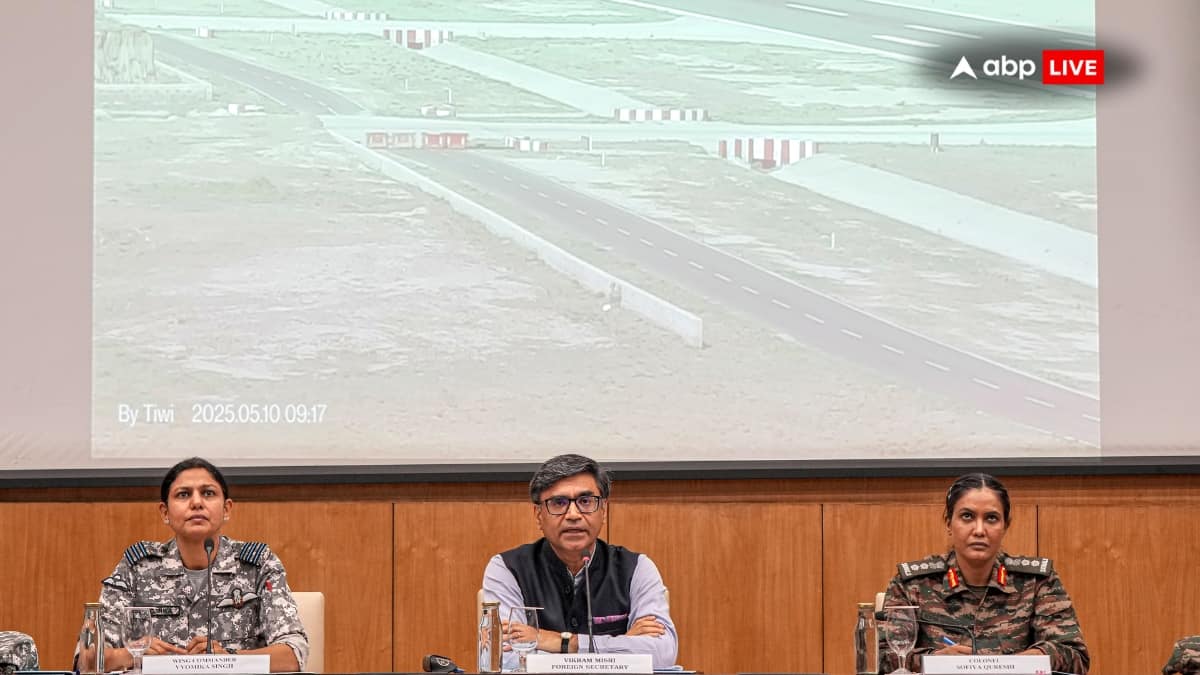
While the US claimed to give both India and Pakistan an “off-ramp” proposal, the actual de-escalation that took place in the evening of May 10 was due to direct talks between the directors general of military operation (DGMO) of both India and Pakistan.
Both the DGMOs have spoken twice so far — first on May 10 and then on May 12. On May 12, both sides discussed the commitment that they “must not fire a single shot or initiate any aggressive and inimical action against each other… It was also agreed that both sides consider immediate measures to ensure troop reduction from the borders and forward areas.”
Interestingly, on May 10, when the Pakistani DGMO approached his Indian counterpart, Islamabad had announced Operation Bunyan al-Marsoos just hours before that.
This came even at a time when PM Modi made it public in his speech that Operation Sindoor has not ended but has only been put on hold. He made it clear Wednesday that it can resume any moment if Pakistan encourages cross-border terrorism.
"It makes sense that India is yet to formally end Operation Sindoor because the Modi government simply doesn't trust Pakistan, nor that it would faithfully abide by the ceasefire. In this way, Indian armed forces remain on heightened alert to respond if Islamabad violates the ceasefire again or launches another terrorist attack,” stressed Grossman.
“Of course, there is also some nationalistic pride going on here: India doesn't want to allow Pakistani narratives on having won the battle to flourish, and thus keeping the pressure on with Operation Sindoor still in effect can help counter that storyline,” he added.
On Tuesday, Lt Gen DS Rana, Director General Defence Intelligence Agency, briefed the defence attaches of 70 nations on Operation Sindoor. During the briefing, India reiterated that New Delhi has established a "new normal" with Pakistan. He highlighted to the defence attaches "India's demonstrated strength and national resolve through military superiority in the new-age warfare", according to the Army.
ALSO READ ON ABP LIVE | Before-After Satellite Pics Show Operation Sindoor's Impact On Pakistani Terror Sites
Role Of China
China, along with the United States and several other nations, has made public appeals to both India and Pakistan to de-escalate rising tensions in the region. However, the situation has been complicated by Pakistan's use of Chinese-made weaponry, which has drawn strong condemnation from India.
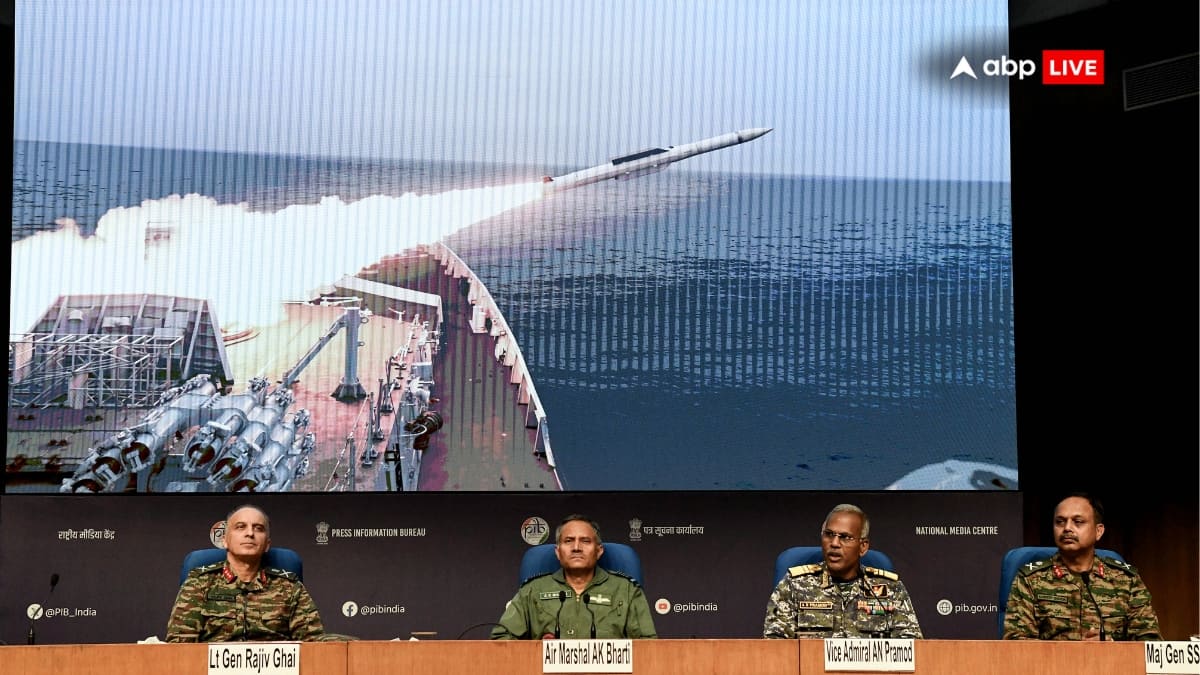
Lt Gen Rajiv Ghai, who is the DGMO for the Indian Army, revealed that during Operation Sindoor, India successfully neutralised a significant number of drones supplied by both China and Turkey. The effectiveness of India's defence was attributed to a sophisticated, multi-layered air defence system that had been strategically deployed to protect against aerial threats.
On the very day that Operation Sindoor was launched, Chinese officials labelled India’s move as “regrettable”. This reaction has sparked deeper discussions within defence and diplomatic circles about the validity of Beijing's commitment to counterterrorism efforts, particularly given their support for Pakistan during heightened conflict.
On May 10, National Security Advisor Ajit Doval spoke with Chinese foreign minister Wang Yi, and told him that "war was not India's choice and was not in the interests of any party".
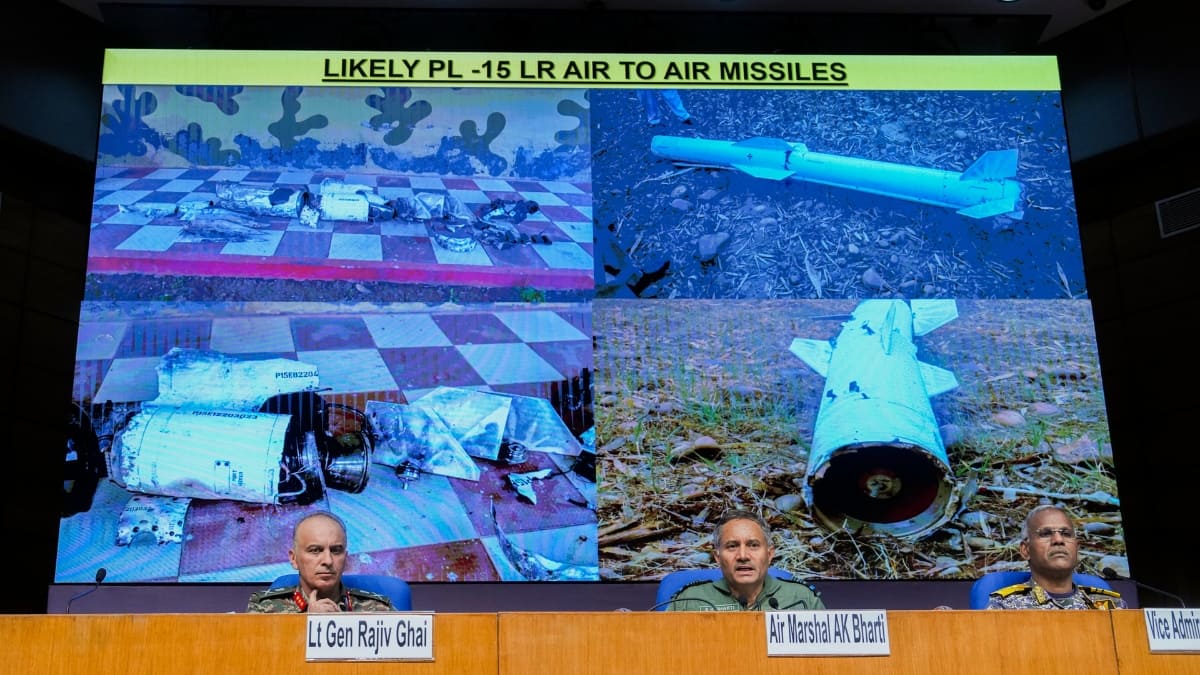
During the press briefing on May 12, Indian military officials showcased photographic evidence of debris from Chinese PL-15 long-range air-to-air missiles that were employed by the Pakistani Army during this conflict. Furthermore, Chinese fighter jets, notably the J-10, have attracted considerable global attention due to their advanced capabilities and strategic significance in the ongoing tensions.
In the aftermath of Operation Sindoor, Pakistan's Prime Minister Shehbaz Sharif openly confirmed that he had engaged in discussions with Chinese President Xi Jinping.
These conversations have raised speculation regarding the nature of military and strategic support that China may be providing to Pakistan, said the sources quoted above.
According to the sources, while it has been recognised for some time that China has been supplying arms to the Pakistani military, the recent crisis has revealed the full scope of the weaponry being provided. This has contributed to a heightened awareness of Chinese involvement in the region and the implications it holds for regional security dynamics.
Nayanima Basu is a senior independent journalist.
Before You Go
Political flash: Amit Shah targets Congress over Vande Mataram controversy in Rajasthan

Top Headlines