S-400: The Backstory Of Modern 'Sudarshan Chakra', India’s Most Powerful Air Defence System
Manohar Parrikar’s 2016 intervention strengthened India's air defence, saving Rs 49,300 crore. S-400 Triumf air defence system, dubbed the 'Sudarshan Chakra', proved its worth in 2025.

In a dramatic escalation of cross-border hostilities, India’s S-400 Triumf air defence system — dubbed the “Sudarshan Chakra” — proved to be its strongest aerial shield. On the night of May 7 and throughout May 8, a major wave of missiles and drones was launched by Pakistan, targeting strategic installations across Jammu, Punjab, Rajasthan, and Gujarat. Swiftly deployed and activated by Indian forces, the S-400 systems neutralised incoming threats in real-time, averting what could have been a massive national security breach.
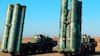
Positioned strategically along the northern and western borders, the Russian-made S-400s tracked and destroyed multiple enemy aerial vehicles using powerful radar capable of detecting targets up to 600 km away. The system’s rapid response and ability to simultaneously engage up to 80 targets ensured multi-layered protection, proving decisive in thwarting a high-stakes, coordinated attack. The interceptors hit drones and missiles mid-air, demonstrating the full force of India’s most advanced air defence weapon.
But this critical capability was not just the result of military preparedness — it was shaped by a turning point in India’s defence planning nearly a decade ago, driven by the late defence minister, Manohar Parrikar.
Parrikar’s Game-Changing Intervention
Back in 2016, India’s long-term air defence plans were quietly undergoing a transformation. Under Parrikar’s leadership, a comprehensive review was initiated to reassess the country’s layered air defence strategy. This rare and timely intervention, as defence analysts noted, not only steered India towards acquiring the technologically superior S-400 system but also potentially saved the exchequer ₹49,300 crore over the next decade.
As reported by The Economic Times at the time, senior officials confirmed that Parrikar personally pushed for a technical reassessment. The Indian Air Force was tasked with evaluating global systems and refining the country’s three-tier defence framework — short-range (up to 25 km), medium-range (around 40 km), and long-range defence systems.
The findings were significant. With the inclusion of the S-400 — a long-range system capable of intercepting threats from over 400 km away — the requirement for more than 100 short and medium-range missile systems could be scaled back. A top official had explained: “The study found we will require a much lesser number of the shorter range systems. Minister Parrikar convinced the Air Force that the long-range S-400 would make many of the MR SAM and SR SAM acquisitions redundant.”
At a cost of $6.1 billion for five units, the S-400 was India’s most expensive air defence acquisition at the time. Yet, on a per square kilometre coverage basis, it offered unmatched value, ranking among the cheapest and most efficient global systems.
The Man Behind The Move
Manohar Parrikar, known for his deep intellect and integrity, brought a rare blend of engineering acumen and political clarity to India’s defence ministry. A graduate of IIT Bombay in Metallurgical Engineering, he was the first alumnus from the prestigious institute to become chief minister of a state — and eventually, the Defence Minister of India (2014-2017), before returning to the state as its CM once again.
Parrikar’s technical background gave him a decisive edge in navigating complex military acquisitions. Known for being hands-on and detail-oriented, he insisted on direct consultations with scientists, military officials, and defence engineers to fast-track decisions. His efforts helped cut through bureaucratic inertia, especially in high-stakes procurements like the S-400.
Importantly, Parrikar held firm even under diplomatic pressure. The US had warned of sanctions under its Countering America’s Adversaries Through Sanctions Act (CAATSA). Passed in 2017, CAATSA provided for sanctions against countries that did business with Moscow.
Parrikar, however, proceeded with the deal, prioritising India’s strategic autonomy — convinced that India’s skies needed this level of protection.
While the contract was signed with Russia on October 5, 2018 for delivery of the S-400 system, the deliveries began in late 2021.
"The S-400 Missile is a potent system in terms of its operational capability to provide continuous and effective air defence system to a very large area. With the induction of this system, air defence capability of the nation will be significantly enhanced," the government had said in 2021.
A Legacy Cemented by Action
The events of May 2025 have now vindicated Parrikar’s vision. The very system he advocated for — and pushed through despite opposition — stood between India and a potential disaster. His ability to merge technical insight with strategic foresight reshaped India's defence posture, laying the foundation for a stronger, more responsive military.
Parrikar’s legacy is etched not just in missile systems or cost-saving policies but in the trust he inspired across the armed forces and the public. His tenure offers a model of integrity-driven leadership — where clarity of thought, national interest, and technological depth came together to create lasting impact.
Kirti Pandey is a senior independent journalist.
[Disclaimer: The opinions, beliefs, and views expressed by the various authors and forum participants on this website are personal and do not reflect the opinions, beliefs, and views of ABP News Network Pvt Ltd.]
Top Headlines