Explorer
We are concerned with purity and sanctity of electoral process, says SC
Posting the matter on May 3 for final hearing, the bench asked all the parties to the case to file their written notes of submission by next date of hearing.
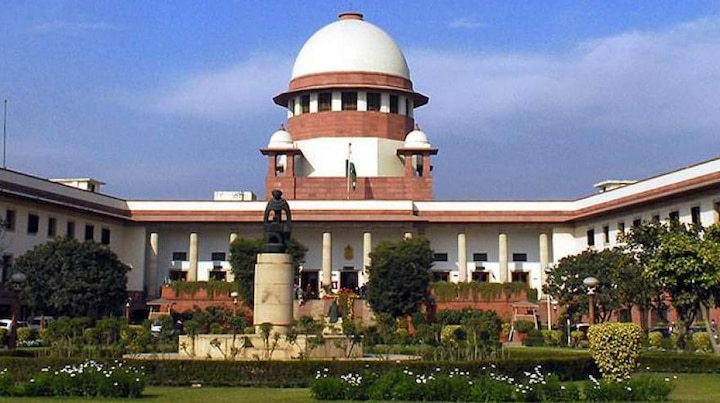
Supreme Court (File/PTI)
New Delhi The Supreme Court on Monday said that it was concerned with the purity and sanctity of the electoral process as it asking how people barred, upon conviction in criminal cases, from contesting election or holding public office, can be allowed to float a political party or be its office bearer. An unimpressed bench of Chief Justice Dipak Misra, Justice A.M. Khanwilkar and Justice D.Y. Chandrachud said this as it was told about the Central government's stand that a person who upon his conviction in a criminal case is barred from contesting election can't be stopped from floating a political party or becoming its office bearer. In the last hearing of the matter on February 12, the top court had asked that if a convicted person can't contest election, then how can he be at the helms of the affairs of a political party and select candidates to contest elections. Posting the matter on May 3 for final hearing, the bench asked all the parties to the case to file their written notes of submission by next date of hearing. The Central government has told the top court in its response that the office bearer of a political party was not a "representative" and there was no "connectivity and nexus" between a person barred from contesting election to parliament or the state assembly upon conviction and prohibiting such a person from forming or becoming a member of any political party. To buttress its stand, it referred to the 255th report of the Law Commission, the Goswami Committee and the National Commission to Review the Working of the Constitution, contending that in none of these reports there is a suggestion to bar a person from being an office bearer of a political party on grounds of his antecedents. Pointing to the situation in the legislatures including Parliament, senior counsel Vikas Singh said that 40 per cent of country's lawmakers have criminal antecedents. Appearing for one of the petitioners, advocate Gopal Shankarnarayan said that Section b 41 of the Representation of People Act too says the same thing which the petitioners are asking for. Section 41 holds that a person who has been disqualified from being a member of either House of Parliament or the State legislature or from voting at election, can't become an election agent during the period of disqualification. Shankarnarayan expressed "surprise" that the Election Commission, which is empowered with the superintendence and conduct of elections, can't derecognise a political party.
Before You Go
JPSC-JSSC Row: Students Stand Firm, Announce August 10 Assembly March
Top Headlines
India

Rijiju Rules Out Special Parliament Session On Women's Reservation, Delimitation Bills
India

From PM Modi Video Row To CSAM: Meta Admits Lapses In Govt Meeting
India

'You Did Nothing Wrong': Rahul Gandhi Backs Students Over Parliament March Crackdown
India

PM Modi Marks Article 370 Anniversary, Says J&K Has Witnessed 'Wide-Ranging Transformation'








See Today's Weather 
powered by