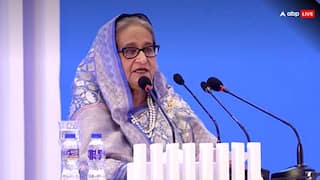
Romila Thapar considers removing entire dynasties like the Mughals from textbooks as 'nonsense.' She believes history is a continuous process and cannot be taught in fragments.
Explorer
‘History Can’t Be Taught In Pieces’: Romila Thapar Criticises Dropping Mughals From NCERT Syllabus
Historian Romila Thapar criticised the removal of the Mughals from NCERT textbooks at the Kerala Literature Festival, calling it “nonsense” and warning against fragmenting history.

Historian Romila Thapar speaks at the Kerala Literature Festival 2026, criticising the removal of historical dynasties from NCERT textbooks.
Source : Twitter/@mishra_surjya
- Historian Romila Thapar calls removing Mughals from textbooks 'nonsense'.
- History is a continuous process, not fragments to be removed.
- Thapar warns against social media's 'popular history' influence.
- She stressed feminist insights and autonomous women in history.
Kozhikode, Jan 25: History is a continuous process and cannot be taught in fragments, eminent historian Romila Thapar has said, while calling the practice of removal of entire dynasties such as the Mughals from textbooks as “nonsense”.
Speaking online at the ongoing ninth edition of the Kerala Literature Festival (KLF), Thapar on Saturday addressed issues ranging from the rise of popular history on social media to the importance of feminist history and the central role of education in questioning existing knowledge.
“The kinds of things that are happening, where, for example, chunks of history are being thrown out of the syllabus or we are told we don’t need to study them, are nonsense. History is a continuous process. It is an evolution of people and cultures, of ways of behaviour and ways of thinking," she said.
"That continuity cannot be broken by saying, ‘All right, we throw this dynasty out, we throw Mughals out, we throw out that'. It breaks history up and makes no sense," said the renowned historian, who has authored over 25 scholarly books, during the session "Women Writing History: Three Generations".
The National Council of Educational Research and Training (NCERT) has reportedly revised its Class 7 Social Science textbook for the 2025-26 academic year, removing chapters on the Delhi Sultanate and the Mughals.
Besides, it also now focuses on ancient Indian dynasties such as the Mauryas, Shungas, and Satavahanas, along with cultural traditions and sacred sites across religious traditions.
The 94-year-old historian also voiced concern over the growing influence of "popular history" on social media, saying it often blurs the line between informed scholarship and opinion.
She earnestly urged people to rely on statements from professional historians when seeking accurate explanations of past events.
“There is a difference now between the two -- popular history and what professional historians write -- and it is important to note that difference and understand what it entails. When quoting a historical statement, one should be aware whether it comes from professional historical writing or a statement propagated on social media,” she explained.
Reflecting on her own journey as a historian, Thapar admitted that while she may not have consciously written history from a woman’s perspective throughout her career, she consistently tried to incorporate feminist insights wherever possible.
More importantly, she emphasised the need for women in professional spaces to assert their autonomy and demand respect, adding that writing feminist history was important, but equally vital was “behaving like a feminist” by standing for independence, critical thinking and intellectual freedom.
"An autonomous woman, I think, is absolutely essential. Therefore, my attitude to this has been, yes, we have to write feminist history, that is a given, but if I am not writing feminist history, I am at least behaving like a feminist. I am propagating that an autonomous woman is an absolutely essential component of any society," she concluded.
The four-day literary extravaganza is hosting over 400 speakers, including Nobel laureates Abdulrazak Gurnah and Abhijit Banerjee, astronaut Sunita Williams, author Kiran Desai, essayist Pico Iyer, Jnanpith winner Pratibha Ray, sports icons Rohan Bopanna and Ben Johnson, and Wikipedia founder Jimmy Wales.
KLF 2026, now in its ninth edition, will come to a close on Sunday.
(This report has been published as part of an auto-generated syndicate wire feed. Apart from the headline, no editing has been done in the copy by ABP Live.)
Before You Go
Aamir Khan Threat Case: Forensic Report Links Viral Audio to Lawrence Bishnoi Gang Operative
Frequently Asked Questions
What is historian Romila Thapar's view on removing dynasties like the Mughals from textbooks?
Why does Romila Thapar emphasize history as a continuous process?
Thapar states that history is an evolution of people, cultures, and ways of thinking. Breaking this continuity by removing parts of history, such as specific dynasties, makes no sense.
What is Romila Thapar's concern about 'popular history' on social media?
She is concerned that popular history on social media often blurs the lines between informed scholarship and mere opinion. She urges people to rely on professional historians for accurate explanations.
What is Romila Thapar's stance on feminist history and women in professional spaces?
Thapar believes writing feminist history is important, but equally vital is 'behaving like a feminist' by asserting autonomy, demanding respect, and standing for independence and critical thinking.
Top Headlines
India

Rs 500 Crore Vaishno Devi 'Fake Silver' Case: Jammu Court Seeks Detailed Inquiry Report
India

'We Thought We Would Die': Air India Phuket-Delhi Flight Passengers Recall Horror
India

Heavy To Extremely Heavy Rainfall Warning Issued For Several States; IMD Releases 7-Day Forecast
India

OPINION | Prashant Kishor, Vijay And Gen Z: Cracks In Old Political Order









See Today's Weather 
powered by