




Explorer
How Putin made India splash out on arms
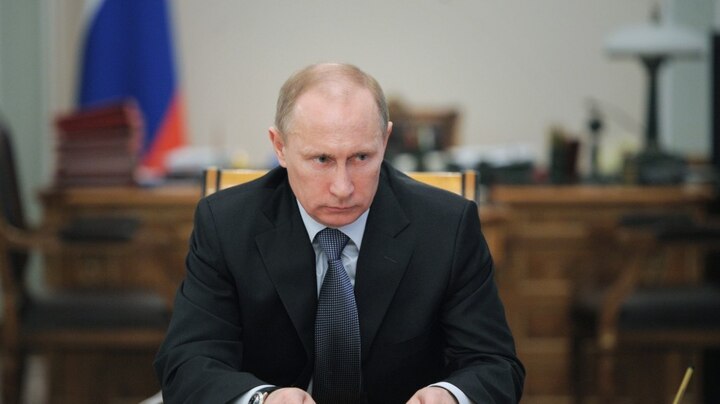
Kolkata: On the eve of the summit of Brazil, Russia, India, China and South Africa, Narendra Modi is realising that bullets are bullish, a wise saying that has been proved in every conflict in the modern age. Unlike any previous Brics summit, Pakistan will be the elephant not only in the main summit room, but also at each of the venues for the bilateral meetings between the visiting leaders and Modi. What is billed as a side show to the Brics summit in Goa that may turn out to be more significant than the main summit will be defence deals to be discussed during bilateral meetings on the margins of the multilateral gathering of five emerging nations. This is also unlike any previous Brics gathering since Jim O'Neill, the chairman of Goldman Sachs Asset Management, coined the term in 2001, originally for only four of these emerging nations, that is, minus South Africa. Tensions with Pakistan which have been rising in the immediate aftermath of Modi's meeting with his counterpart across the western border, Nawaz Sharif - ironically after their meeting in Vladimir Putin's own Ufa -have meant a windfall for the Russian armaments industry. At the time of writing, defence deals amounting to mind-boggling figures were to be finalised during the Prime Minister's annual summit with the Russian President. That military purchases from Russia amounting to tens of thousands of crores have been decided in 10 months in a country where decades are the norm in finalising defence purchases is yet another tribute to how Putin conducts his foreign policy with an unerring eye on his country's best interests. To put it plainly, the Kremlin has virtually forced India into catapulting Russia once again as this country's main arms supplier. This has been done with Putin's repeated threats to sell weapons to Pakistan and by holding military exercises with Rawalpindi - the seat of its Army General Headquarters - during precisely the time when terrorists who attacked Uri prompted India to cross the Line of Control in Jammu and Kashmir. India panicked and decided to buy Russia's continued strategic support by pouring tens of thousands of crores into Moscow's armaments industry: through announcements to be made in Goa during the weekend. When the Prime Minister was briefed on this strategy by his policy-makers, Modi said Russia's critical support for India can no longer be taken for granted, according to sources present at internal meetings in the government on this issue. This was the same argument Modi advanced - recalling French support for India's Pokhran II nuclear tests in 1998 - when he favoured the purchase of Rafale aircraft for the Indian Air Force. Modi also realised that he lacked advice from the band of Kremlinologists who surrounded virtually every one of his predecessors. The absence of Kremlinologists in Modi's inner circle had caused a downturn in ties with Moscow during his tenure so far as head of India's government. So he quickly resurrected the National Security Advisory Board (NSAB) which has been moribund since January 2015 and made one of this country's best-known Russia experts its chairman. P.S. Raghavan, the head of NSAB since five days ago, according to a low key announcement, was until recently ambassador in Moscow. Raghavan will now share the space hitherto occupied by foreign secretary S. Jaishankar and national security adviser Ajit Doval as Modi's foreign policy adviser. He will be Modi's "Moscow mule", to borrow a term from the world of Russian vodka and of vodka-based cocktails. Although Raghavan is an unalloyed professional diplomat untainted by any ideological attachments, Modi trusts him because he was in Atal Bihari Vajpayee's PMO, dealing specifically with external affairs, defence, national security, space and atomic energy. A fluent Russian speaker who was third secretary, second secretary and later ambassador in Moscow, Raghavan caught the then Gujarat chief minister's attention when he helped Modi to formalise Gujarat's institutional links with Astrakhan province with which the Prime Minister's home state did business as long ago as the early 17th century. All previous NSAB heads have been associated with the US, such as Naresh Chandra and K.S. Bajpai. Both men were ambassadors in Washington. Or they have been ambassadors in China or Pakistan: C.V. Ranganathan in Beijing and S.K. Lambah in Islamabad are examples. Modi had virtually decided to let the NSAB fade away. When Shyam Saran's two-year tenure as chairman expired in January 2015, it was decided not to name a new chairman. Nor did the BJP-led government reconstitute the board. According to the cabinet resolution of April 1999 constituting the National Security Council, the NSAB can have up to 30 members, who will advise the council, chaired by the Prime Minister. Such proximity with the Prime Minister - for instance, shared by K. Subrahmanyam, then called NSAB convener and Vajpayee - is one of the reasons why those who want to monopolise access to Modi advised him in 2015 against reconstituting the NSAB. Fortuitously, this lapse has now allowed the Prime Minister to bring in a Russia expert into his inner circle through the NSAB route. Modi's point person in reviving relations with Russia and South Africa, another Brics partner, will be Raghavan. For three years, he was deputy high commissioner in Pretoria. Bilateral defence cooperation that will figure on the sidelines of the Brics summit in Goa is not confined to Russia. India and South Africa are keen to revive their defence relations, which were once thriving. With Brazil too, there will be a defence component during Modi's bilateral meeting with the President of that country. India is in the middle of an inquiry into alleged kickbacks in the acquisition of Embraer planes from Brazil for the Defence Research and Development Organisation.
Top Headlines
India

Kolkata Stampede: 7 Accused Get 10-Day Police Custody, VIP Gates May Be Scrapped
India

Kolkata Stampede: Video Shows Crowds Rushing Into Durga Puja Pandal Amid Heavy Rain
India

‘Anti-India Ravana’ Posters Featuring Akhilesh, Rahul, Elon Musk Surface In Lucknow
India

Kolkata Stampede: Amit Shah, CM Adhikari Meet Injured At Hospital; Section 163 Orders Issued





See Today's Weather 
powered by



