EXPLAINED: Quit India Movement — What Happened In 1942 | 10 Points
Know about the iconic ‘Quit India Movement', also known as ‘August Kranti', that led to India gaining its independence from the British Raj.
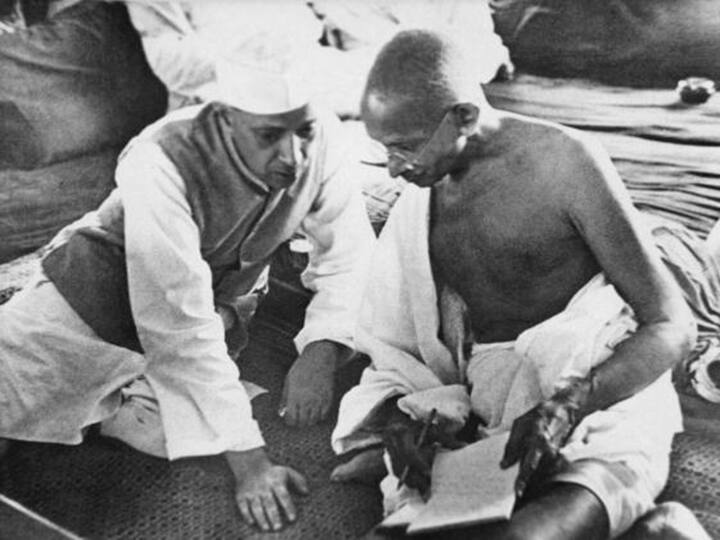
New Delhi: It has been 79 years since India launched the ‘Quit India Movement' against the British to make our country independent. It was this day, August 8, when Mahatma Gandhi raised this resolution to make India free, a feeling which reverberated in the heart of every citizen of the country resulting in a watershed moment that led the country to hoist the tricolour and declare Independence.
Under the leadership of Gandhi, India demanded freedom from British rule, which was termed as ‘Quit India Movement’ and came to be known as ‘August Kranti'.
ALSO READ | 'History Scripted At Tokyo!' PM Narendra Modi, Prez Kovind Laud Neeraj Chopra's Spectacular Olympics Win
On August 8, 1942, at the Bombay Session of All India Congress Congress Committee, Gandhi introduced the resolution to begin a ‘Quit India Movement’, and it was passed at the meeting.
Every year, the country celebrates this day as August Kranti Diwas by paying tribute to freedom fighters who gifted us our Independence.
What happened in 1942?
- India had been preparing to launch such a huge movement since Congress leader Hasrat Mohani in 1921 coined the term of Poorna Swaraj. During World War II, the British needed cooperation from Indian soldiers to end the war and Sir Richard Stafford Cripps arrived in India to meet leaders of the Congress and the Muslim League and propose a draft. The idea was to secure India’s whole-hearted support in the war, in return for self-governance.
- The draft granted Dominion status to India after the war but otherwise conceded few changes to the status quo. Despite the promise of “the earliest possible realisation of self-government in India”, the offer Cripps made was not ‘freedom’. Also, the draft mentioned the provision of dividing India and partition of the nation was not acceptable to the Congress.
- When Gandhi realised that the need of the hour was to fight tooth and nail to gain India’s freedom, on August 8, 1942, the CWC passed the historic resolution presented by Gandhi and heralded the Quit India Movement.
- To inspire the masses, Gandhi gave a fiery speech at Mumbai's Gowalia Tank Maidan, also known as August Kranti Maidan now, marking the watershed movement.
- On August 8, addressing the people from Mumbai’s Gowalia Tank maidan, Bapu said: “Here is a mantra, a short one, that I give you. Imprint it on your hearts, so that in every breath you give expression to it. The mantra is: ‘Do or Die’. We shall either free India or die trying; we shall not live to see the perpetuation of our slavery.”
- The most powerful people-led movement was launched after Aruna Asaf Ali hoisted tricolour on the Gowalia Tank ground. By August 9, many of the eminent leaders, including Jawaharlal Nehru, Abul Kalam Azad and Mahatma Gandhi, were arrested on charges of sedition.
- Mahatma Gandhi was kept at the Aga Khan Palace in Pune, and later in the Yerawada jail. It was during this time that Kasturba Gandhi died at the Aga Khan Palace. Arrests of the leaders did not dampen the spirit of the masses, and people took the movement into their own hands. By August 10, protests erupted in Delhi, UP, and Bihar. There were strikes, demonstrations, and people’s marches in defiance of prohibitory orders in Kanpur, Patna, Varanasi, and Allahabad.
- Activists like Jai Prakash Narayan, Aruna Asaf Ali, SM Joshi, Ram Manohar Lohia continued to fuel the movement and the protests would turn violent as railway tracks were blocked, students went on strike in schools and colleges across India. In some places, bridges were blown up, telegraph wires were cut, and railway lines were taken apart.
- The British government was successful in suppressing the movement by September 1944, but one thing that remained alive in every Indian’s heart was the resolve for complete Independence, and it was non-negotiable.
- The British refused to grant immediate independence and stated that it could only be granted after the war ended. Finally, India got Independence in 1947.
Top Headlines