




Explorer
Distinction between data collection, utilisation, need to protect privacy: SC
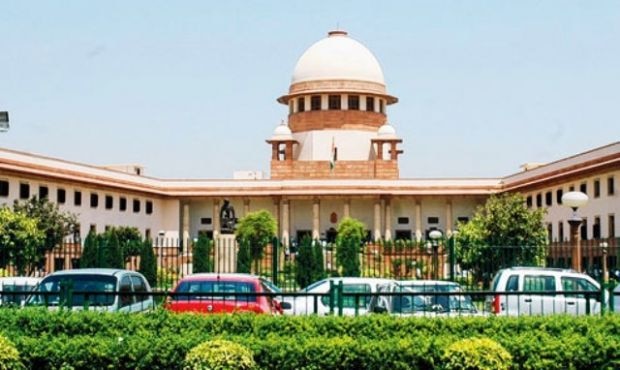
New Delhi: The Supreme Court on Wednesday said that in a digital world, the state can collect biometric data of its citizens but what could be the bone of contention is the extent of its use or misuse by the government and invasion of privacy of the citizens. Observing that the collection of biometric data under Aadhaar had begin some years back and there was a distinction between the collection of data and its use, the five judge constitution bench headed by Chief Justice Dipak Misra said that there would be no problem if the data is used for the purpose it has been collected. The government should not use the Aadhaar data to intrude into the private space of the citizens, said the constitution bench which also comprises Justce A.K. Sikri, Justice A.M. Khanwilkar, Justice D.Y. Chandrachud and Justice Ashok Bhushan. The constitution nench is hearing challenges to the constitutional validity of the Aadhaar scheme on the touchstone of the fundamental right to privacy on a batch of petitions by former Karnataka High Court Judge K.S. Puttuswamy, Magsaysay awardee Shanta Sinha, feminist researcher Kalyani Sen Menon and others. Making a distinction between the collection of data and its use, the court said that there would be no problem if demographic and biometric data collected under Aadhaar was used for the limited purpose for which it was sought. As senior counsel Shyam Divan pointed to state surveillance and tracking of the citizens though Global Positioning System (GPS), Justice Chandrachud, in a poser, asked that when Google maps tracks us. don't we accept it. To this, Divan said that the online search engine was not as strong as the state and the tracking by the state makes it a police stateAand that is constitutionally not permissible. "The manner the government uses this (tracking) information is a matter of judicial review," Justice Chandrachud observed apparently indication tracking information can't be used to shadow people. Elaborating on the argument of Divan, senior counsel Kapil Sibal said, "Big brother (the state) may use it, may not use it. He may use it without you knowing it. By the time you come to the court (against intrusion by the state), a year will be over." He wondered why, if the state fails to curb money laundering, all the people are being asked to link their bank accounts with Aadhaar. Divan cited a number of judgments by the American courts as well as by European Court of Human Rights that had taken a dim view of the state collecting data on its citizens and intruding into their daily lives. Hearing will continue on January 30.
Top Headlines
India

Press bodies condemn detention of journalists covering Delhi protests; demand apology, inquiry
India

Security stepped up at JPNIC ahead of Jayaprakash Narayan’s birth anniversary
India

Constable recruitment: Allahabad HC allows 15 ex-servicemen to appear for physical efficiency test
India
Allahabad HC warns against misuse of criminal law in short-lived marriages, quashes dowry FIR








See Today's Weather 
powered by



