




Explorer
Simple Blood Test Can Help Reduce Heart Disease Deaths
The study, published in the Journal of the American College of Cardiology, reported that higher levels of amyloid-beta in the blood may be a key indicator of cardiovascular disease.
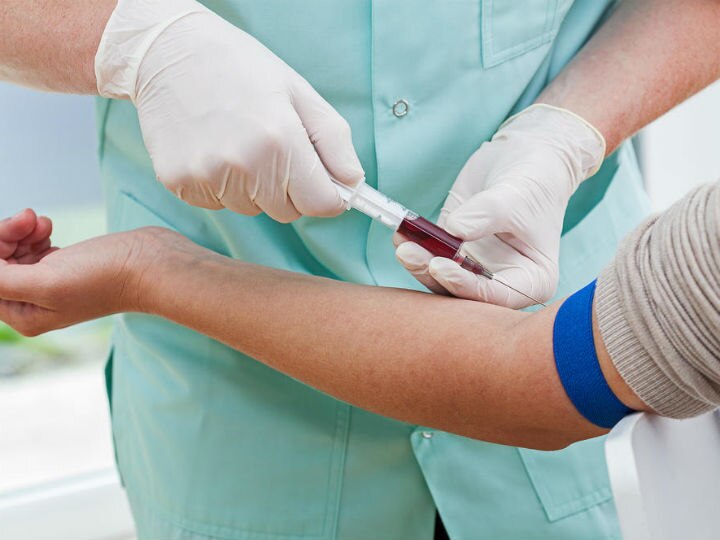
Researchers have revealed how a simple blood test could be used to help identify cardiovascular ageing and the risk of heart disease. The study, published in the Journal of the American College of Cardiology, reported that higher levels of amyloid-beta in the blood may be a key indicator of cardiovascular disease. Amyloid-beta is known to be involved in the development of Alzheimer's disease, yet researchers have now concluded that it may have a key role to play in vascular stiffening, thickening of the arteries, heart failure and heart disease progression. It is hoped that this research will one day lead to the development of a simple blood test that could be used as a clinical biomarker to identify patients who are most at risk, so that preventative measures can be put in place and death rates reduced. "Our work has created and put all the pieces of the puzzle together. For the first time, we have provided evidence of the involvement of amyloid-beta in early and later stages of cardiovascular disease," said study researcher Konstantinos Stellos from Newcastle University in the UK. For the findings, the research team analysed blood samples from more than 6,600 patients from multiple cohort studies in nine countries, and found that patients could be divided into high and low risk categories of heart disease based on their amyloid-beta levels. "What is really exciting is that we were able to reproduce these unexpected, clinically meaningful findings in patients from around the world. In all cases, we observed that amyloid-beta is a biomarker of cardiovascular ageing and of cardiovascular disease prognosis," Stellos added. The study proposed the existence of a common link between both conditions, which has not been acknowledged before, and could lead to better patient care. The findings suggest that the higher the level of amyloid-beta in the blood the higher the risk of developing serious heart complications. In the future, it is hoped that a simple blood test could be added to the current method of patient screening, known as the GRACE score, which assesses heart attack risk and guides patients' treatment plans. Using the GRACE score, eight factors are used to predict the risk of heart attack, including age, blood pressure, kidney function and elevated biomarkers.
Check out below Health Tools-
Calculate Your Body Mass Index ( BMI )
Top Headlines
Health

Doc Talk | Breast Cancer Prevention: 6 Lifestyle Changes That May Help Lower Your Risk
Health

Doc Talk | Chasing Festive Glow? Why Over-Exfoliation Can Backfire On Indian Skin
Health

Pope Leo XIV Health Update: What We Know About His Lung Cancer, Surgery And Recovery
Health

PM2.5 Pollution: Study Of 346.5 Million Records Links Poor Air Quality To 8% Higher Hospitalisation Risk









See Today's Weather 
powered by



