India Aims To Be Among Top Two Global Producers In All Auto Segments: Siam
Siam President Kenichi Ayukawa said India also plans to be nearly 100 per cent self-reliant in the entire manufacturing value chain of automobiles during the period as per the Vision 2047
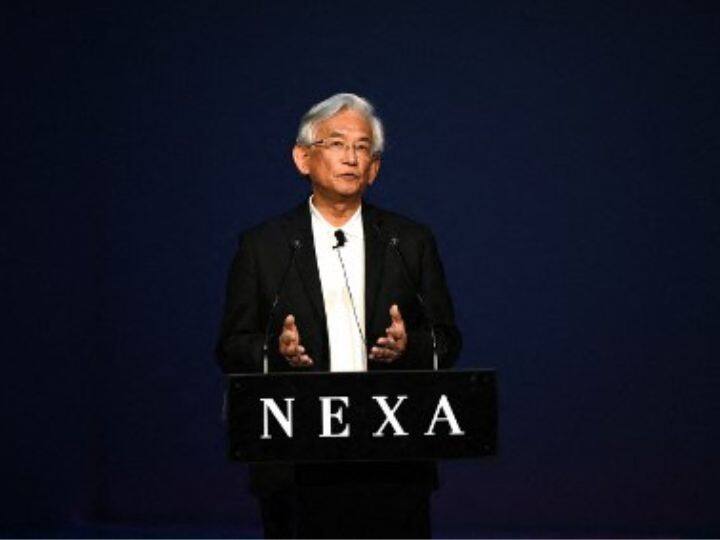
The Indian automobile industry aims to be among the top two producers globally in every segment of vehicles over next 25 years, Siam President Kenichi Ayukawa said on Thursday.
Speaking at the 62nd annual session of Society of Indian Automobile Manufacturers (Siam), Ayukawa said India also plans to be nearly 100 per cent self-reliant in the entire manufacturing value chain of automobiles during the period as per the Vision 2047.
"Industry has prepared a vision statement for India at 100. According to that, the Indian automobile industry will be one of the two largest producers in every segment of automobiles in the world," he said.
Besides, the industry aims to have a dominant share of clean energy vehicles on a life-cycle basis in the next 25 years, Ayukawa noted.
"This means a significant share of all feasible technologies..including battery electric, ethanol, flex fuel, CNG, bio-CNG, hybrid electric, and hydrogen," he added.
Ayukawa stated that to achieve such ambitious targets the industry would require some key enablers like having single-minded pursuit of competitiveness. "Second is ease of doing business. A long-term regulatory roadmap can be helpful in better planning of investments, technologies and product development," he said.
The industry would also have to focus on developing enabling technologies and new energy infrastructure, Ayukawa said.
"Similarly, we have to increase the traction on other frontiers like safety, telematics, infotainment, customer convenient features, etc...also the industry has to ensure the right skilling and re-skilling to make our manpower future ready," he stated.
Elaborating on the current market scenario, Ayukawa noted that the domestic automobile industry has been going through a long-term, deep structural slowdown, even before the pandemic started.
Citing example he stated that passenger vehicle segment in the decade of 1990 to 2000, grew at a CAGR (compound annual growth rate) of 12.6 per cent.
"This came down to 10.3 per cent in the next decade from 2000 to 2010 and further down to just 3.6 per cent in the decade from 2010 to 2020. If we look at five-year period, the drop is much steeper. Similar steep drop is seen in other segments also," Ayukawa said.
Multiple other challenges on both demand and supply side that came along with the pandemic, further impacted the industry's growth, he added. He noted that currently the industry is going through a unique phase with some segments witnessing recovery after the pandemic, while others still struggling to cope up.
"Mass segments like entry level cars and two-wheelers are facing huge reduction in demand owing to significant increase in the acquisition cost..other segments which are seeing good demand, there are supply side challenges mainly being the semiconductor shortage," Ayukawa said.
Overall, due to these challenges, all segments, be it passenger vehicles, two wheelers, three wheelers or commercial vehicles, are still below the industry's peak of 2018-19, he noted.
Ayukawa said the Indian auto industry is a key driver of the economic growth in the country with a turnover of around $120 billion and contributing about 6 per cent to the country's GDP and 35 per cent to India's manufacturing output.
The domestic automobile industry generates employment for more than 3 crore people and contributes about Rs 1.5 lakh crore to GST, he added.
Ayukawa said the sector has achieved a large scale, both in the domestic market and exports as well.
"We stand second largest in the world in the category of two-wheelers and seventh largest in the commercial vehicles..in 2021, India's passenger vehicle segment has surpassed Germany to become the fourth largest, globally," he added.
Ayukawa also lauded the government for key interventions like the introduction of PLI scheme for auto and auto component industry, for advanced chemistry cell, and also a special scheme for electronic components.
He also appreciated the government for the extension of FAME-2 scheme, vehicle scrappage policy and extension of the corporate tax benefit for new companies, and progress on FTAs with developed countries.
Top Headlines