Explorer
Sr Advocate Harish Salve Believes SC Squarely Responsible For Economic Slowdown; Here's Why
Senior advocate Harish Salve has blamed the Supreme Court for pushing the country into the economic slowdown, citing its judgements in the 2G spectrum case.
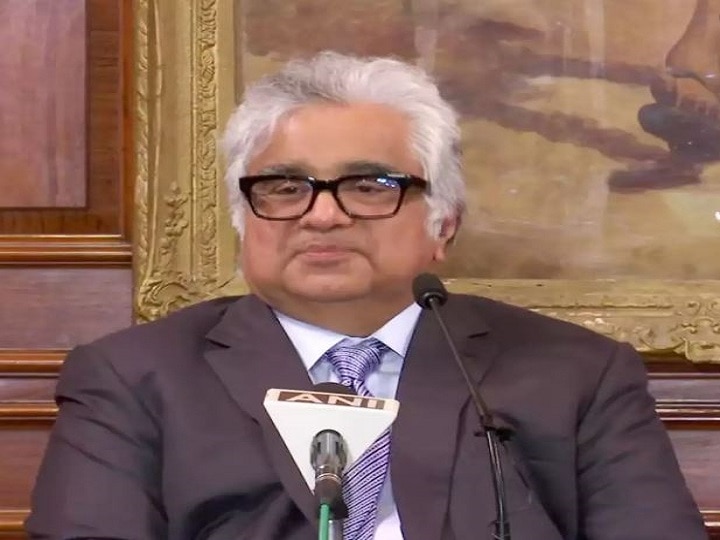
Salve said the apex court was inconsistent in dealing with commercial cases. (Image: ANI)
New Delhi: Senior advocate Harish Salve has blamed the Supreme Court for pushing the country into the economic slowdown, citing its judgements in the 2G spectrum case. Salve said the economic slowdown begun with the 2G case order when the apex court in one stroke cancelled 122 spectrum licences issued to telecom operators. In an interview to a legal website, Salve said, "I squarely blame the Supreme Court." Though, he acknowledged that he could understand holding people responsible for the wrongful distribution of the licences in 2G spectrum allocation. "Blanket cancellation of licences...when a foreigner invested, it was your rule that said he must have an Indian partner. The foreigner didn't know how the Indian partner got a licence. Foreigners invested billions of dollars, and with one stroke of the pen, the Supreme Court knocked all of them out", he said. The Comptroller and Auditor General (CAG) in its 2010 report concluded that the 2G spectrum allocation method had led to Rs 1.76 lakh crore loss to the exchequer. A charge-sheet was filed by the CBI in April 2011. In February 2012, the top court cancelled 122 licences. Salve had appeared for telecom companies in the case. In December 2017, the CBI trial court acquitted former Union Ministers and key accused A. Raja and Kanimozhi, along with 15 others. Emphasising on the nature of foreign investment, he said it turned risky after the retrospective changes in the Vodafone case. The great strength of India was the people's belief in its judiciary that it would deliver justice, he said and added the Vodafone case dealt a blow to that. "People now had to factor in -- you win in the tribunal, they will make a retrospective law and change it", said Salve. Salve said the apex court was inconsistent in dealing with commercial cases and that was a matter of huge concern for investors. Referring to the apex court's judgment in the coalmine allotment case, he said, "You cancelled coalmines (allocation) by one stroke of the pen, without examining the merits of every case. Much genuine foreign investment in the coal industry went flat. Then what happened? Indonesian and other coal prices softened up. It became cheaper to import." He said the import of coal was putting pressure on the economy and also led to job losses. In August 2014, the top court declared all 218 coal block allocations, from 1993 to 2011, illegal and arbitrary. The court cancelled all but four licences in September 2014. Salve also called the top court ruling cancelling iron ore mining leases in Goa "a howler".
Top Headlines
Business

Have 1,000 YouTube Subscribers? Here’s How You Can Earn From Ads In 2027
Business

OPINION | Lost, Stolen, Or Frozen Crypto? Indian Law Has More Options Than You Think
Business

Tata Sons Succession Race: Who Could Replace N Chandrasekaran As Chairman?
Business

Bank Holidays Next Week (August 16-22): Check Where Banks Will Be Closed









See Today's Weather 
powered by