SpaceX's Starlink Sends And Receives First Text Messages Using Direct-To-Cell Satellites Launched This Month
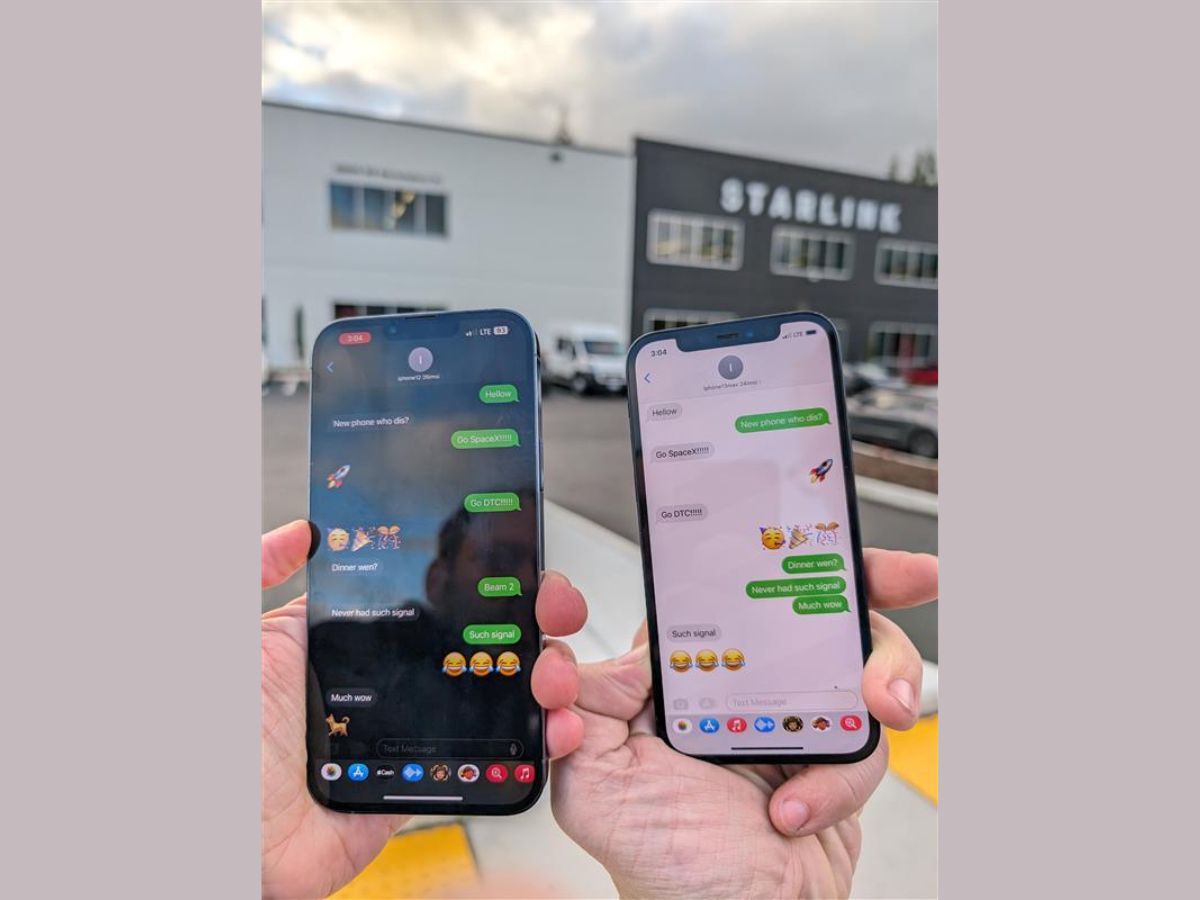
Less than six days after launch, the Starlink team was able to send and receive their first text messages to and from unmodified cell phones on the ground with the help of their new satellites.

SpaceX's Starlink has successfully sent and received their first text messages through one of the six Direct-to-Cell satellites launched on January 2, 2024. The Starlink team used the T-Mobile network spectrum, America's 5G network, to send and receive these text messages. The Starlink satellites launched on January 2 are the firm's first satellites with Direct-to-Cell capabilities.
Less than six days after launch, the Starlink team was able to send and receive their first text messages to and from unmodified cell phones on the ground with the help of their new satellites in space.
What makes Starlink’s Direct-to-Cell satellites special?
It is a challenging task to connect cell phones to satellites.
This is because in the case of terrestrial networks, cell towers are stationary, but in the case of satellite networks, the satellites move at tens of thousands of kilometres per hour relative to people on the Earth.
Therefore, seamless handoffs between satellites are required, and accommodations for factors like Doppler shift and timing delays challenge communications between phones and space. Doppler shift refers to the changes in frequency of any kind of sound, light, or other electromagnetic wave produced by a moving source with respect to an observer.
Satellites are hundreds of kilometres away from cell phones, which have low antenna gain and transmitting power. Antenna gain refers to the degree to which an antenna concentrates radiated power in a given direction, or absorbs incident power from that direction, relative to a reference antenna, according to the Telecommunications Engineer's Reference Book, 1993.
Given the distance, it is very difficult to connect satellites to cell phones.
However, according to SpaceX, Starlink satellites are unique, and can overcome this challenge. This is because the Direct-to-Cell payloads on Starlink satellites are equipped with innovative custom silicon, and advanced software algorithms. They are also equipped with phased array antennas, which are special antenna arrays with the unique ability to change the shape and direction of the radiation pattern without physically moving the antenna.
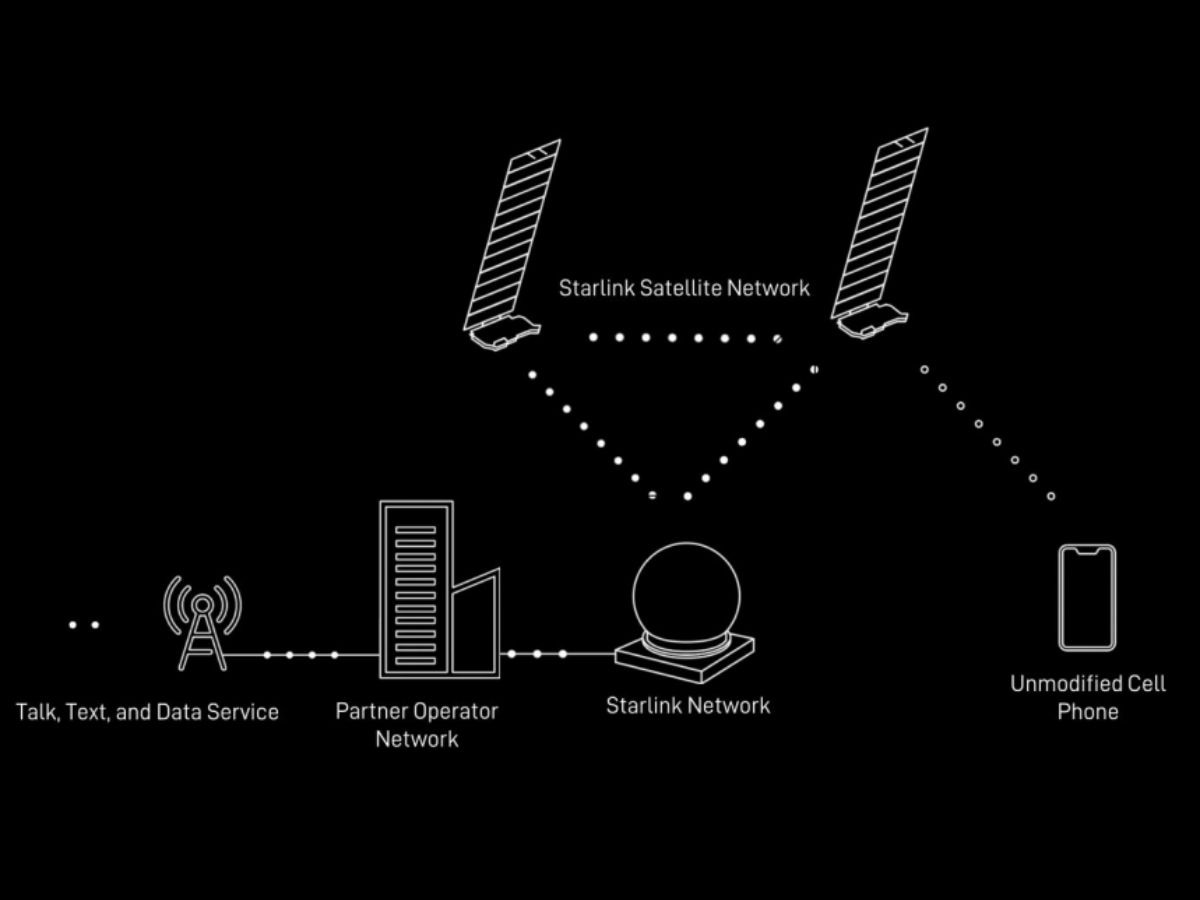
With the help of these features, Starlink's Direct-to-Cell satellites can overcome several challenges, and provide standard LTE service to cell phones on the ground. LTE, which stands for Long Term Evolution, refers to a particular type of 4G that delivers a fast mobile Internet experience.
SpaceX intends to rapidly scale the firm's Direct-to-Cell network, and launch a constellation of hundreds of satellites to enable text service in 2024, and voice, data, and Internet of Things (IoT) services in 2025.
ALSO READ | Year 2023 Was The Hottest Ever, Saw Highest Temperatures In Last 100,000 Years: EU
The Direct-to-Cell network intends to provide ubiquitous connectivity and seamless access to text, voice, and data for LTE phones and devices across the globe. Several regions can avail text services this year.
In a few years, Starlink has deployed a constellation of over 5000 satellites, which have provided connectivity services to 2.3 million customers across the globe.
SpaceX's vision is to connect the world using their existing phones, without needing a new phone, upgrades, or a special application, and hence, has decided to use standard LTE/4G protocols. SpaceX's Starlink satellites orbit hundreds of kilometres above the Earth's surface at speeds of 7.7 kilometres per second, making compatibility with LTE timing and Doppler shift extremely challenging.
Each satellite is equipped with an LTE modem that functions like a cell tower in space.

Top Headlines