Chandrayaan-3 Sends ISRO First Images Of Moon Captured During Lunar Descent
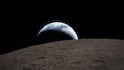
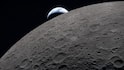
Chandrayaan-3 has sent Earth its first images of the Moon captured during lunar descent, after its historic soft landing on the lunar south pole on August 23, 2023.

Chandrayaan-3 has sent Earth its first images of the Moon captured during lunar descent, after its historic soft landing on the lunar south pole on August 23, 2023. The Lander Horizontal Velocity Camera captured these images during descent. The Indian Space Research Organisation said in a mission update that communication link between Chandrayaan-3's Vikram lander and the Mission Operations Complex (MOX) of ISRO Telemetry, Tracking and Command Network (ISTRAC), Bengaluru, has been established.
Chandrayaan-3 created history by softly landing on the lunar south pole at 6:04 pm IST on August 23. India is now the first country to softly land a spacecraft on the lunar south pole.
Chandrayaan-3 Mission:
— ISRO (@isro) August 23, 2023
Updates:
The communication link is established between the Ch-3 Lander and MOX-ISTRAC, Bengaluru.
Here are the images from the Lander Horizontal Velocity Camera taken during the descent. #Chandrayaan_3#Ch3 pic.twitter.com/ctjpxZmbom

All the phases of descent during the ‘15 minutes of terror’ were successfully completed. Chandrayaan-3 underwent initial preparation, velocity reduction, orientation change, attitude hold phase, fine braking, final descent, and touchdown. Powered descent began after the automatic landing sequence was initiated.
After the Vikram lander successfully landed on the lunar south pole, the sensors signalled the computer onboard the spacecraft. The Pragyan rover will be rolled out after the lunar dust has settled down.
Chandrayaan-3 will perform experiments on the ice and explore how these reserves could be used to extract water, oxygen and fuel for future crewed missions to the Moon.
Since the lunar south pole is similar to Earth’s diversity, exploring it will allow scientists to obtain insights into how the Earth was billions of years ago, and if it will be possible to colonise the Moon in the future.
The lander module, which refers to the complete configuration of the lander and the rover fitted inside the former, weighs 1,752 kilograms. The rover weighs 26 kilograms.
The lander module has a mission life of one lunar day, which is equivalent to 14 Earth days. It has a power generation capacity of 738 Watts.
The rover is similar to Chandrayaan-2's Pragyan rover, but improvements have been made to help ensure a safe landing.
Top Headlines