Aditya-L1: How Close To The Sun Will India's First Solar Mission Go? Will It Touch The Star? Know Everything
Aditya-L1 will be placed at a distance of 1.5 million kilometres from Earth. ISRO has chosen a strategic location for India's first space-based solar observatory to study the Sun.

Aditya-L1, India’s first space-based solar observatory, was launched on September 2, 2023. The spacecraft will be placed at a distance of 1.5 million kilometres from Earth, and 148.5 million kilometres from the Sun. The distance between the Sun and the Earth is 150 million kilometres, which means that the Indian Space Research Organisation (ISRO) will place Aditya-L1 at a location whose distance is one per cent the Sun-Earth distance.
Aditya-L1 will not approach the Sun any closer than this, and will maintain a distance of about 148.5 million kilometres from the Sun.
ALSO READ | Aditya-L1 Will Be Placed 1.5 Million Kilometres From The Earth. Know The Significance Of This Distance
Will Aditya-L1 touch the Sun?
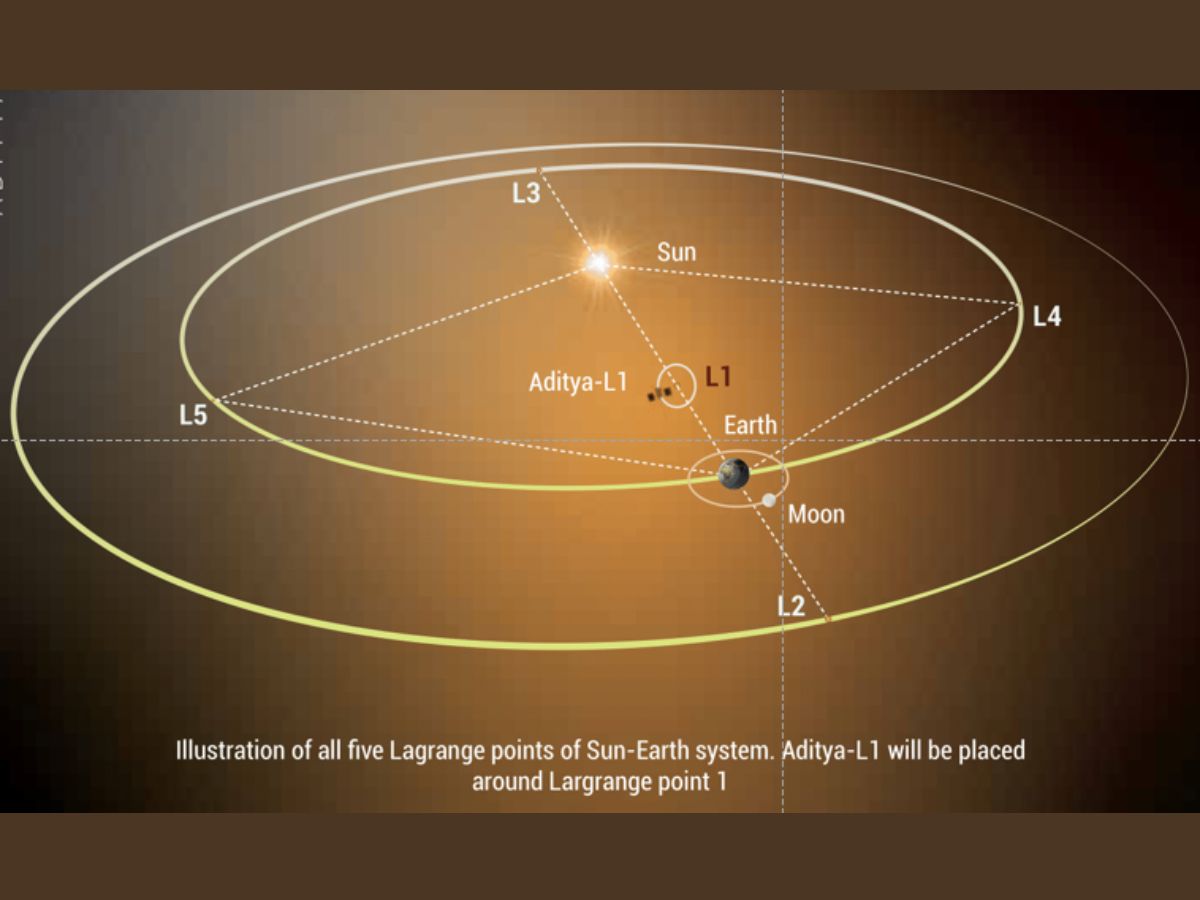
Aditya-L1 will not touch or land on the Sun. It will be placed in a halo orbit around Lagrange point 1 (L1), which is a special location in space where the gravitational forces exerted by the Sun and Earth are equal to the centripetal force required to make a small object move under the influence of gravity. Since the forces will be balanced at L1, Aditya-L1 will be in an equilibrium state and a stable position, and will simply hover in the halo orbit without spending much fuel.
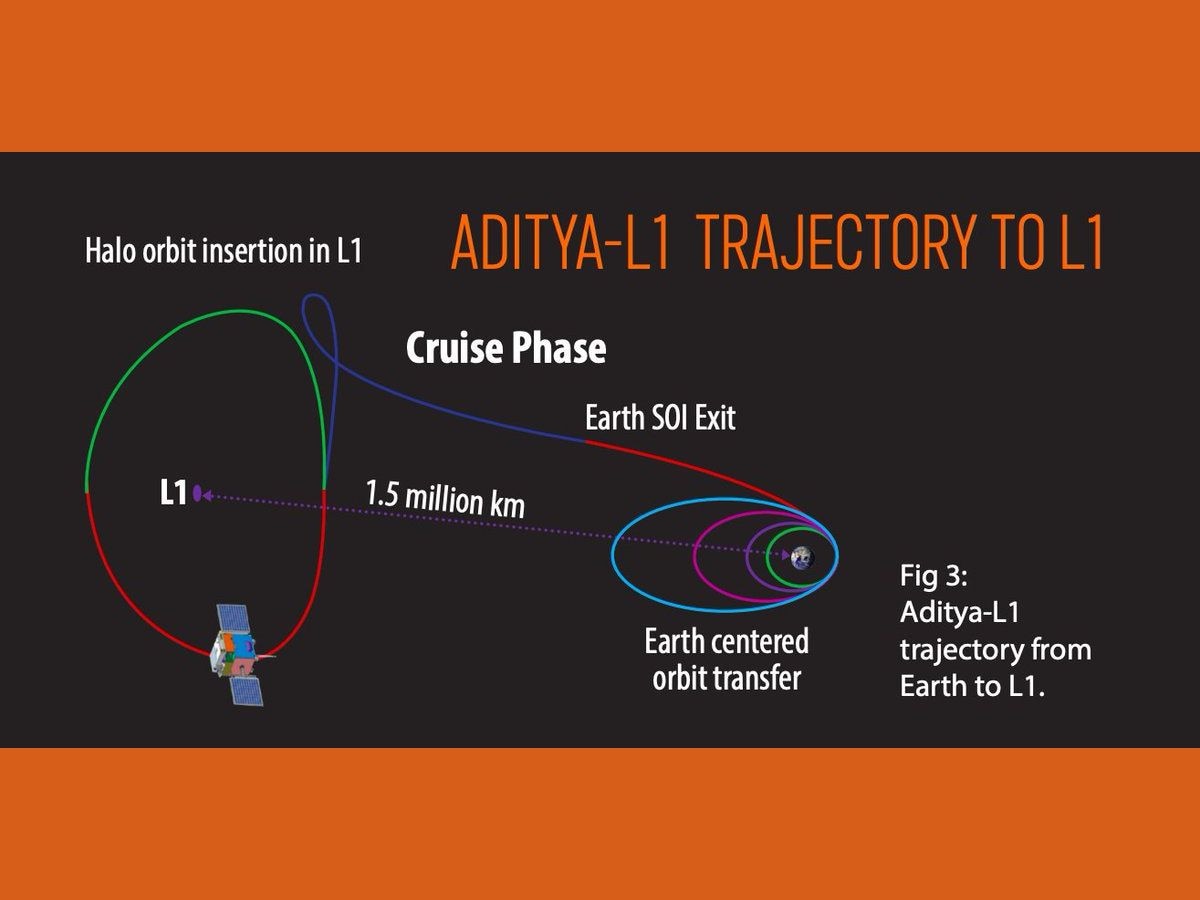
Not only will L1 allow Aditya-L1 to conserve energy by saving fuel, but will also give the spacecraft an uninterrupted view of the Sun for five years.
Manish Purohit, a former ISRO scientist, told ABP Live that L1 is a “strategic position” which will allow Aditya-L1 to observe the behaviour of the Sun and obtain important information without coming into direct contact with the scorching environment of the Sun.
Which spacecraft has come closest to the Sun?
NASA's Parker Solar Probe, which was launched in 2018, "touched the Sun" in 2021, marking the first instance of a spacecraft touching the solar system's star. Parker Solar Probe flew through the corona, or the Sun's upper atmosphere. The spacecraft made its closest approach to the Sun at a distance of 8.5 million kilometres.
Parker Solar Probe is expected to surpass this record and make its closest approach to the Sun by 2025, at a distance of 6.16 million kilometres to the Sun.
“Parker Solar Probe will repeatedly break its own records, with a final close approach of 3.83 million miles (6.16 million kilometres) from the Sun’s surface expected within the next few years,” said Debadatta Mishra, a former ISRO scientist.
Over a period of seven years, the spacecraft will have completed 24 orbits around the Sun, and fly more than seven times closer to the Sun than any other spacecraft.
MUST READ | Aditya-L1: What Makes India's First Space-Based Solar Observatory To Study The Sun Unique
Parker Solar Probe uses gravitational assists from Venus to come close to the Sun.
“Parker Solar Probe is projected to reach a distance of about six million kilometres from the Sun's surface. This remarkable feat of approaching the Sun at such a relatively short distance is a testament to the advancement of space technology and our understanding of celestial mechanics,” said Purohit.

Top Headlines