Fnideq has transformed from a transit point into a base for migrants, impacting its economy, social fabric, and culture. This change has negatively affected tourism and the city's overall identity.
Explorer
Ceuta Dream: Why Young Moroccans Still Risk Everything To Cross Into Spain
The Moroccan city of Fnideq is next to Spanish-controlled Ceuta. In Fnideq, would-be migrants dream of crossing to a better life, even as locals who witnessed recent mass migration surges say it's way too risky.
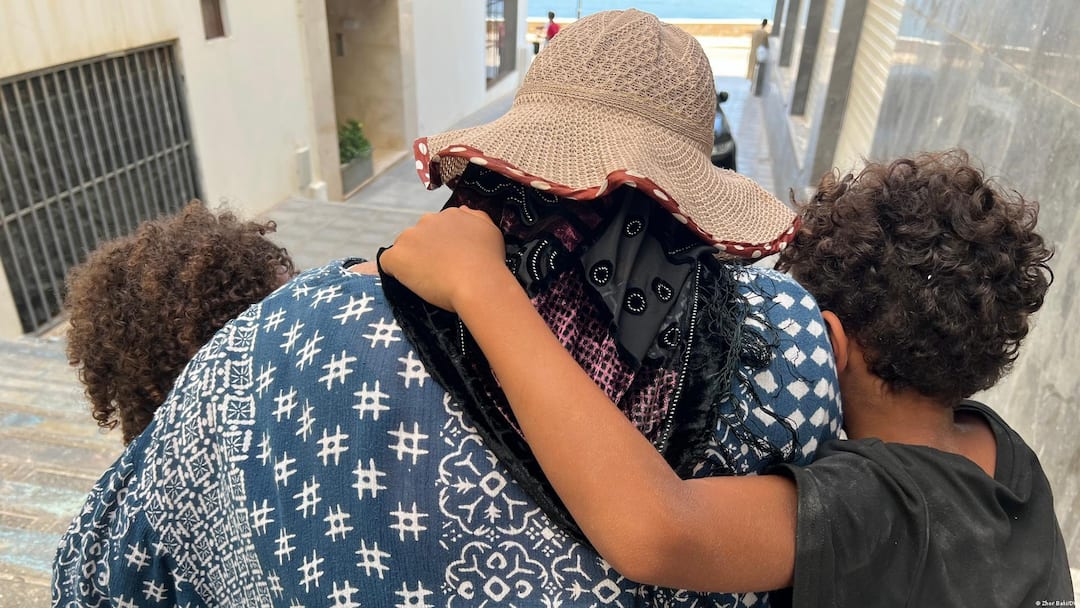
Mother-of-two Malika believes that if she can just get to Ceuta, she will find the support she is lacking at home.
Source : DW
- Migration transformed Fnideq, impacting economy and city identity.
Reported by: Zhor Baki in Morocco
There are only a few kilometers between the city of Fnideq in Morocco and the Spanish enclave of Ceuta — but the distance between those who dream of crossing that divide and those who chose to stay in Morocco is far greater than that.
After July 30, when an estimated 72,000 people crossed from Morocco into Ceuta, there were further calls on social media for people to come to Fnideq for another mass crossing attempt in mid-August.
That is despite the fact that around 100 people died in the July attempt and that most of those who crossed into Ceuta have since returned to Morocco. Numbers are unclear but somewhere between 2,000 and 8,000 of those who managed to get over to the Spanish enclave remain there. According to reports, they are now living in desperate circumstances. Many are sleeping on the beach while they wait for Spanish authorities to decide their fate.
Homeless and desperate in Morocco
Still, back in Morocco, some would-be migrants continue to hope for a chance to get to Ceuta.
Malika came to Fnideq from the city of Casablanca in western Morocco with her two children after she heard that people had managed to get there on July 30; she did not want to give DW her full name for personal reasons.
"My life is below zero," she said, with tears in her eyes. "I have no life."
Malika heard there might be a new opportunity to cross in August so she has stayed in Fnideq, together with her 3-year-old daughter and 8-year-old son. For the past few weeks, she says she has simply wandered the streets searching for ways to feed her children. The family has slept in the open.
But rumors about an August crossing also reached both Spanish and Moroccan authorities. On August 15, eyewitnesses reported a heavy Moroccan security presence around Ceuta and Melilla, another Spanish exclave to the east, with numerous checkpoints, patrol boats monitoring the coast and water cannons stationed at the border. Moroccan police said they arrested 111 people as they tried to enter Ceuta.
There was no mass crossing on August 15 and Malika has remained in Fnideq.
"I'm in a situation where I might do something to myself at any moment," she told DW. "My children are starving. I'm practically homeless. I have no job and no stable home, and my husband suffers from depression due to extreme poverty. Sometimes he just disappears, leaving me alone with the two children, without money or shelter."
That is why she still wants to get to Ceuta, she says, where she is certain she and the children will find support of some kind: "Our situation is very difficult. … that's why I want them to go to Ceuta. They will study there and we will be fine."
No future, no hope
Another man that DW meets in Fnideq, Ahmed Amhid, is in a better position. He's 22 years old and he came from Oued Zem in central Morocco after hearing about the August crossing. He is with a relative selling drinks on the street.
Amhid says there are no job opportunities in his hometown and he feels like there's no future for him there.
"The situation is deplorable, there's nothing in this country," he says angrily. "I want to emigrate from Morocco. I have no hope in this country."
Amhid pauses to offer a glass of orange juice to a customer before continuing.
"There's nothing in this country: no jobs, no industries, no companies, nothing," he told DW. "My current income isn't enough to support me or build a future."
Many of the young people, like Amhid, who arrived in Fnideq recently came because of what they had seen on social media, explains Ahmed al-Dafri, a Moroccan expert on media and culture.
This kind of online call represents "a new model of digital mobilization that doesn't necessarily require a single leader or a central authority," al-Dafri told DW. "When videos circulate widely, especially those documenting past successful attempts to cross, it creates a feeling that everyone wants to migrate and that no one wants to stay."
This type of content can give people a feeling of exclusion if they don't join in the collective movement, he explains.
Not everybody wants to leave Morocco
Nearer to the border between the city and Ceuta, DW meets Mohamed al-Dami. The 30-year-old says he isn't even thinking about leaving Morocco, even though he watched many people try recently.
The economic situation is unstable in this country, he concedes.
"But personally, I've never thought about migrating. I buy, sell and work normally," he explains. "I could migrate, but I won't throw myself into the sea in an attempt that might not even end with me reaching my destination. Even if you get into Ceuta, it's not worth all the trouble and risk. Why put yourself in harm's way?"
Al-Dami recalled seeing crowds heading for the border in late July. He was never tempted to join them.
"In my opinion, if a person can make a living and secure their future, then praise be to God. As for the future, it is in God's hands," he says.
He also heard the calls to try and cross into Ceuta again on August 15, but given all the security preparations, he didn't think those trying to cross would be successful anyway.
"Honestly, since a large number of young people entered Ceuta and then returned here again, people's morale has really plummeted and there's not much enthusiasm for this sort of thing at all," al-Dami said.
Migrants bring change to city
Another local man, Munir Hamdouch, a 34-year-old merchant, tells DW that he too has never thought about emigrating.
Things are not easy here, he admits. He's been working in his field since 2012 and he's noticed a huge decrease in tourism in Fnideq, which impacts those working in seasonal trade.
"We want an economic revival in this city," he adds. "Projects are either stalled, or maybe they've been built but haven't been opened yet. The city really needs economic alternatives."
Local civil society activist Mohamed Azzouz agreed that things have changed in Fnideq because of migration. The city was no longer a transit point for migrants, instead it had become a base for them, he says.
Migration has economic, social and cultural impacts in the city and it has become "an integral part" of Fnideq's identity. That in turn has impacted the city's appeal for tourists as well as its economy, Azzouz says.
Despite all that, local trader Hamdouch is not thinking about leaving.
"I have my shop and my family with young children so even if the thought crossed my mind, I wouldn't be able to," he explained. "For me, if I just earn 100 dirhams and I can feed my children, then I thank God."
Hamdouch thinks that some of the people who try to cross into Ceuta are chasing an impossible dream.
"Some people lack patience and are never satisfied," he suggests. "It's also a matter of contentment. Some people just want something better, they want everything."
(Disclaimer: This report first appeared on Deutsche Welle, and has been republished on ABP Live as part of a special arrangement. Apart from the headline, no changes have been made in the report by ABP Live.)
Before You Go
BREAKING: Rahul Gandhi's Police Station Protest Intensifies as Congress Demands FIR in Pellet Gun Case
Frequently Asked Questions
How has the recent migration trend affected the city of Fnideq?

Advertisement
Top Headlines
World

Ceuta Dream: Why Young Moroccans Still Risk Everything To Cross Into Spain
World

China’s Chang’e-7 Mission To Hunt For Lunar Ice In One Of The Solar System’s Coldest Places
World

China’s ‘Superman’ Robot Can Jump 2 Metres And Claims To Outrun Usain Bolt | WATCH
World

Hong Kong Court Convicts Two Tiananmen Activists Under Security Law





Advertisement








Advertisement