Explorer
BIZARRE! Man eats world's hottest chilli pepper and this is what happened to him !
The patient's symptoms after eating a 'Carolina Reaper,' the world's hottest chilli pepper, started immediately and his pain was so severe that he sought emergency care, and was tested for various neurological conditions.
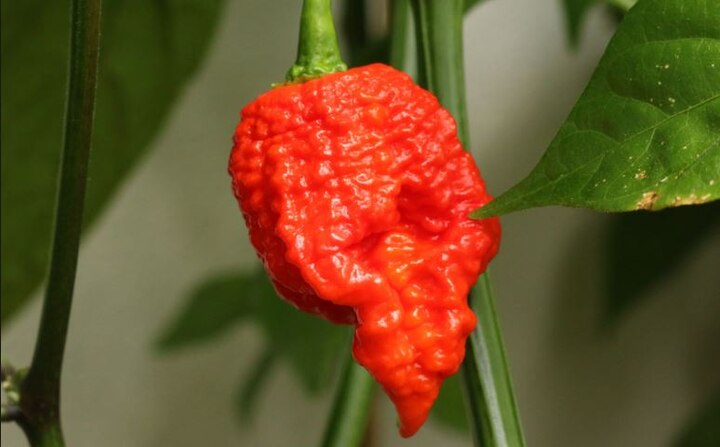
Washington: Eating the world's hottest chilli pepper caused a young man in the US to suffer from excruciatingly painful 'thunderclap' headaches for several days, doctors including those of Indian origin have found. The patient's symptoms started immediately after eating a 'Carolina Reaper,' the world's hottest chilli pepper, according to a report published in the journal BMJ Case Reports. After an initial bout of dry heaves, he developed severe neck pain and crushingly painful headaches, each of which lasted just a few seconds, over the next several days, according to the doctors at Bassett Medical Center and Henry Ford Health System in the US. His pain was so severe that he sought emergency care, and was tested for various neurological conditions, the results of which all came back negative. According to the doctors, including Satish Kumar Boddhula, Sowmya Boddhula, and Kulothungan Gunasekaran, a CT (computed tomography) scan showed that several arteries in his brain had constricted, prompting them to diagnose him with thunderclap headache secondary to reversible cerebral vasoconstriction syndrome (RCVS). RCVS is characterised by temporary artery narrowing often accompanied by thunderclap headache. It does not always have an obvious cause, but can occur as a reaction to certain prescription medicines, or after taking illegal drugs. This is the first case to be associated with eating chilli peppers, although they point out that eating cayenne pepper has been linked to sudden constriction of the coronary artery and heart attacks. "Given the development of symptoms immediately after exposure to a known vasoactive substance, it is plausible that our patient had RCVS secondary to the Carolina Reaper," doctors said. The man's symptoms cleared up by themselves. And a CT scan 5 weeks later showed that his affected arteries had returned to their normal width, they said.
Before You Go
Delhi Rain Crisis: Record Downpour Floods Neighbourhoods, Snarls Traffic and Pushes Yamuna Higher
Top Headlines
World

'Airstrikes Won't Work': US General Dan Kane Warns Trump Over Iran War Strategy
World

LeT Commander Qari Saeed Dies; CCTV Captures Final Moments
World

Zelenskyy Makes First Visit To Russia-Friendly Serbia Amid War
World

Pakistan Bows To PoK Resistance, Defers Polls In 7 Poonch Seats After Aman Khan's Aug 5 Ultimatum








See Today's Weather 
powered by