No Cap With Megha Prasad | Is Politics Hijacking The CJP Movement?
As political parties vie to lead the CJP movement, the students who started it risk being pushed aside in a battle for credit and control.

- Inter-party rivalry overshadowed the movement's core agenda.
The students who lost years preparing for an examination? The young protesters who built it from the ground up? Or the politicians who arrived after the cameras did? The CJP movement began with a paper leak. But today, it appears to be suffering from something equally dangerous-a credit leak.
Every political party wants to support the movement. Every leader wants to speak for the students. And somehow, amid all that support, the students themselves are slowly disappearing from the picture.
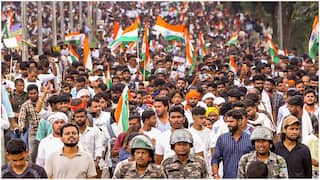
The CJP movement became powerful because it did not resemble a conventional political rally. Its young supporters had not been ferried in on party buses. They did not wave identical flags, wear centrally distributed caps or chant slogans drafted inside a political office. They arrived with their own anger, their own placards and their own credibility. That independence was CJP’s greatest strength.
But the moment the movement became nationally visible, India’s political parties discovered it. Not the examination crisis-that had existed for a long time. They discovered the political value of the examination crisis. And that is where support began turning into appropriation.
#WATCH | CJP Protest: Opposition Locked in a Credit-Claiming Contest?@MeghaSPrasad #CockroachJantaParty #CJP #Protest #Politics #ABPLive pic.twitter.com/xpAA89hiHp
— ABP LIVE (@abplive) July 22, 2026
When Support Becomes Ownership
Rahul Gandhi and several Opposition leaders took their protest close to the Prime Minister’s official residence, where Congress demanded accountability for the police action, a debate in Parliament and resignations extending beyond Education Minister Dharmendra Pradhan to the Prime Minister and the Home Minister. Gandhi also appealed to the public to join the protest.
Congress has every democratic right to demand the Prime Minister’s resignation. But CJP must answer one basic question: Is that now its demand too?
The original movement demanded examination reforms, accountability for repeated failures and the resignation of the Education Minister. Then a political party entered the picture, and suddenly the demand travelled all the way to the Prime Minister’s Office. That may be a legitimate Congress position, but it is not automatically the position of every student standing at Jantar Mantar.
A movement does not become stronger simply because its list of resignations becomes longer. Sometimes the issue grows. Sometimes it simply loses focus.
Rahul Gandhi’s protest immediately opened another battle-not between the government and the students, but between Opposition parties themselves.
AAP leader Sanjay Singh alleged that Prime Minister Narendra Modi had effectively enabled Rahul Gandhi’s protest outside his residence to weaken the CJP agitation.
Atishi described it as a BJP-Congress 'jugalbandi', questioning why the government responded swiftly to Rahul Gandhi while CJP and Sonam Wangchuk had been protesting for weeks. The BJP then used those remarks to accuse CJP of functioning as an AAP proxy.
And CJP entered the argument too. Instead of limiting itself to examination reform, it found itself defending Rahul Gandhi, responding to Sanjay Singh and clarifying which political leader was genuinely supporting the movement.
Just observe how far the conversation had travelled.
Students originally asked: Who is responsible for repeated examination failures?
Political parties began asking: Who is the real Opposition?
AAP says Congress is weakening CJP. Congress says it is standing with the students. The BJP says CJP is an AAP proxy. And CJP is trapped in the middle, behaving like a relationship counsellor for parties that cannot stand one another.
The students wanted an answer key. They received an Opposition family dispute.
Also Read: #NoCap: Why India's Gen Z Is Losing Faith In Political Parties
From Examination Reform To Political Rivalry
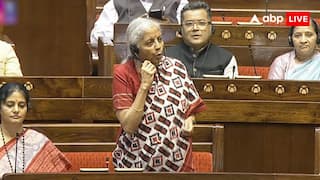
The same competition for ownership then entered Parliament. Opposition members disrupted proceedings, demanding a debate and Dharmendra Pradhan’s resignation. The government said it was ready for a detailed discussion.
Speaker Om Birla told protesting MPs to submit their notices and assured them that time would not be a constraint for those wishing to speak. Pradhan also met the Speaker as arrangements for a discussion were considered.
That should have brought the focus back to the examination crisis. Instead, another political contest began.
Akhilesh Yadav objected that the BJP and Congress had been allowed to speak while the Samajwadi Party was being denied its opportunity. His frustration exposed the deeper tension within the Opposition: Congress wants to lead the response, while its allies have no intention of becoming background artists in Rahul Gandhi’s production.
Outside Parliament, parties competed to stand closest to the protesters, while inside Parliament they competed for speaking time. The paper had already leaked; now even the subject of the debate was leaking away.
The issue was examination reform. The argument became visibility. The question was student accountability. The contest became political ownership.
Congress wants to lead. AAP wants to expose Congress. The Samajwadi Party wants its share of the microphone.
And every party wants to appear closest to the same young people who originally took to the streets because they had lost faith in established political parties.
Political support is not the problem. Movements need elected representatives. Street pressure must eventually reach Parliament if it is to produce legislation, investigations or policy changes. But elected representatives should carry the movement’s demands into Parliament. They should not carry their rivalries back onto the movement’s stage.
The Movement Must Draw Its Own Boundaries. This is where CJP must also accept responsibility.
Before its Parliament march, CJP asked supporters to carry only the national flag and avoid political or organisational flags. But the organisation had itself invited leaders from across the political spectrum, including Rahul Gandhi and JP Nadda, to join and support the protest.
So, essentially, the instruction was simple: leave your party flag outside, but bring your entire party agenda onto the stage.
That was never going to remain politically neutral.
Indian politicians do not arrive at a stage merely to sit quietly and listen. They come with a slogan, a constituency, a media strategy and a natural appetite for the microphone. CJP opened the door. Political parties did not even have to force it open.
Once that door was opened, CJP needed a clear rulebook. Support the movement. Raise its demands in Parliament. Provide legal and medical assistance. But do not rewrite its goals. Do not turn examination reform into an election campaign. And do not treat a student platform as an audition for the role of chief Opposition leader.
CJP’s negotiating strategy is also beginning to look uncertain. On Monday, its representatives visited JP Nadda’s residence and submitted their demands. Two days later, the organisation rejected another invitation to the same venue, insisting instead that the government come to Jantar Mantar or meet at a neutral location.
Changing strategy is not necessarily wrong. But a serious movement must explain why its strategy has changed. Otherwise, firmness begins to resemble improvisation, and negotiation starts looking like political theatre.
CJP must now answer three questions: What are its precise and non-negotiable demands? Who is authorised to speak on its behalf? And what role are established political parties allowed to play?
Supporters? Guests? Negotiators? Or co-owners?
Because a movement cannot call itself independent while allowing every visiting politician to rewrite its headline. It cannot ban party flags while permitting party agendas. And it cannot complain about political hijacking after inviting competing politicians onto its platform without setting clear boundaries.
The movement’s independence remains its greatest asset. It is also the first thing this political stampede will destroy.
Political parties do not always kill movements by opposing them. Sometimes they embrace them so tightly, that the movement loses its own breath.
Young people gave CJP a megaphone. CJP must not turn it into an open microphone for every politician searching for relevance.
This movement began because an examination paper leaked. It is now threatened by a leak of focus, leadership and credit. And its greatest danger may no longer be that the government refuses to hear it.
Its greatest danger may be that so many politicians begin speaking on its behalf, that nobody can hear the students anymore.
Also Read: No Cap With Megha Prasad | Who Is Really Benefiting From Sonam Wangchuk's Hunger Strike?
Before You Go
JHARKHAND: Hemant Soren Government Faces Heat From Opposition and Alliance Partners
Top Headlines