100 Years Of Railway Electrification: It All Started With Bombay's Victoria Terminus — See Timeline
Indian Railways celebrates 100 years of electrification, marking a transition from steam-powered locomotion to a more energy-efficient and environmentally-friendly system. The journey began in 1925.

100 Years Of Indian Railway Electrification: The Indian Railways completes a century of electrification this month, a transition that was required a hundred years ago driven by the demand to have a more energy-efficient and environmentally-friendly system as steam-powered locomotion was not able to keep pace with the growing need for urban mobility. The journey, which began in 1925, has evolved through various technological advancements that have shaped the country's vast railway network, which is fourth largest in the world.
Indian Railways, An Over 160-Year History
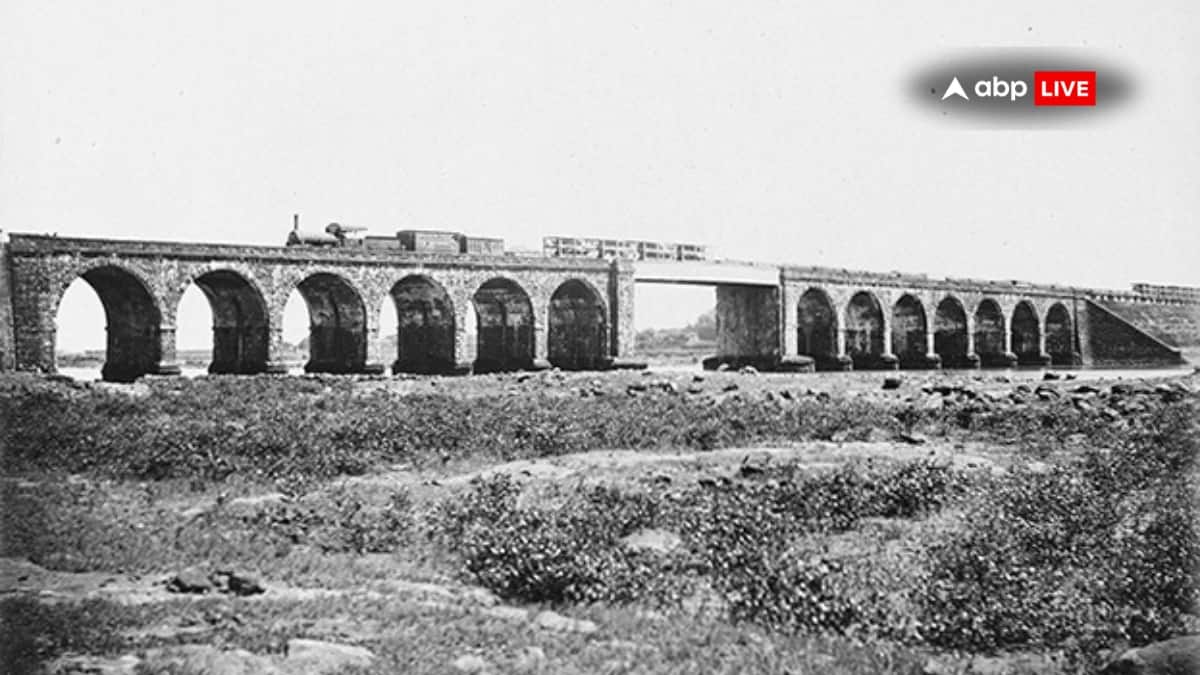
Indian Railways has a history spanning over 160 years. The first passenger train ran on April 16, 1853, between Bori Bunder (erstwhile Bombay) and Thane, covering 34 km with three locomotives — Sahib, Sultan, and Sindh, as per Indian Railway records.
Soon after, engineers took on the massive task of constructing a railway over Bhore Ghat, connecting Bombay to Poona at an elevation of 2,000 feet.
The first railway workshop was set up in Jamalpur, Bihar, in 1862, which later became a major industrial hub. Delhi Junction, the first station in North India, was established in 1864 when trains from Howrah, India's oldest railway station, reached Delhi. Lucknow followed in 1867 as the headquarters of the Oudh and Rohilkhand Railway, now part of Northern Railway.
In 1895, India manufactured its first steam locomotive, F-734, at the Ajmer Workshop, marking the beginning of indigenous locomotive production. It was not before another 30 years that Indian Railways saw electrification.
ALSO READ ON ABP LIVE | India's First Electric Engine 'Sir Leslie Wilson' Awaits A Home
Timeline Of Indian Railways Electrification
1925: The Beginning
On February 3, 1925, electric traction was introduced in India with a 1.5 KV DC system. The first electric train ran between Bombay's Victoria Terminus (now Chhatrapati Shivaji Maharaj Terminus) and Kurla along the Harbour Line of Central Railway. The event was flagged off by Sir Leslie Orme Wilson, the then Governor of Bombay. The electric locomotive was later named after Sir Leslie Wilson.
1957: Adoption of 25kV AC System
Recognising the advantages of high-voltage alternating current (AC) traction, Indian Railways decided to adopt the 25 kV 50 Hz AC system, based on French (SNCF) technology. The first electrified section under this system was between Burdwan and Mughalsarai in 1957, followed by Tatanagar-Rourkela on the Howrah-Bombay route.
1959-1988: Expansion Of AC Electrification
- The first full train run using 25kV AC took place on December 15, 1959, between Kendposi and Rajkharswan.
- The Howrah-Gaya section was electrified by 1960, and Kanpur was reached by 1972.
- The entire Howrah-Delhi route was electrified on August 5, 1976.
- The Bombay-Delhi Western Railway (WR) route was fully electrified by February 1, 1988.
- Central Railway (CR) route achieved full electrification by June 1990.
1995: 2x25 kV AC System Implementation
A pilot project using the 2x25 kV AC system was commissioned between Bina and Katni on January 16, 1995, and later extended to Bishrampur. While initially limited in scope, this system is now planned for use in Dedicated Freight Corridors to support heavier traffic.
1993-2006: Introduction Of 3-Phase Technology
- In 1993, Indian Railways signed an agreement with ABB Transportation (Switzerland) for three-phase locomotives.
- The WAP5 (passenger) and WAG9 (freight) classes were introduced, featuring GTO-based traction converters and microprocessor control.
- In 2000, CLW developed the WAP7 class, a powerful passenger locomotive with a 6000 hp output.
- By 2006, an upgraded freight locomotive (WAG9H) with a 135-tonne adhesive weight was introduced.
2004-Present: Advancements in Propulsion Technology
GTO technology began to be replaced with Insulated-Gate Bipolar Transistor (IGBT)-based propulsion systems.
CLW initiated the development of IGBT-based locomotives as part of the Railway Ministry’s 2004-05 budget plan.
Railway Electrification Milestones
By March 2008, Indian Railways had electrified 18,145 route kilometres, covering 28.65% of the total railway network and 36.42% of the broad-gauge system.
To reduce reliance on petroleum, electrification has been progressively extended to improve efficiency and sustainability.

DC-AC Conversion: Shift From 1.5 kV to 25 kV AC
- The 1.5 kV DC system, used mainly in Mumbai, was reaching its operational limits, prompting conversion to 25 kV AC.
- This shift reduced maintenance costs, enhanced energy efficiency, and improved operational reliability.
- Major conversion projects have improved long-haul train operations by reducing traction changes and increasing throughput.
Train Lighting and Air Conditioning
- Passenger coach lighting was introduced in 1897, and electric lighting became standard on Jodhpur Railway in 1902.
- The first air-conditioned train was introduced in 1956 between Howrah and Delhi.
- In 1979, two-tier AC coaches were introduced, followed by three-tier AC coaches in 1993.
EMUs And Main-Line EMUs (MEMUs)
- Mumbai suburban railways adopted 1.5 kV DC EMUs in 1925, later transitioning to AC-DC EMUs with regenerative braking.
- MEMUs were developed to extend EMU operations beyond suburban routes, with improved efficiency and higher speeds.
Before You Go
Breaking: Kangana-Ramdev Row Escalates as ‘Character’ Remark Sparks Fresh Political Storm
Top Headlines