Explorer
India should continue engaging with Pakistan despite the current tensions, says Chidambaram
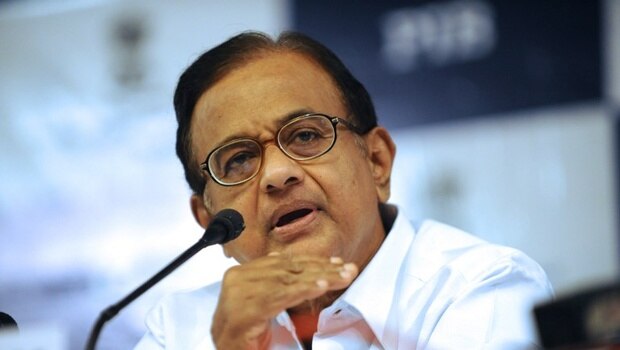
New Delhi: India should continue engaging with Pakistan despite the current tensions between the two South Asian neighbours, former Union Minister of Home and Finance P. Chidambaram said on Friday. "You have to continue to engage with Pakistan," Chidambaram said at a panel discussion here after former Prime Minister Manmohan Singh officially released a new book "Choices: Inside the Making of India's Foreign Policy" written by former National Security Advisor and Foreign Secretary Shivshankar Menon. "Eventually you have to live with your neighbours and you have to learn to live with them," he said in the discussion moderated by journalist broadcaster Karan Thapar. New Delhi has refused to sit for a peace dialogue with Islamabad following terror attacks emanating from Pakistan and bilateral relations have gone from a high level of optimism at the end of last year to absolute pessimism now. During External Affairs Minister Sushma Swaraj's visit to Islamabad last year, the two countries agreed to start a 10-point Comprehensive Bilateral Dialogue with the Foreign Secretaries of the two countries scheduled to work out the modalities for the process. Expectations further rose when Prime Minister Narendra Modi made an unscheduled stop at Lahore on his way from Kabul to New Delhi on December 25, 2015, on the occasion of his Pakistani counterpart Nawaz Sharif's birthday. But the whole process got derailed when Pakistan-based terror outfit Jaish-e-Mohammed (JeM) carried out a cross-border terror attack at the Pathankot Air Force base on January 2 this year that left seven Indian security personnel dead. New Delhi gave proof of JeM's involvement in the attack and demanded that Islamabad bring the perpetrators to justice. Relations further deteriorated when Indian security forces killed Hizbul Mujahideen terrorist Burhan Wani in July and Pakistan declared him a "martyr". Scores of people died in the resultant violence that sparked off in the Kashmir valley. In September, the JeM again carried out a cross-border terror attack on an army base at Uri in Jammu and Kashmir that killed 19 Indian soldiers. In what was seen as a retaliatory move, the same month the Indian Army carried out surgical attacks across the Line of Control (LoC) in Jammu and Kashmir inflicting heavy casualties on terror camps in Pakistan-occupied Kashmir. Again on Tuesday, terrorists from across the border attacked an army camp at Nagrota in Jammu and Kahmir in which seven Indian soldiers were killed. Chidambaram was of the opinion that surgical strikes would not deter terrorists from across the border. He also said that the government should not have gone public with the army's surgical strike as it has put the Pakistan government too in the public and has forced it to go on the offensive. "Going public limits your options," he stated, adding that "you must heed public opinion, but you must also lead public opinion". Chidambaram said India "gained enormously" by not retaliating against Pakistan after the November 2008 Mumbai terror attacks that claimed more than 160 lives. "India gained enormously in esteem in the world for not retaliating after the attacks," Chidambaram said At least 166 people were killed when 10 members of the Pakistan-based terror outfit Lashkar-e-Toiba carried out attacks across multiple locations in India's commercial capital Mumbai from the night of November 26, 2008, till the dawn of November 29, 2008. Chidambaram said that after he was made Home Minister on December 1, 2008, he realised that retaliation was "not an option, it was not feasible". Menon, who was the Foreign Secretary at the time of the Mumbai attacks, said that he too had felt that retaliatory action should have been taken Pakistan but later realised that it was a "purely emotional reaction". Chidambaram said that after the ceasefire agreement was signed between India and Pakistan in 2004 the number of people killed along the LoC had gone down substantially since then till 2012-2013. Srinath Raghavan, Senior Fellow at the Centre for Policy Research who was also part of the panel, said that since the September surgical attack, the LoC has become "very active" and the ceasefire agreement was now hanging by a thread Asked what happened after 2013, Chidambaram said there seemed to be no unified command in the home ministry now. He recalled that during the UPA government's time, such a command used to meet daily at the home ministry to take stock of the security situation in the country. The former Minister of Home and Finance was of the view that the current government's policy has swung from "over enthusiasm" to the other extreme.
Before You Go
JHARKHAND: Hemant Soren Government Faces Heat From Opposition and Alliance Partners
Top Headlines
India

Govt expected to find ways to raise additional Rs 1 crore needed for girl's treatment of girl: MP HC
India

'All They Want Is Road': Saurav Das Backs Kids' Protest Over Poor Roads In UP
India

'Bring Their CVs': Prashant Kishor Promises Jobs For 10,000 Bankipur Youths
India

‘More Than 90 Killed’: MEA Urges World To Hold Pakistan Accountable Over PoJK Violence





See Today's Weather 
powered by