‘Did Nothing After 26/11’: EAM Hits Back At Congress, Trains Guns At Rahul Gandhi Over China 'Warning'
In Lok Sabha, Jaishankar defended Operation Sindoor and India's anti-terror approach, criticising the opposition's "inaction" after 26/11. He called out Rahul Gandhi for seeking briefings from the Chinese ambassador during the Doklam crisis.


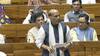
External Affairs Minister S Jaishankar, speaking in the Lok Sabha, hit out at the Opposition for questioning the Centre’s decisions on Operation Sindoor and India’s approach to terrorism. Drawing a sharp contrast with the previous government’s response after the 2008 Mumbai attacks, Jaishankar accused critics of exhibiting “temerity” despite remaining inactive during national crises.
“We were asked, why did you stop at this time? Why did you not go further? This question is being asked by people who, after 26/11, felt that the best action was inaction,” he remarked.
“…26/11 happened in November 2008. What was the reaction? The reaction was Sharm-el-Sheikh. In Sharm-el-Sheikh, the then government and the Pakistani Prime Minister agreed that terrorism is a main threat to both countries. Now, today, people are saying America is hyphenating you, Russia is hyphenating you—that is what I heard Deepender Hooda ji say. You are hyphenating yourself. You did not need a foreign country to say please link India to Pakistan… And worst of all, they accepted a reference to Balochistan in that. Those who did nothing are now asking us, ‘Why didn’t you do more?’” he added.
#WATCH | During the discussion on Operation Sindoor in the House, EAM Dr S Jaishankar says, "We were asked, why did you stop at this time? Why did you not go further? This question is being asked by people who, after 26/11, felt that the best action was inaction."
— ANI (@ANI) July 28, 2025
"...26/11… pic.twitter.com/r80uus7djo
In a fierce rebuttal, Jaishankar said, “People who did nothing have the temerity to question the government which brought down Bahawalpur and Muridke terror sites.” He added that few could have imagined these sites would ever be dismantled, asserting, “Who thought that terror sites in Bahawalpur and Muridke would be brought down the way they were?”
‘Thanks to India’s Diplomacy, TRF Was Designated Global Terrorist Group’: Jaishankar
Underscoring India’s diplomatic efforts post-attack, Jaishankar said, “Our responsibility from a foreign policy approach was to shape the global understanding of the Pahalgam attack.” He said India worked to expose Pakistan’s long-standing support for terrorism and demonstrate how the attack aimed to target Jammu and Kashmir’s economy and provoke communal discord.
“All diplomatic briefings were aimed at these two objectives: zero tolerance for terrorism and the right to defend our people against terrorists,” he added.
The Minister also pointed to the global designation of The Resistance Front (TRF) as a terrorist organisation by the United States, attributing it to India’s sustained diplomatic pressure. He credited India’s unified foreign policy outreach, including parliamentary delegations that travelled to various nations to brief them on Operation Sindoor and New Delhi’s position on terrorism.
Highlighting India’s diplomatic achievements, Jaishankar noted, “Thanks to India’s diplomacy, TRF, which owned up [to the] Pahalgam attack—[was] designated as [a] global terrorist organisation.”
He stated that seven delegations visited 33 countries and were received with respect. He asserted that the delegations comprised government and opposition MPs, retired diplomats, and public-spirited citizens, who succeeded in presenting India’s stance on terrorism to the world. “These seven delegations did the nation proud,” he declared.
‘Not Olympics, Not Secret Deals—My China Visit Was About Terror’: Jaishankar
Clarifying his visit to Beijing for the SCO Foreign Ministers’ meeting, Jaishankar said, “Yes, I went to China to make our position very clear about de-escalation, trade restriction and terrorism. I did not go to China for the Olympics or secret deals.”
He further stated, “The House should know people were watching Olympics when China was issuing staple visas for people from Arunachal Pradesh and Jammu and Kashmir.”
Jaishankar also criticised previous governments’ handling of Chinese influence. “Opposition lectures us on dealing with China but they allowed 2G and 3G from China; our government made indigenous 5G,” he said.
#WATCH | During the discussion on Operation Sindoor in the House, EAM Dr S Jaishankar says, "Yes, I went to China to make our opposition very clear about de-escalation, trade restrictions and terrorism.
— ANI (@ANI) July 28, 2025
I did not go to China for the Olympics. I did not go to China for secret… pic.twitter.com/vhlhs1EWTu
He dismissed Congress’s warnings about Pakistan-China collaboration, saying such a nexus has existed for decades. “We are getting warnings about Pak-China collaboration, when this has been going on for 60 years,” he said, accusing the Opposition of feigned alarm.
‘Rahul Gandhi Took Briefing from Chinese Envoy During Doklam Crisis’: Jaishankar
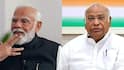
Directly attacking Leader of Opposition in Lok Sabha, Rahul Gandhi, Jaishankar said, “I want to remind this House that the Doklam crisis was on. The Leader of Opposition decided to get a briefing not from the government, not from the MEA, but from the Chinese ambassador. He took his briefing from the Chinese ambassador when our military was confronting the Chinese military in Doklam.”
VIDEO | "...When Doklam crisis was on, the Leader of Opposition (Rahul Gandhi) decided to be briefed not from the government of India, not from the MEA, but from the Chinese ambassador, " says EAM S Jaishankar (@DrSJaishankar) in Lok Sabha.
— Press Trust of India (@PTI_News) July 28, 2025
(Source - Third party) pic.twitter.com/5lzjgVVhy5
The remarks came as Congress MP Gaurav Gogoi, during the discussion, raised questions over the sudden cessation of Operation Sindoor. He said, “The entire country, and the Opposition, were supporting PM Modi. Suddenly, on 10th May, we got to know that there had been a ceasefire. Why? We wanted to know from PM Modi that if Pakistan was ready to kneel down, then why did you stop, and to whom did you surrender?”
Referring to US President Donald Trump’s repeated assertions, Gogoi added, “The US President has said this 26 times that he forced India and Pakistan to announce a ceasefire,” alleging that India had succumbed to international pressure.
Criticising India’s foreign policy positioning, he questioned international narratives that continued to hyphenate India with Pakistan. “How can we say that our foreign policy is a success? Even our allies have hyphenated India-Pakistan. In the Brazil document, the assault in Pakistan was mentioned and not India. What do you have to say about IMF and World Bank aid to Pakistan? This money will go to the places we attacked, as Pakistan’s Army holds the remote control of their government.”
“What were the circumstances that, despite having the best fighter jets and pilots in the world, we had to attack from a distance? Why couldn’t we go closer? Why did the CDS have to say that we made some mistakes on the first day but later ratified them? Lt Gen Rahul R Singh said Pakistan was right in front, but China was supporting them. I want to ask Defence Minister Rajnath Singh why he did not name China even once in his speech. The Army is saying we may have to face not just two fronts but three, and that there may be convergence between Pakistan, China, and Bangladesh. Our leader, Rahul Gandhi, himself had warned the government about this two-front situation. I want the defence minister and the prime minister to tell the House how much help Pakistan is getting from China,” he remarked.
Highlighting India’s diplomatic push at the United Nations, Jaishankar said, “Pakistan is a member of the UN Security Council and we are not. We had to achieve our aim there.” He pointed to the UNSC statement dated April 25, which condemned terrorism “in all its forms and manifestations” and stressed accountability for perpetrators and sponsors.
Five-Point ‘New Normal’ Against Cross-Border Terrorism
Jaishankar described the post-Pahalgam military action as a defining shift in India’s counter-terrorism strategy. “The challenge of cross-border terrorism continues but Operation Sindoor marks a new phase. There is now a new normal,” he told the House.
Outlining the components of this “new normal”, he said:
“One — terrorists will not be treated as proxies, two — cross-border terrorism will get an appropriate response, three — terror and talks are not possible together and there will only be talks on terror, four — not yielding to nuclear blackmail, and finally — terror and good neighbourliness cannot co-exist, blood and water cannot flow together. This is our position.”
Jaishankar also called for a united national stance against terrorism, commending parliamentary delegations that engaged foreign governments to explain India’s position following the Pahalgam attack.

Top Headlines