Explorer
Chief Justice Of India's Office Comes Under RTI Ambit, Says Supreme Court
In a landmark verdict on January 10, 2010, the Delhi High Court had held that the office of the chief justice of India comes within the ambit of the Right to Information (RTI) law, saying judicial independence was not a judge's privilege, but a responsibility cast upon him.
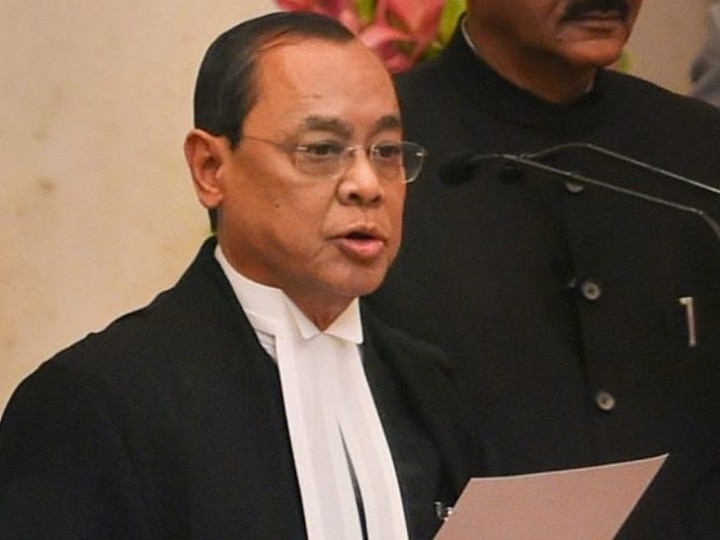
Chief Justice Ranjan Gogoi
New Delhi: The Supreme Court on Wednesday held that the office of Chief Justice of India is public authority under the purview of the transparency law, Right to Information Act (RTI). A five-judge constitution bench headed by Chief Justice Ranjan Gogoi pronounced the judgement a short while ago and upheld the Delhi High Court verdict of 2010. Other members of the bench are Justices N V Ramana, D Y Chandrachud, Deepak Gupta and Sanjiv Khanna. The apex court in its major verdict said the judicial independence has to be kept in mind while dealing with transparency. The bench ruled that "only names of judges recommended by Collegium can be disclosed, not reasons". It stated that RTI cannot be used as tool of surveillance. "Method of appointment has impact on independence of judiciary,"the court observed. The notice regarding the pronouncement of the judgement was made public on the apex court's official website on Tuesday afternoon. A five-judge constitution bench had on April 4 reserved its verdict on the appeals filed in 2010 by the Supreme Court secretary-general and its central public information officer against the high court and the central information commission's (CIC's) orders. The bench, headed by the chief justice, had wrapped up the hearing, saying nobody wants a "system of opaqueness", but the judiciary cannot be destroyed in the name of transparency. "Nobody wants to remain in the state of darkness or keep anybody in the state of darkness," it had said. "The question is drawing a line. In the name of transparency, you can't destroy the institution." In a landmark verdict on January 10, 2010, the Delhi High Court had held that the office of the chief justice of India comes within the ambit of the Right to Information (RTI) law, saying judicial independence was not a judge's privilege, but a responsibility cast upon him. The 88-page judgement was then seen as a personal setback to the then CJI, K G Balakrishnan, who has been opposed to disclosure of information relating to judges under the RTI Act. The high court verdict was delivered by a three-judge bench comprising Chief Justice A P Shah (since retired) and Justices Vikramjit Sen and S Muralidhar. The bench had dismissed a plea of the Supreme Court that contended bringing the CJI's office within the RTI Act would "hamper" judicial independence. Justice Sen retired as the judge of the apex court, while Justice Murlidhar is a sitting judge of the high court. The move to bring the office of the CJI under the transparency law was initiated by RTI activist S C Agrawal. His lawyer Prashant Bhushan had submitted in the top court that though the apex court should not have been judging its own cause, it is hearing the appeals due to "doctrine of necessity". The lawyer had described the reluctance of the judiciary in parting information under the Right To Information Act as "unfortunate" and "disturbing", asking: "Do judges inhabit different universe?" He had submitted that the apex court has always stood for transparency in functioning of other organs of State, but it develops cold feet when its own issues require attention. Referring to the RTI provisions, Bhushan had said they also deal with exemptions and information that cannot be given to applicants, but the public interest should always "outweigh" personal interests if the person concerned is holding or about to hold a public office. Dealing with "judicial independence", he said the National Judicial Accountability Commission Act was struck down for protecting the judiciary against interference from the executive, but this did not mean that judiciary is free from "public scrutiny". "This is not independence from accountability. Independence of judiciary means it has to be independent of the executive and not independent from the common public. People are entitled to know as to what public authorities are doing," Bhushan had said. The deliberations of the collegium in appointing and overlooking judges or lawyers should be made public and information can be parted with under RTI on case-to-case basis keeping in mind the larger public interest, the lawyer had said. The bench had said people, of late, were opting out and do not want to become judges because of the fear of negative publicity. "On interaction, the reason appears to be the possibility of the negative observations, whether rightly or wrongly, being brought into the public domain," it had observed. In such a case, besides losing judgeship and reputation, the professional and family life of the person are adversely affected, it had said. The apex court had said it had brought about changes in the functioning of the collegium system and said now members have started interacting with prospective candidates.
Before You Go
UP News: Atiq Ahmed's Son Aaban Dies in Jhansi Road Accident While Going to Meet Brother
Top Headlines
India

PM Modi Shares Reel, Urges People To Post 'Get Ready With Me' Videos On Handloom Day
India

'I Trust Gen Z Blindly; They're Not Anti-National': RSS Chief Mohan Bhagwat
News

BJP MLA's 'Girl Child' Comment Sparks Uproar In Punjab Assembly
News

Opinion | India Should Move On With Bangladesh. Let 'Genocider, Mass Murderer' Hasina Return










See Today's Weather 
powered by