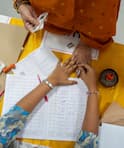
It's an ongoing exercise to revise electoral rolls in West Bengal. The process began in December last year, with an initial focus on 'unmapped' voters.
Explorer
Amartya Sen Warns ‘Hasty’ SIR In Bengal May Hurt Democracy
Earlier this month, Trinamool Congress leader Abhishek Banerjee claimed that the Election Commission had served Sen with a notice for an SIR hearing.

“Sometimes, the officials of the Election Commission themselves seem to lack enough time,” he said.
Source : PTI
- Amartya Sen criticizes West Bengal's hurried voter roll revision process.
- He warns the current exercise could undermine democratic participation.
- Sen highlights insufficient time for voters to submit eligibility documents.
Nobel laureate Amartya Sen has raised concerns over the ongoing Special Intensive Revision (SIR) of electoral rolls in West Bengal, warning that the exercise is being carried out with “undue hurry” and could undermine democratic participation ahead of the Assembly elections due in a few months.
Speaking to news agency PTI, Sen said that while electoral roll revisions can strengthen democracy if done carefully, the current process in Bengal falls short of that standard.
“A thorough review of electoral rolls done carefully with adequate time can be a good democratic procedure, but this is not what is happening in West Bengal at this time,” he said.
‘Exercise Being Done In A Hurry’
The 92-year-old economist stressed that such exercises require sufficient time and procedural care, which he said are “missing” in the current SIR process.
Sen said the revision was being conducted at a pace that leaves voters without adequate opportunity to submit documents needed to establish eligibility.
“The SIR is being done in a hurry,” he said, adding that people are not being given “sufficient opportunity” to prove their eligibility for the upcoming Assembly elections.
“This is both unjust to the electorate and unfair to Indian democracy.”
Special Intensive Revision In West Bengal
Hearings under the Special Intensive Revision began in West Bengal in December last year. At the time, a senior official had said that around 32 lakh ‘unmapped’ voters—those unable to establish linkage with the 2002 electoral rolls—would be called for hearings in the first phase.
Earlier this month, Trinamool Congress leader Abhishek Banerjee claimed that the Election Commission had served Sen with a notice for an SIR hearing.
According to a PTI report, Sen was summoned after the Election Commission flagged a “logical discrepancy” related to an age difference between him and his mother, Amita Sen, in the electoral rolls.
Sen Recounts His Own Experience With SIR Hearings
Drawing from his personal experience, Sen said the time pressure was evident even among Election Commission officials.
“Sometimes, the officials of the Election Commission themselves seem to lack enough time,” he said.
He recalled being questioned about his right to vote from his home constituency of Santiniketan, from where he has voted earlier and where his name and address are already on official records.
“When they questioned my right to vote from my home constituency in Santiniketan… they questioned me about my deceased mother’s age at my date of birth, even though, as a voter herself, my mother’s details, like mine, were stored also in their own official records,” he said.
Documentation Challenges For Rural-Born Citizens
Sen also highlighted the broader documentation challenges faced by many Indians, particularly those born in rural areas.
“Like many Indian citizens born in rural India (I was born in the then village of Santiniketan), I do not have a birth certificate, and my eligibility to vote required further paperwork to be presented on my behalf,” he said.
Before You Go
Political flash: Amit Shah targets Congress over Vande Mataram controversy in Rajasthan
Frequently Asked Questions
What is the Special Intensive Revision (SIR) of electoral rolls in West Bengal?
What concerns has Amartya Sen raised about the SIR process?
Amartya Sen expressed concerns that the SIR is being conducted with 'undue hurry' and insufficient time for voters to establish their eligibility. He believes this could undermine democratic participation.
Why was Amartya Sen summoned for an SIR hearing?
Amartya Sen was summoned due to a 'logical discrepancy' flagged by the Election Commission regarding an age difference between him and his mother in the electoral rolls. He recounted his own experience with the hearing, noting time pressure.
What challenges do rural-born citizens face during electoral roll revisions?
Many citizens born in rural India, like Amartya Sen, may lack birth certificates. This can create challenges in presenting the necessary paperwork to prove their eligibility to vote.

Top Headlines
World

Trump Orders 'Substantial' Cut In US-South Korea Military Drills, Cites Kim Jong Un Ties
World

Former Afghan Security Official Shot Dead By Unknown Gunmen In Pakistan’s Quetta
World

Iran Offers $30,000 Bounty To Capture Or Kill US Soldiers; Double Reward For Women
News

UGC NET 2026: NTA To Conduct Re-Exam For English, Commerce And Sociology







See Today's Weather 
powered by