Farooq Abdullah Convoy Car Hits Nilgai In Rajasthan, NC President Safe
The incident occurred when a vehicle of Delhi Police escorting Abdullah, hit Nilgai on the highway.

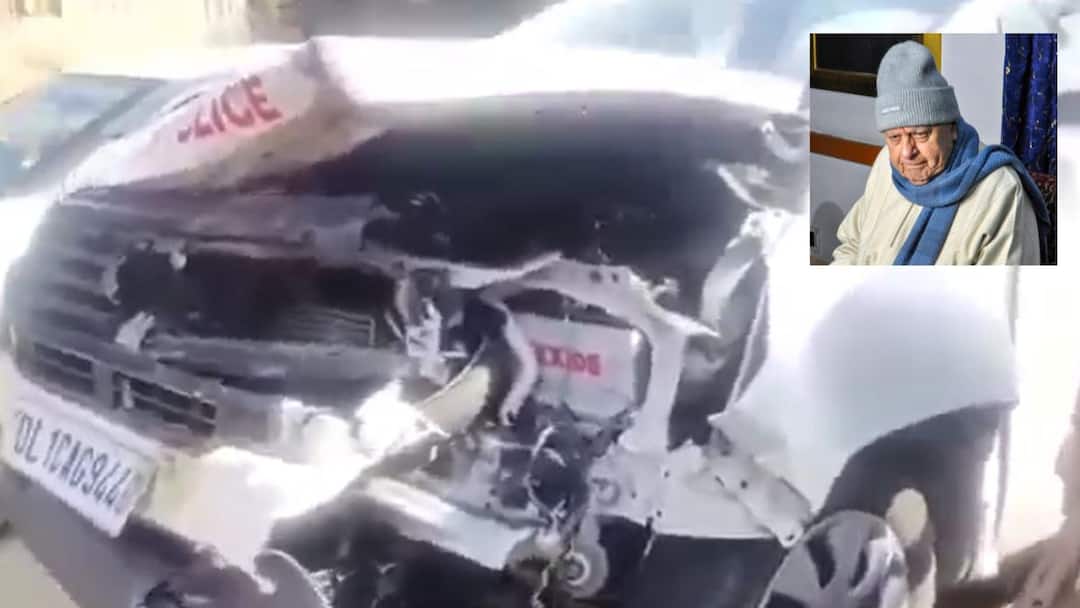
National Conference (NC) President and former Jammu and Kashmir Chief Minister Farooq Abdullah escaped unhurt after a car in his convoy collided with a Nilgai (Blue Bull) near Bhandarej, Dausa, in Rajasthan. The accident occurred at pillar number 80 on the Delhi-Mumbai Expressway while Abdullah was travelling to Ajmer to pay his respects at the Dargah of Sufi saint Khwaja Moinuddin Chishti.
The collision occurred when the Delhi Police escort vehicle struck the Nilgai (Blue Bull) on the highway. The high impact triggered the car’s airbags, minimising further damage and preventing injuries to the policemen inside.
The Sadar Police Station team is investigating the matter further.
ALSO ON ABP LIVE | From The PM Of J&K State To CM Of A Union Territory: 3 Generations Of Abdullahs Since India's Independence
According to reports, Rajasthan Police confirmed the NC President resumed his journey to Ajmer following the incident.
This is not the first time an accident has occurred involving Abdullah’s convoy. In 2019, an elderly man was critically injured after being hit by a vehicle in his cavalcade in Magam, central Kashmir.
Ahead of his Ajmer visit, the NC president on Wednesday had said that the doors of the civil secretariat, the seat of the Jammu and Kashmir government, are open for people to visit and have their grievances addressed.
"People have finally breathed a sigh of relief after a decade of undemocratic rule, during which they were treated as mere subjects," the former Jammu and Kashmir chief minister had said at his residence in Jammu.
Referring to the formation of the NC-led government in the Union Territory in October last year, he said the post-election era has ushered in a significant change in Jammu and Kashmir where people are now being treated with the respect and dignity that they deserve.
This shift, he said, marks a pivotal moment in the region's political landscape, highlighting the empowerment of its citizens and putting them at the centre stage.
Abdullah emphasised that the situation has changed, with the doors of the secretariat and other power corridors thrown open for the common people to visit and have their grievances addressed.
"They are now being respected as voters and placed at the centre stage of the administration," he said.
Top Headlines