Explorer
Budget 2019: How FM Nirmala Sitharaman Can Put Automobile Industry In Fast Lane
Since the industry has a multiplier effect, the meltdown has significantly affected original equipment manufacturers (OEMs), auto ancillary and metal sectors.
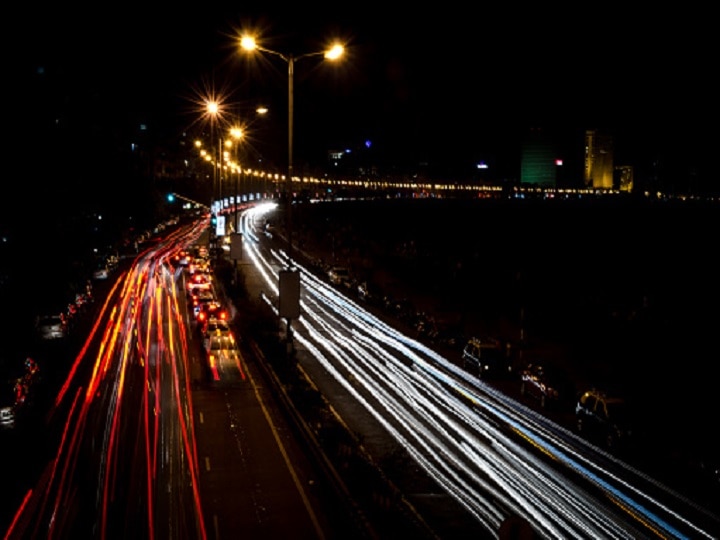
Automobile sector is facing one of its worst multi-layered crises in recent years. (Image: Getty)
Budget 2019: The shine is coming off; the bright aura around the Indian automotive industry has dulled considerably. The sector is facing one of its worst multi-layered crises in recent years. Automobile sales have plunged by 17.07 per cent during April 2019 - an all-time low in the last eight years since 2011. Since the industry has a multiplier effect, the meltdown has significantly affected original equipment manufacturers (OEMs), auto ancillary and metal sectors. The milieu of uncertainty against the high-voltage general elections, prohibitive rates of insurance and implementation of 28 per cent GST has taken a toll on the industry with almost every segment struggling to achieve their targets. In April-May 2019, production figures stood at a total of 4,879,375 units, including passenger and commercial vehicles, three-wheelers, two-wheelers and quadricycles, marking a significant drop of 9.31 per cent over the same period last year. Sale figures for 2018-19 too, do not paint a happy picture with almost all the segments being in the red. Passenger vehicle sales fell by 18.82 per cent in April-May 2019 while the drop in the commercial vehicle segment is 8.05 per cent. May was the worst month in 18 years as it witnessed a fall of 20.6 per cent in passenger car segment year-on-year. Three-wheeler sales declined by 6.56 per cent, while the corresponding two-wheeler figure comes as a blow - a steep negative of 11.68 per cent in April-May 2019. Automobile exports, too dwindled by 0.27 per cent. Recent data from the Federation of Automobile Dealers Associations (FADA) reveals that there have been a staggering 271 vehicle dealership closures in the last months. The cumulative result is a huge inventory pileup. The coming year is not going to be any easier. 2020 is earmarked for the transition to the new BS-VI emission norms while pulling the plug on old BS-IV registrations from April 1, 2020. Coupled with the current scenario of demand slowdown, liquidity crunch, troubled financing with non-banking finance companies (NBFCs) and BS-VI expectations, manufacturers have stopped production. Under the prevalent tax regime, automobiles attract peak GST rates of 28 per cent with an additional cess ranging across 1 to 15 per cent depending upon specifications and make of engine. Excise duties vary between 12.5 to 27 per cent; and sometimes even as high as 30 per cent. Add the 43 per cent. on dealer margins and you have the vital reason behind this unprecedented stagnation. The rationalisation of GST to a uniform base rate of 18 per cent across all categories of vehicles and automotive components will play a huge role in lowering prices and consequently stimulating demand. Envisaging a new India with electric and hybrid vehicles is not enough. To bring about this change, the government must introduce an incentivised tax policy and roadmap to spur investment and interest in electric vehicles (EVs). The current rates of custom duties for steel and aluminium alloys at 15 per cent and 10 per cent, respectively, should give way to the lowest tax bracket of 5 per cent, especially for electric cars. Reduction of import duties and a comprehensive strategy to concurrently develop transport infrastructure and a highway network is crucial for the EV dream to truly kick off. These factors cannot work in isolation but must be supported by a comprehensive scrappage policy for old vehicles and tax reforms for encouraging R&D. The current 150 per cent weighted tax deduction was brought down from the initial 200 per cent and is scheduled to be scrapped from April 2020. The importance of R&D cannot be undermined as technology will be the driver of growth in the next few years. I believe that the retention of weighted tax of at least 150 per cent or ideally 200 per cent on R&D spends will be the boost that the industry is looking for. As we stand today, the market shows no signs of recovery. The automobile industry is hoping for comprehensive remedial measures from the new government to bring out of stupor a sector that employs almost 37 million people and has contributed 7.5 per cent to the nation's GDP. (Author of the article is Sunjay Kapur, CEO of SONA Group and Managing Director of SONA BLW Precision Forgings Ltd. The views expressed are personal)
Top Headlines
Business

Share Markets Remain On Edge, Sensex 100 Points Up, Nifty Ends Under 24,400
Business

August 15 Stock Market Holiday: NSE, BSE Shut For Independence Day Weekend, Details Here
Business

Who Will Succeed N Chandrasekaran? Sir Dorabji Tata Trust Begins Tata Sons Succession Process
Business

Uber, Ola Users Can Still Tip Drivers, But Not Before Ride; Govt Issues Fresh Direction





See Today's Weather 
powered by