





The Bayon is designed to fill the gap between Hyundai's popular Venue and Creta models, offering a new SUV option for buyers.
Explorer
Hyundai Bayon Review: A New SUV Between The Creta And Venue
The Bayon is based on the Global K Enhanced platform and comes with a petrol engine for now while a CNG option will join in from January.

The Bayon actually looks big in the real world and it is near to the Creta with a length of 4.2m while being wider along with having more ground clearance at 205mm
Source : Somnath Chatterjee
- Hyundai Bayon SUV fills segment gap between Venue and Creta.
- Futuristic interior boasts twin 12.3-inch screens and AI assistant.
- Smooth 1.5L petrol engine offers comfortable, refined driving experience.
More SUVs across different price points seem to be the need of the hour and Hyundai now wants a larger slice of that segment with the Bayon. Its best seller and the highest seller in the segment the Creta remains and so does the popular Venue but a gap between the two needed to be filled.
The Bayon is based on the Global K Enhanced platform and comes with a petrol engine for now while a CNG option will join in from January. We drove the car in Goa to find out more.
How does it look?
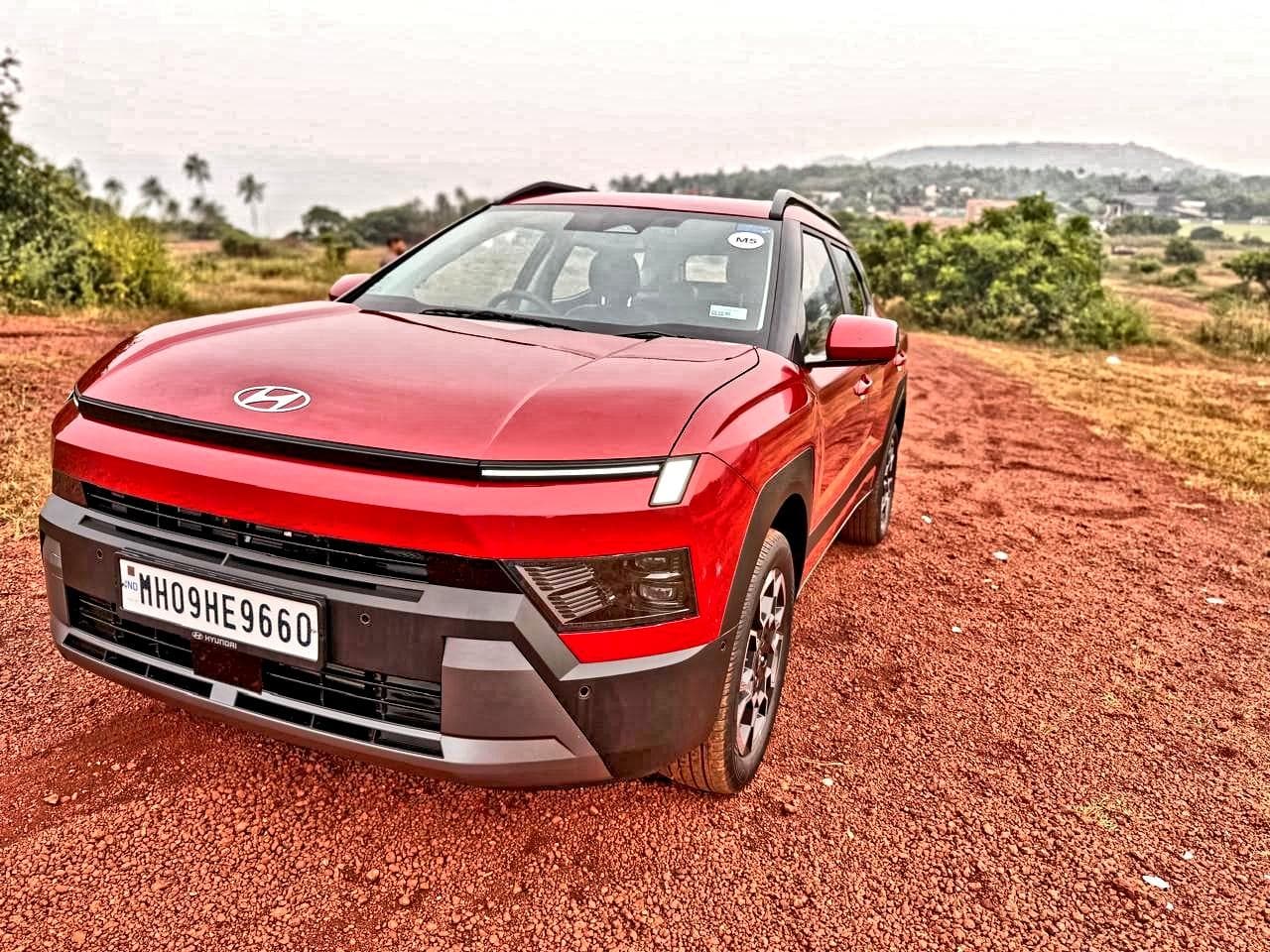
The Bayon actually looks big in the real world and it is near to the Creta with a length of 4.2m while being wider along with having more ground clearance at 205mm. The design is futuristic and different with the H shaped DRLs plus projector headlamps but does not have a full width light bar.
The 17 inch alloys, cladding and the overall look though stands out and paint finish is high quality too.

What about on the inside?
The interiors again are different but like the Venue the Bayon gets the latest set of 12.3-inch screens including a digital instrument cluster plus a vertical console below with haptic buttons. The quality is superb while not getting soft touch materials but the sense of occasion and the overall fit/finish being high.
The touchscreen is slick to use and neatly divided into sub menus too while it gets a lot of tech including an AI assistant which is conversational rather than just saying commands. We tried it and it works while being quick with the answers as well.

The features list meanwhile has a 360 degree camera which has a crisp display quality plus a powered driver seat, wireless charginging, ventilated seats, panoramic sunroof which can be opened via voice commands, Bose audio system, OTA updates and a rear recline seat along with ADAS features.
The rear seat is comfortable enough for two passengers but feels shorter on space vs a Creta while missing a middle headrest or sunblinds too. The boot space is a massive 500l plus and the loading lip isn't high as well.

How does it drive?
The Bayon has a 1.5l naturally aspirated petrol which develops 115bhp along with either a CVT automatic or a 6-speed manual. We drove both while the automatic impressed us the most with its smooth nature which gels with the engine.
The Bayon felt refined and the engine is quiet while being tractable as well as being smooth in stop go traffic. The power delivery is linear.
The automatic gets drive modes placed on the steering wheel plus a dash boost mode which works when you are in normal mode and gives it more throttle. The engine does not have the turbo petrol like punch but offers decent performance on the highway too and works as an everyday SUV.
What is impressive is the ride quality which is more comfortable than the current Venue or Creta while it absorbs bad roads quite well. The steering wheel is the latest design and offers more grip while being light as ever but feedback has improved over earlier Hyundai cars.
The manual version meanwhile offers a light clutch and slick shifts while there is plenty of low end torque while we still prefer the automatic which suits the Bayon more. Mileage in the real world would be 10-12kmpl.

Is it worth the price?
The Bayon is priced between Rs 10-18 lakh and carves its own personality away from the Creta or Venue. We like the way it looks, the quality as well as the interior along with its smooth 1.5 petrol.
However, we feel it is priced too close to the current Creta while the rear seat isn't the most spacious as well while enthusiasts will miss a turbo petrol which the Venue has.
However, the Bayon makes sense for those who don't want to stretch to a Creta but want more space than a Venue. Our recommendation is the iVT version.
Frequently Asked Questions
What market segment does the Hyundai Bayon aim to fill?
What engine options are available for the Hyundai Bayon?
Currently, the Bayon comes with a 1.5L naturally aspirated petrol engine. A CNG option is expected to be introduced from January.
What are some notable interior features of the Bayon?
The Bayon features dual 12.3-inch screens, a conversational AI assistant, and a panoramic sunroof. Key amenities include ventilated seats, a 360-degree camera, and a Bose audio system.
How does the Hyundai Bayon perform in terms of ride quality?
The Bayon offers impressive ride quality, being more comfortable than the current Venue or Creta. It effectively absorbs bad road conditions.
What is the price range of the Bayon and who is its target audience?
Priced between Rs 10-18 lakh, the Bayon targets buyers who want more space than a Venue but don't wish to stretch to a Creta.

Advertisement
Top Headlines
India

Congress MP Imran Masood Faces Rebuke From Own Party Leader Over Mohammed Siraj Remark
News

NEET-UG 2026 Paper Leak Case: All Accused Produced Before Rouse Avenue Court
News

‘Not An Accident, Result Of BJP Govt’s Negligence’: Rahul On Manipur Liquor Deaths
India

PM Modi Inaugurates Nitish Setu In Bihar At Rs 4,280 Crore Cost, Naming Sparks BJP-RJD Row


Advertisement







Advertisement




