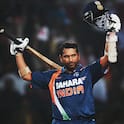
Sourav Ganguly Turns 53: How Dada Built The Generation That Changed Indian Cricket
Sourav Ganguly turns 53: A tribute to Dada’s fearless leadership and how he built a generation of Indian cricket legends, shaping the team’s golden era.

Sourav Ganguly, the man who reimagined what Indian cricket could be, celebrates his 53rd birthday today. Fondly known as "Dada," Ganguly's legacy goes far beyond the 18,575 international runs and 38 centuries he amassed across 424 matches. He wasn’t just a prolific left-handed batter—he was a transformational leader who reshaped the very soul of Indian cricket.
A Leader Who Rose When India Needed One Most
When Ganguly took the reins of the Indian team in 2000, the sport in India was reeling. The late ’90s had brought scandal, shaken trust, and left the team searching for direction. But Ganguly didn’t just step in as captain—he brought in a new attitude. Fearless. Fiery. Unapologetically bold. From the moment he led the side, it was clear: Indian cricket would no longer play second fiddle to anyone.
Under his leadership, India rediscovered its voice. The team began to fight harder, dream bigger, and most importantly—believe.
A Birthday Tribute from Indian Cricket’s Apex Body
The Board of Control for Cricket in India (BCCI) honored Ganguly with a heartfelt message on social media, spotlighting his remarkable dual role as both captain and administrator. The tribute read:
“424 intl. matches, 18575 intl. runs, 38 intl. centuries. Here’s wishing former #TeamIndia Captain and former BCCI President Sourav Ganguly a very Happy Birthday. @SGanguly99”
It’s a testament to how his contributions have continued to shape Indian cricket both on and off the field.
The Firebrand Captain Who Took On the World
Gen Z saw what Virat Kohli does on the cricket field with his aggression but long before him the millennials experiened a high frequency aggression by DADA, who became the synonymous with aggressive captaincy. He didn’t care for reputations or records. Whether facing Australia in Brisbane or England at Lord’s, he carried himself—and his team—with the belief that India belonged among the best.
His now-iconic shirtless celebration at the Lord’s balcony after winning the NatWest Series in 2002 wasn’t just a moment of triumph—it was a declaration. India was done being polite. Done playing safe. Ganguly’s team would fight back, on any pitch, against any opposition.
Spotting Stars Before They Were Ready
Ganguly’s greatest legacy, perhaps, lies not in his stats but in the careers he launched. He had a knack for identifying raw talent—and backing it when it mattered most.
Names like Virender Sehwag, Yuvraj Singh, Harbhajan Singh, Zaheer Khan, and MS Dhoni might never have reached their heights if not for Ganguly’s unshakable belief in them. He gave these young players room to fail, learn, and flourish. And that, in the cutthroat world of international cricket, is rare.
Redefining Team Culture
Before Ganguly, the Indian dressing room was steeped in hierarchy. Juniors stayed quiet. Seniors called the shots. Ganguly flipped that script. He created an environment where performance mattered more than pedigree, and effort was valued over entitlement.
He also pushed for fitness, professionalism, and mental toughness—laying the cultural foundation that captains like Dhoni and Kohli would later build upon.
Making India Believe Abroad
Winning at home was one thing. Winning abroad was another mountain altogether. Under Ganguly’s captaincy, that mountain didn’t seem so high anymore.
India drew a tough series in England in 2002, won in Pakistan in 2004, and came heartbreakingly close to a series win in Australia in 2003–04. And who can forget the epic 2001 Test series against Australia—especially the legendary Kolkata Test where India followed on and still emerged victorious?
Another incredible stat: India never lost a Test in which Ganguly scored a century. Out of his 16 Test hundreds, India won 12 and drew four.
A Legacy Etched in Every Corner of Indian Cricket
Even though Ganguly never lifted the World Cup, his real victory was in the team he built. Players like Dhoni, Sehwag, Yuvraj, Zaheer, and Harbhajan became India’s spine in years to come.
And when Dhoni led India to World Cup glory in 2011, it was Ganguly’s team that helped seal the win. Sehwag’s blistering starts, Yuvraj’s all-round brilliance (earning him the Player of the Tournament), Zaheer’s clutch bowling in the final—these were Ganguly’s boys, shaped under his watch, and this will remain the actual legacy of The Price of Calcutta forever.

Top Headlines