This mission marks humanity's return to deep space since Apollo 17 and is a crucial step in NASA's Artemis program, signaling a new era in space exploration.
Explorer
NASA’s Artemis II Breaks Free Of Earth Orbit, Astronauts Rocket Toward Moon
NASA’s Artemis II crew begins lunar journey after Orion burn, marking humanity’s first mission beyond Earth orbit since 1972.

Orion's engine burn propelled the crew, including the first woman and person of color, beyond Earth's orbit.
Source : NASA
- Astronauts embark on first Moon journey in over 50 years.
- Orion spacecraft completes critical translunar injection burn.
- Artemis II mission is first crewed deep space voyage.
- Mission paves way for future lunar landings, historic firsts.
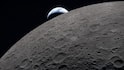
In a landmark moment for space exploration, astronauts have embarked on a journey around the Moon for the first time in more than five decades, following a successful engine burn by NASA’s Orion spacecraft. The mission marks humanity’s return to deep space since Apollo 17, signaling a major step forward in NASA’s ambitious Artemis program.
Orion Executes Critical Lunar Injection Burn
On Thursday, Orion’s service module fired its main engine for nearly six minutes in a precisely timed maneuver known as a translunar injection burn. This critical step allowed the spacecraft to break free from Earth’s orbit and set course for the Moon. The crew onboard includes Reid Wiseman, Victor Glover, Christina Koch, and Jeremy Hansen of the Canadian Space Agency.
“Today, for the first time since Apollo 17 in 1972, humans have departed Earth orbit,” said Lori Glaze, as per report on NASA. “Reid, Victor, Christina, and Jeremy are now on a precise path toward the Moon. Orion is operating with crew for the first time, and we are collecting vital data at every step. While the next eight days will be demanding, this is a historic milestone for the Artemis program.”
First Crewed Deep Space Mission In 50 Years
The mission represents the first time humans have traveled beyond Earth orbit in over half a century. The journey began with the launch of NASA’s powerful Space Launch System from Kennedy Space Center.
After reaching orbit, Orion separated from the rocket’s upper stage and performed a series of burns to raise its trajectory. The translunar injection ultimately committed the spacecraft to a three-day outbound journey toward the Moon. Astronauts are traveling on a “free-return” trajectory, using the Moon’s gravity to loop around it and safely return to Earth without requiring additional propulsion—an added layer of safety for the pioneering mission.
Challenges In Space, But Mission On Track
During the initial phase of the mission, the crew conducted system checks and resolved minor technical issues, including a communication glitch and a malfunctioning onboard toilet. Despite these early challenges, operations have continued smoothly.
Before the crucial burn, the astronauts began their day on a lighter note, playing Green Light by John Legend and André 3000.
Their spacesuits are designed to function as emergency survival systems, capable of maintaining life-support conditions—including oxygen, pressure, and temperature—for up to six days if required.
Artemis II Sets Stage For Future Moon Landing
The 10-day Artemis II mission is a crucial precursor to NASA’s planned human landing on the Moon later this decade. It also marks several historic milestones, including the first woman, the first person of color, and the first non-American astronaut to take part in a lunar mission.
If successful, the crew will travel farther from Earth than any humans in history, surpassing a distance of 250,000 miles (over 402,000 kilometers).
As Orion continues its journey, the mission represents not just a return to the Moon, but the beginning of a new era in human space exploration.
Frequently Asked Questions
What is the significance of the current mission around the Moon?
What is a translunar injection burn?
A translunar injection burn is a critical engine maneuver that allows the Orion spacecraft to break free from Earth's orbit and set course for the Moon.
Who are the astronauts on board the Orion spacecraft?
The crew includes Reid Wiseman, Victor Glover, Christina Koch, and Jeremy Hansen from the Canadian Space Agency.
What is a 'free-return' trajectory?
A 'free-return' trajectory uses the Moon's gravity to loop the spacecraft around it and return to Earth safely without needing additional propulsion.
What are some historic milestones of the Artemis II mission?
It's the first crewed deep space mission in over 50 years and includes the first woman, first person of color, and first non-American on a lunar mission.

Top Headlines
News

Exclusive: Girl Accused Of Abusing PM Modi Says 'I'm Only 15'; What Did Complainant Say?
World

'Ruthless Force Against Civilians': India Condemns Pakistan's PoJK Crackdown
Cities

Independence Day Security: Delhi Police Prohibits Drones In Capital Till August 16
India

Tahir Hussain, Four Others Get Life Term For IB Officer Ankit Sharma's Murder










See Today's Weather 
powered by