Moon Is Slipping Away, But Will It Ever Break Up With Earth For Good? A Cosmic Love Story
Moon is slowly moving away from Earth at a rate of 3.8 centimetres per year. This gradual drift affects Earth’s rotation and has significant implications for our planet’s stability and ecosystems.

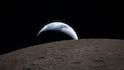
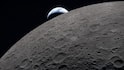
The Moon means the world to us, the inhabitants of the Earth. Gazing up at the celestial body that has sparked off the poet and romanticist in many of us, it’s hard to imagine that this steadfast companion of Mother Earth is slowly distancing itself from us. Yet, over time, the Moon is gradually moving away from Earth — a process that holds profound implications for our planet’s future.
Measuring The Moon’s Drift
On July 21, 1969, the Apollo 11 crew installed the first set of mirrors to reflect lasers targeted at the Moon from Earth. The subsequent experiments carried out using these arrays have helped scientists to work out the distance between the Earth and Moon for the past 50 years. A write-up in ‘The Conversation’ notes how the Moon’s orbit has been getting larger by 3.8cm per year — which means it is moving away from the Earth.
How The Moon Was Likely Formed
The prevailing theory about the Moon’s origin is the Giant Impact Hypothesis. It suggests that, approximately 4.5 billion years ago, a Mars-sized body, often referred to as Theia, collided with the early Earth. The debris from this colossal impact eventually coalesced to form the Moon.
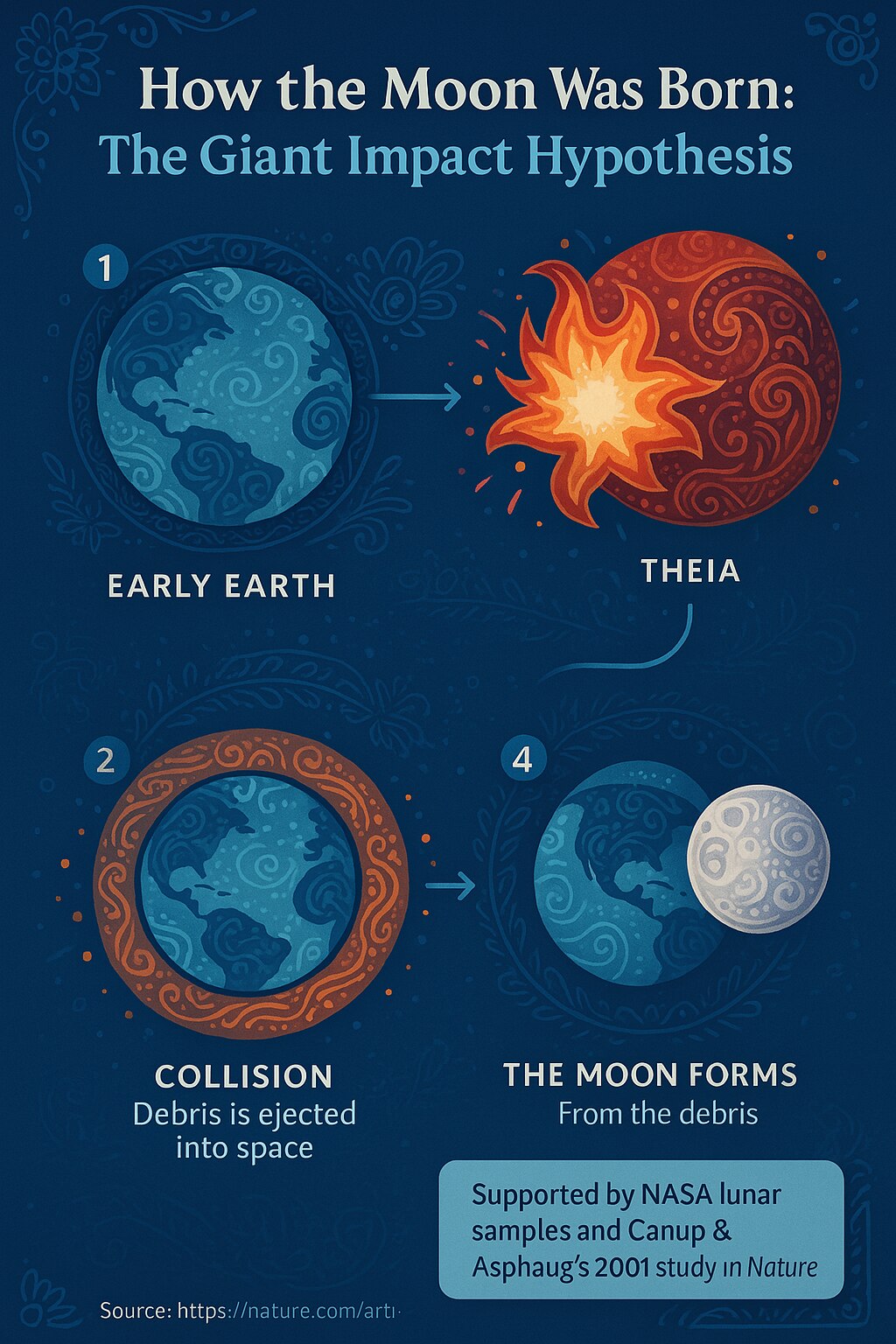
Earth’s Rotational Evolution
Research says that, in the aftermath of the Moon’s formation, Earth’s rotation was significantly faster, resulting in shorter days. Early Earth was spinning at a much faster rate; Earth’s day was much shorter 4.5 billion years ago — between 3 and 6 hours long! Over time, the gravitational interaction between Earth and the Moon has led to a gradual slowing of the Earth’s rotation, extending the length of a day. For instance, studies indicate that around 1.4 billion years ago, a day on Earth lasted approximately 18.7 hours. Over time, the Moon’s gravitational pull on the Earth “steals” some of the Earth’s spin energy, which launches the Moon into higher orbits.
It Literally Moves The Oceans
The Moon’s gravitational pull tugs on all of the Earth — but especially the portion that is nearest to the Moon, creating a tidal bulge on that side of the Earth, and leaving behind a bulge on the far side, creating two high tides each day, with low tides in between.
The Moon’s Role in Earth’s Stability
The Moon plays a crucial role in stabilising the Earth’s axial tilt, which in turn affects the planet’s climate and seasons. Its gravitational pull is also responsible for the ocean tides, influencing marine life and ecosystems. A significant increase in the Moon’s distance could disrupt these delicate balances, leading to profound environmental changes, according to the Lunar and Planetary Institute.
ALSO READ | Sunita Williams Missed This The Most In Space—Her Dogs’ Joyful Welcome Says It All
Looking Ahead: A Slow Farewell?
While the Moon is indeed moving away, this process is exceedingly slow. At the current rate, it would take billions of years for the Moon to drift to a point where its influence on Earth diminishes significantly. By that time, other cosmic events, such as the Sun’s evolution into a red giant, are expected to occur, potentially engulfing the inner planets, including Earth, reports Live Science.
Scientists say that the Moon will not leave Earth, or vice versa. Rather, ultimately, the Sun will obliterate them both.
The writer is a senior independent journalist.
Top Headlines