Last Solar Eclipse Of 2021 Today: Don’t Miss These Amazing Sights During Total Eclipse
A total solar eclipse can last for several hours and totality can range from a few seconds to 7.5 minutes
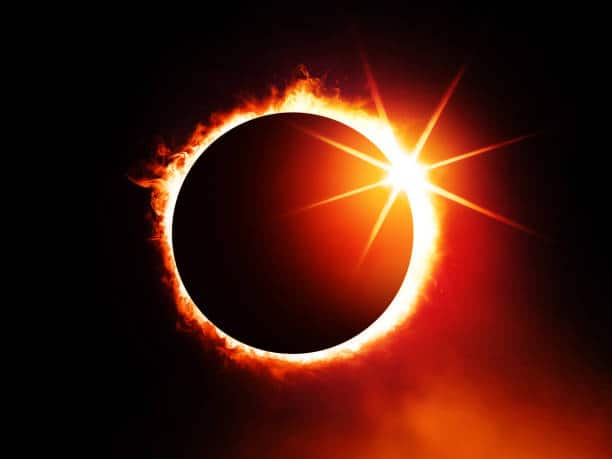
New Delhi: A total solar eclipse is occurring on Saturday across Antarctica, and the partial phase of it will be visible in the southern parts of Australia, New Zealand, Africa, and South America, and the Pacific, Atlantic and Indian Ocean.
This is the final eclipse of the year and the only total solar eclipse of 2021. The next total solar eclipse will take place on April 20, 2023.
A total solar eclipse takes place in following five stages:
- First contact: The beginning of partial solar eclipse
- Second contact: the beginning of total solar eclipse
- Totality and maximum eclipse
- Third contact: End of total eclipse
- Fourth contact: End of partial eclipse
A total solar eclipse can last for several hours and totality can range from a few seconds to 7.5 minutes, according to timeanddate.com.
ALSO READ | Total Solar Eclipse 2021: Where And How To Watch
Unique Sights
Some unique sights appear in the following order as the totality of a solar eclipse sets — shadow bands, diamond ring, Sun's corona, Baily's beads, and Sun's chromosphere.
Shadow bands are wavy lines of alternating light and dark that can be seen on the ground and along walls about a minute before totality.
A diamond ring is seen about 10 to 15 seconds before and after totality. The solar corona together with the single jewel of light from the Sun, creates the diamond ring effect.
The outermost part of the Sun's atmosphere, or the corona, becomes more prominent as the diamond ring fades. The corona is visible as a faint ring of rays surrounding the silhouetted Moon.
Baily's beads appear about five seconds before totality. They are little bead-like blobs of light at the edge of the Moon created by the sunlight passing through the gaps between mountains and valleys on the Moon.
A few seconds after totality, the Sun's chromosphere, which is the second most outer layer of the Sun's atmosphere, gives out a reddish glow.
The events are subsequently repeated in reverse order as the totality begins to end.

Top Headlines