‘Every Day Could Be Our Last’: NASA Deactivates Voyager Instruments To Extend Deep Space Exploration
NASA is shutting down instruments on the Voyager spacecraft, humanity's farthest explorers, allowing them to continue sending invaluable data from interstellar space, despite dwindling power.

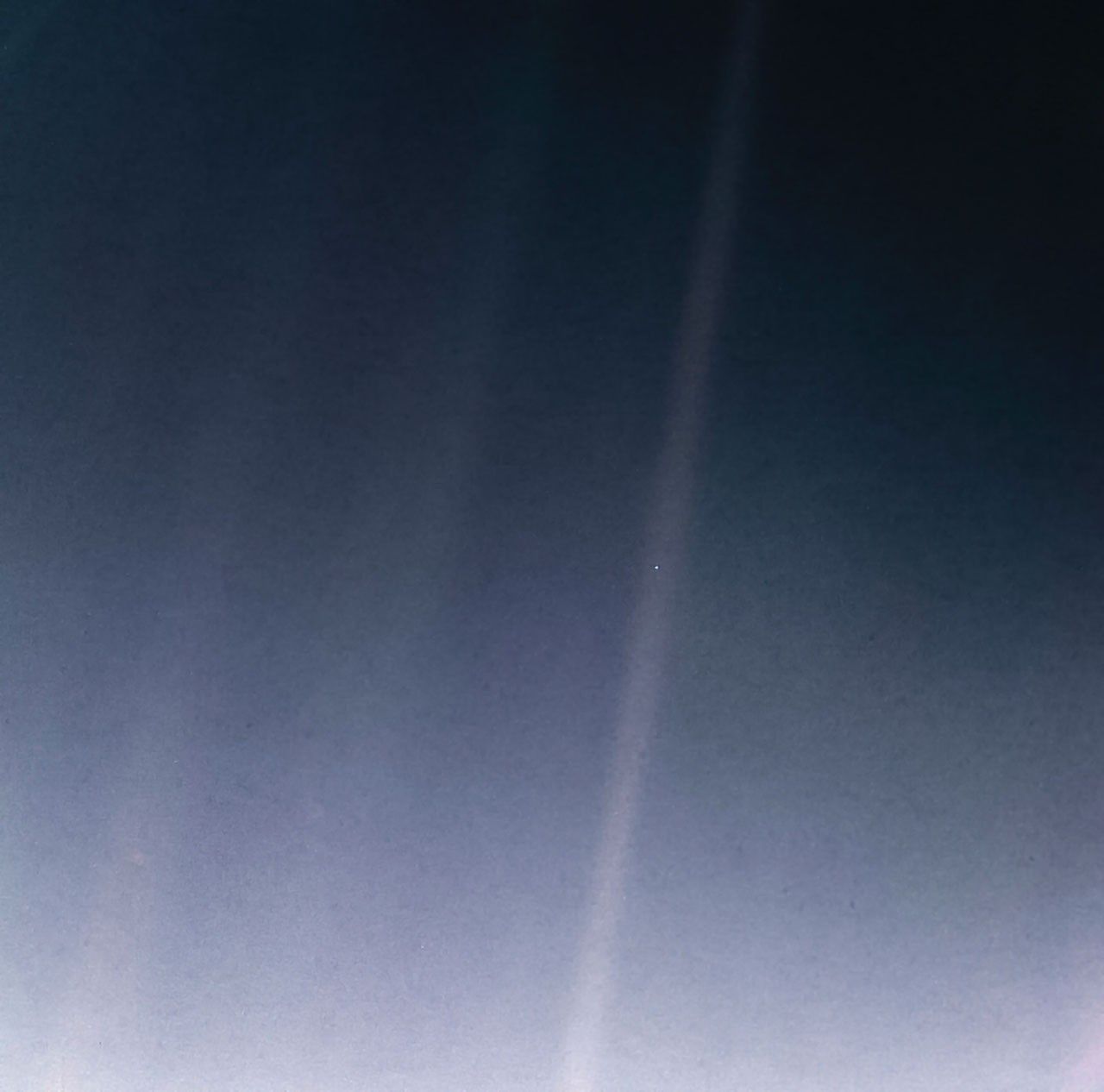
"Look again at that dot. That's here. That's home. That's us. On it everyone you love, everyone you know, everyone you ever heard of, every human being who ever was, lived out their lives. The aggregate of our joy and suffering, thousands of confident religions, ideologies, and economic doctrines, every hunter and forager, every hero and coward, every creator and destroyer of civilization, every king and peasant, every young couple in love, every mother and father, hopeful child, inventor and explorer, every teacher of morals, every corrupt politician, every "superstar," every "supreme leader," every saint and sinner in the history of our species lived there - on a mote of dust suspended in a sunbeam," Carl Sagan said this epid quote for the last picture of Earth sent by the Voyager 1 spacecraft, before it headed towards the deep space exploration.
Importance of Voyager 1
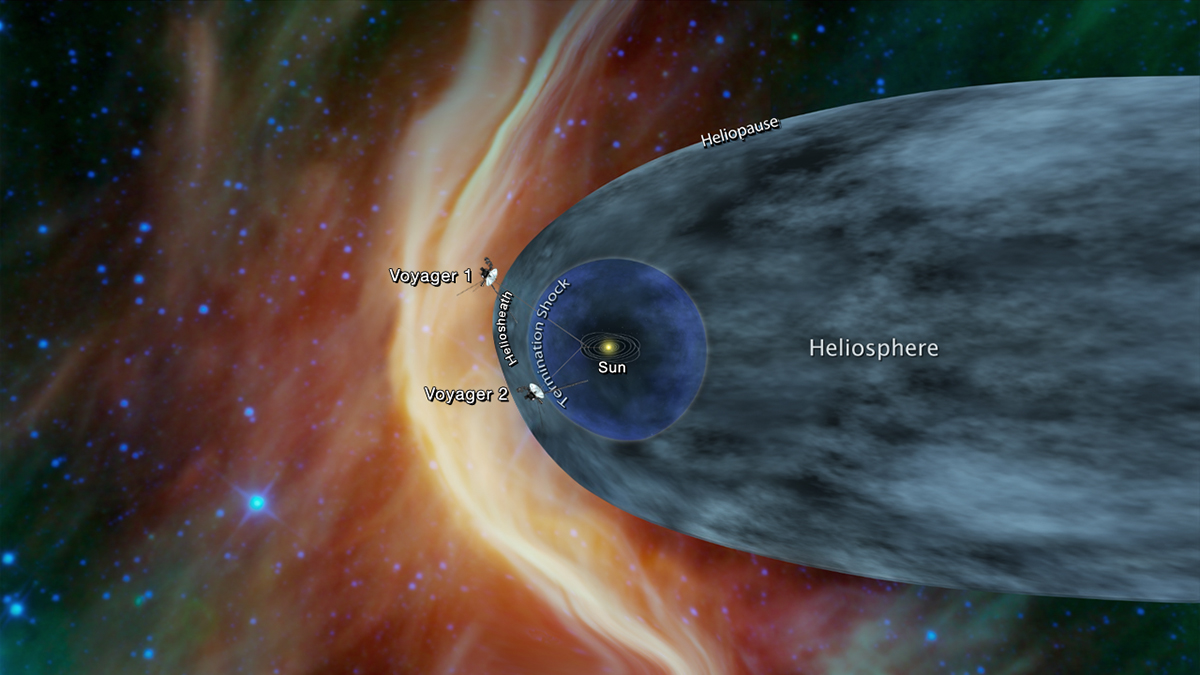
Voyager 1 has been exploring space since its launch in 1977. It is now traveling through interstellar space, the region beyond the heliopause—where the Sun’s magnetic field and energetic particles no longer dominate. Although Voyager 2 was launched first, Voyager 1 took a faster route, allowing it to exit the asteroid belt ahead of its twin and overtake Voyager 2 on December 15, 1977.
During its journey, Voyager 1 made several significant discoveries. It detected a faint ring around Jupiter and identified two new Jovian moons, Thebe and Metis. Upon reaching Saturn, the spacecraft discovered five additional moons and a previously unknown ring, named the G-ring.
Voyager 1 holds the historic achievement of being the first spacecraft to cross the heliosphere, where the influence of interstellar space becomes stronger than that of our Sun. It also stands as the first human-made object to travel beyond the boundaries of our solar system. But, like everything comes to an end this spacecraft is also on the verge of getting siwtched off.
NASA engineers are shutting down two scientific instruments on the Voyager spacecraft to help them continue their journey through deep space. The twin spacecraft, Voyager 1 and Voyager 2, are the farthest human-made objects from Earth. They have been exploring space for nearly 50 years. To conserve power, NASA turned off Voyager 1's cosmic ray subsystem experiment on February 25. On March 24, they will shut down Voyager 2’s low-energy charged particle instrument. This step will help extend the life of the spacecraft, allowing them to keep sending data for a little longer.
"The Voyagers have been deep space rock stars since launch, and we want to keep it that way as long as possible," said Suzanne Dodd, Voyager project manager at NASA's Jet Propulsion Laboratory. "But electrical power is running low. If we don’t turn off an instrument on each Voyager now, they would probably have only a few more months!"
A Long Journey Beyond the Solar System
Voyager 1 and Voyager 2 were launched in 1977. They carry ten instruments each and have traveled a combined 29 billion miles. Voyager 1 reached interstellar space in 2012, followed by Voyager 2 in 2018.
Both spacecraft generate electricity from the heat of a radioactive isotope of plutonium. However, this power source loses about 4 watts every year. In the 1980s, NASA started turning off some of their instruments after they finished studying the giant planets of the solar system. This helped keep them operational for longer. NASA already shut off Voyager 2's plasma science experiment in October 2024. This experiment measured the movement of plasma beyond the solar system but had been collecting limited data. Voyager 1’s plasma science instrument had stopped working in 1980 and was turned off in 2007 to save power.
The most recent shutdown was Voyager 1’s cosmic ray subsystem. This instrument played a key role in confirming that Voyager 1 had left the heliosphere, the outer edge of the solar system. Next to be turned off is Voyager 2’s low-energy charged particle instrument, which studies ions, electrons, and cosmic rays from the solar system and beyond.
Extending the Mission
"The Voyager spacecraft have far surpassed their original mission to study the outer planets," said Patrick Koehn, Voyager program scientist. "Every bit of additional data we have gathered since then is not only valuable bonus science for heliophysics but also a testament to the exemplary engineering that has gone into the Voyagers — starting nearly 50 years ago and continuing to this day."
Because Voyager 1 and Voyager 2 are the only spacecraft in interstellar space, the data they collect is unique. NASA carefully considers every decision to turn off an instrument. Shutting down these two instruments should allow the spacecraft to continue their mission for another year. By 2026, each spacecraft will have only two working instruments. NASA hopes that at least one instrument on each Voyager will keep running into the 2030s.
"Every minute of every day, the Voyagers explore a region where no spacecraft has gone before," said Linda Spilker, Voyager project scientist at JPL. "That also means every day could be our last. But that day could also bring another interstellar revelation. So, we’re pulling out all the stops, doing what we can to make sure Voyagers 1 and 2 continue their trailblazing for the maximum time possible."
Top Headlines