Did Scientists Just Solve the Long-Standing Mystery of Starless Planets and Their Mysterious Origins?
Scientists may have uncovered the origins of starless planets, or planetary-mass objects (PMOs). Simulations reveal they form from circumstellar disc collisions, reshaping our understanding.
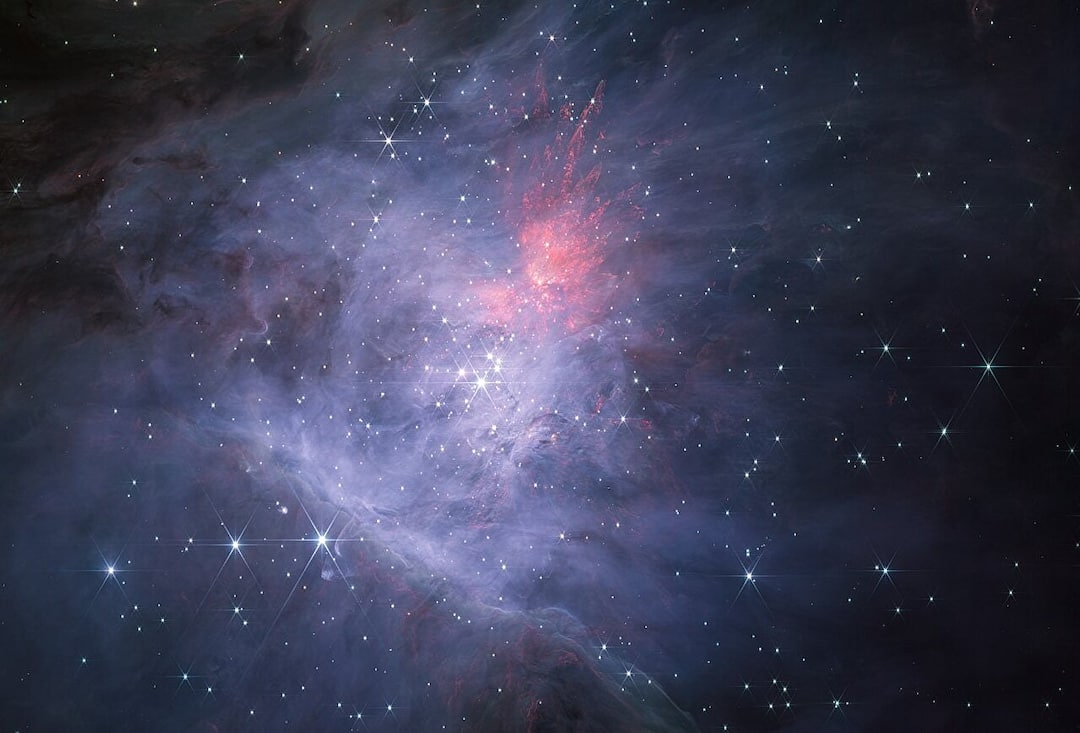
A groundbreaking study by an international team of astronomers has shed new light on the origins of planetary-mass objects (PMOs), strange celestial bodies that drift freely through space without a host star. The new findings, published in Science Advances, suggest that these cosmic wanderers may form through an unexpected process involving collisions of circumstellar discs.
The Mystery of Planetary-Mass Objects
Scientists have long been puzzled by PMOs, which are frequently found in young star clusters like Orion’s Trapezium. Previously, researchers speculated that PMOs were either failed stars or planets expelled from their solar systems, given that their masses are less than 13 times that of Jupiter. However, existing theories failed to explain key characteristics of PMOs, such as their high numbers, frequent binary formations, and their synchronized movement with nearby stars.
Simulating Star Formation and PMO Origins
Now, a multinational team led by Dr. Deng Hongping of the Shanghai Astronomical Observatory has used high-resolution simulations to explore an alternative explanation. Their research modeled the interactions between circumstellar discs—rings of gas and dust that encircle young stars—and discovered that these discs could give rise to PMOs when they collide in dense star clusters.
According to the study, "gravitational forces produce long 'tidal bridges' of gas when two circumstellar discs pass within 300–400 astronomical units (AU) of one another." These bridges eventually collapse and fragment into compact cores and dense filaments, which then accumulate enough material to form PMOs approximately ten times the mass of Jupiter.
The Future of PMO Research
The simulations further revealed that "up to 14 per cent of PMOs originate in binary or triplet systems," providing an explanation for why these objects are often found in pairs. The frequent disc collisions in tightly packed star clusters may lead to the formation of hundreds of PMOs, helping to account for their surprising abundance.Unlike planets that have been ejected from their solar systems, PMOs retain material from their parent discs and move in sync with neighboring stars.
Their composition also reflects that of their originating discs, specifically from the metal-poor outer regions where heavier elements are scarce. Additionally, some PMOs have gas discs extending as far as 200 AU, raising the possibility that moons or planets could form around them.
The study was conducted by researchers from the Shanghai Astronomical Observatory, the University of California Santa Cruz, and the University of Hong Kong. Future research will focus on examining PMOs in other star clusters to verify their chemical composition and further refine our understanding of their formation.
Top Headlines