Kedarnath Dham: The Supreme Shiv Shakti Peeth And Its Significance In Pind Daan
Kedarnath Dham, a Jyotirlinga and Shakti Peeth, is known for Pind Daan and Tarpan rituals. It represents devotion, penance, and renunciation, offering spiritual peace and connection with Lord Shiva.

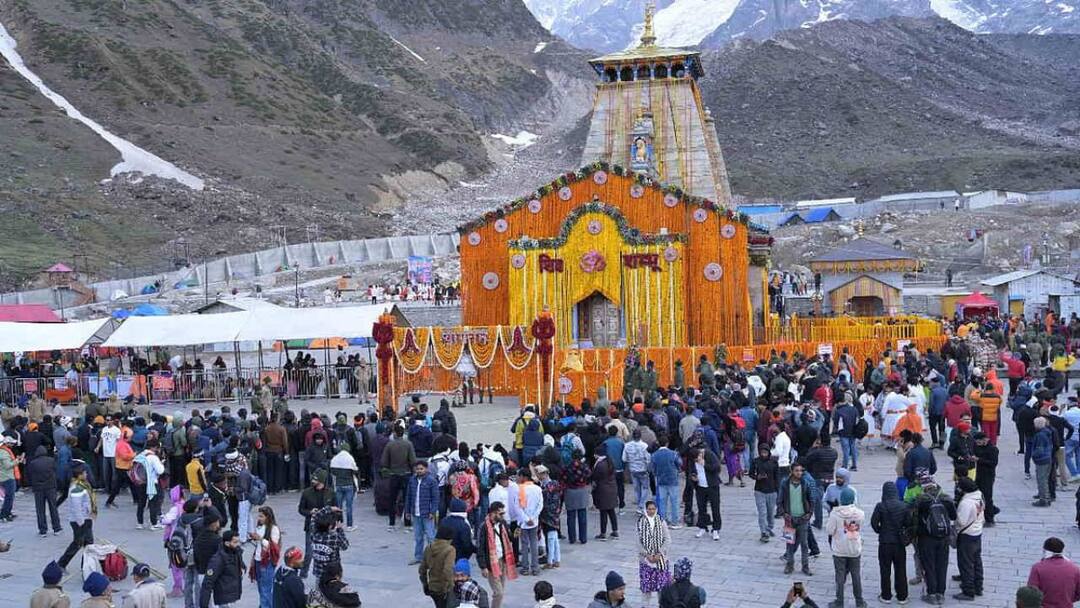
Kedarnath Dham holds a very important place in India’s religious traditions. It is located at an altitude of 11,750 feet in the mountains of Uttarakhand. This temple is not only one of the twelve Jyotirlingas of Lord Shiva but is also considered the highest among the five major Shakti Peeths. It is called the ‘Himavat Vairagya Peeth,’ where special rituals like Pind Daan and Tarpan are performed.
ALSO READ: Portals Of Badrinath Dham Open To Devotees, Temple Decorated With 40 Quintals Of Flowers
Kedarnath's Spiritual Importance
At Kedarnath, the main object of worship is the backside of Lord Shiva’s Svayambhu. According to the mythology, after the great war of Mahabharata, the Pandavas wanted to rid themselves of the sins they had committed. They sought Lord Shiva’s help for this. Lord Shiva, upset with them, took the form of Nandi, a bull to hide underground in Kedarnath. Bhima, one of the Pandavas, held on to the the bull's tail. As the bull went underground, only its rear part stayed above the surface. That part is now worshipped as the Kedarnath Jyotirlinga.
The Significance Of Pind Daan And Tarpan
Kedarnath is considered a very important place for performing Pind Daan and Tarpan, rituals that bring peace and moksha to the souls of ancestors. Devotees who come here perform these rituals by offering water, milk, ghee, and sandalwood to Lord Shiva’s Lingam. It is believed that the worship is incomplete unless the devotee applies ghee, sandalwood, and butter to the Lingam, as part of the ritual.
Why Kedarnath Is So Special
Senior priest of Kedarnath, Srinivas Posti, says that here, devotees experience a direct connection with Lord Shiva. Just a single darshan of Baba Kedarnath is believed to wash away all sins and bring deep inner peace. This is why lakhs of devotees from across India and the world visit Kedarnath every year. Kedarnath is a very sacred place for Hindus, not just because of the temple but also because of its historical and spiritual significance. According to religious beliefs, the Kedarnath region lies between the Meru and Sumeru mountains, where holy rivers like Mandakini, Saraswati, and Madhu Ganga flow. The temple is surrounded by sacred ponds like Udak Kund, Retas Kund, and Amrit Kund, which are places of great spiritual importance.
In the 9th century, Adi Guru Shankaracharya restored the Kedarnath temple and made it a center for promoting Vedic culture. His is also located in the temple complex, and it remains a major point of devotion for pilgrims.
Kedarnath is considered the highest among the five major Shakti Peeths in India. The other four are Shri Sailya in Andhra Pradesh, Jnana Peeth in Varanasi, Veer Peeth in Karnataka, and Sadharma Peeth in Ujjain. Kedarnath is special because it symbolises devotion, penance, and renunciation.
A Spiritual Journey To Kedarnath
Nestled in the lap of the Himalayas, this sacred place is not just a pilgrimage site, but a gateway to inner peace and spiritual awakening. It is believed that seeing Lord Shiva here gives true meaning to life. The age-old traditions of pind daan, tarpan, and darshan make Kedarnath not only spiritually powerful, but also a proud symbol of India’s rich religious heritage.
[Disclaimer: The content of this article is based solely on beliefs, and should be taken as general guidance. Individual experiences may vary. ABPLive.com does not assert the accuracy or validity of any claims or information presented. It is strongly recommended to consult a qualified expert before considering or implementing any information or belief discussed herein.]
Top Headlines