WATCH: Inside Himachal’s Viral Raulane Festival And The Mystical Ritual Behind It
Himachal’s ancient Raulane Festival is going viral for its mystical winter ritual, hidden folklore, and masked dancers. Here’s the fascinating story behind it.

A centuries-old mountain ritual from Himachal Pradesh is suddenly making waves across social media. the Raulane Festival, celebrated deep in the Kinnaur district, has become the internet's latest fascination due to its surreal costumes, masked dancers, and a mystical winter ritual rooted in ancient folklore. While the viral visuals show a mesmerising procession, the real story goes far deeper. This is a tradition shaped by snowbound months, resilient communities, and a belief in unseen guardians who protect the valley when winter turns unforgiving. Here’s an inside look at the ritual that has captured India’s imagination.
For centuries people in Kinnaur have believed in acknowledging and venerating the presence of fairies, spirits and other beings that reside upon the high altitudes and on special occasions come into a village's vicinity. Raulane in Kalpa is an interesting procession. pic.twitter.com/bTw4Z7G5hB
— 🪷 BHAKTI 🪷 (@bhakti_iii) June 26, 2024
ALSO READ: What Is Ikebana? The Mindful Japanese Art Of Flower Arrangement That Symbolises Balance And Beauty
The Legend Of Saunis: Himachal’s Invisible Winter Protectors
Villages in Kinnaur have preserved the Raulane Festival for thousands of years, passing it down long before the region became a tourist haven. The ritual honours celestial beings believed to safeguard the community during winter. It's an oral tradition that has shaped local culture for generations.
At the heart of the festival lies a captivating belief, the presence of Saunis, mysterious mountain spirits who watch over the valley when temperatures drop and landscapes freeze. Locals say these entities descend during the harshest months, shielding villagers from unseen dangers and guiding them through storms, isolation, and uncertainty. When spring arrives, the spirits retreat to their mythical realms, leaving behind blessings that the festival commemorates with gratitude.
Meet The Raula And Raulane: The Ceremonial Duo

The most symbolic part of the festival is the appearance of the Raula and Raulane. These are two chosen individuals who represent a sacred pair. Despite resembling a bride and groom, both roles are performed by men.
The transformation of the Raula and Raulane is a spectacle in itself. Their bodies are wrapped completely in layers of Kinnauri woollens, ornate jewellery, shawls, veils, and elaborate headpieces. This isn’t just ceremonial dressing, it’s a symbolic shedding of personal identity. By covering every part of themselves, the performers enter a sacred state, representing divine forces rather than individuals. In the freezing mountain climate, the heavy garments also act as armour against the bitter cold.
One of the most intriguing aspects of the festival is the complete concealment of faces with colourful masks and fabric. Locals believe this anonymity prevents human energy from interfering with the sacred ritual. The mask serves as a boundary. It reminds the community that the Raula and Raulane are not just performers but spiritual intermediaries, temporarily bridging the human realm and the world of the Saunis.
The Sacred Dance At Nagin Narayan Temple
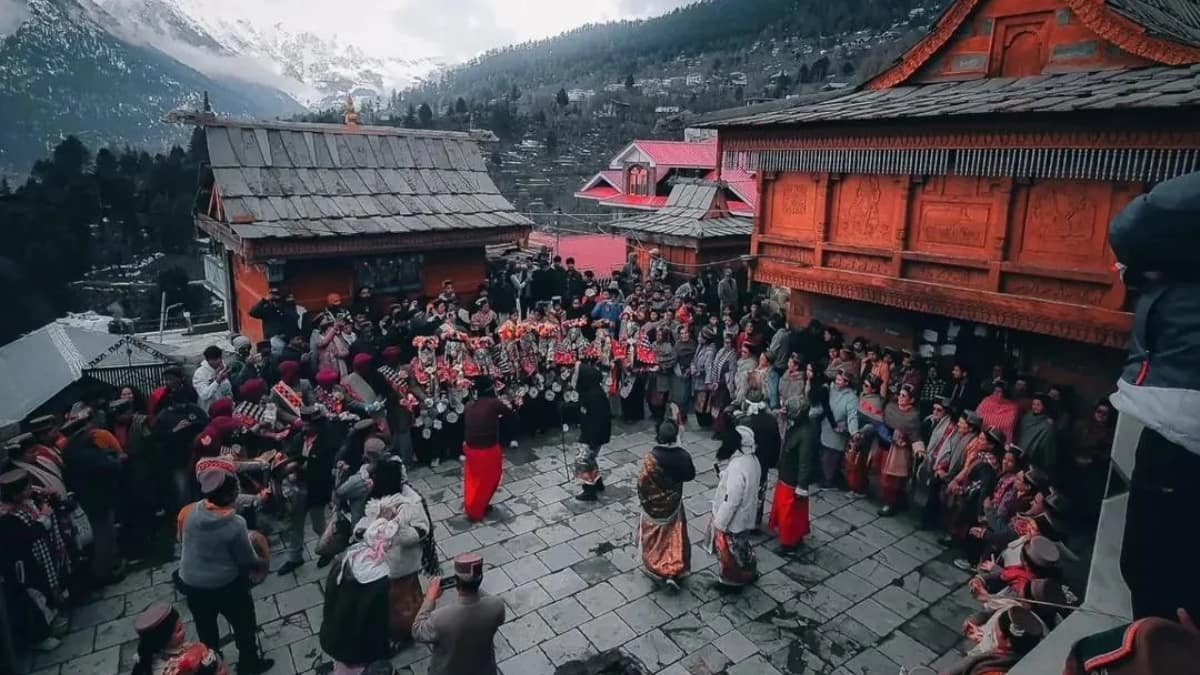
Once adorned, the duo walks slowly through the village lanes. People cheer, laugh, chant, and exchange jokes along the way. Though deeply spiritual, the atmosphere buzzes with warmth and joy. Every gesture is steeped in meaning, yet the energy feels natural and unscripted. Some villagers believe that the more the Raula laughs, the more prosperous the year ahead will be.
The procession leads to the revered Nagin Narayan Temple, an ancient shrine central to Kinnaur’s spiritual life. Here, the Raula and Raulane perform a slow, meditative dance. There are just gentle and rhythmic steps involved that are believed to open a silent passage between worlds. The ritual is less performance and more prayer, inviting blessings, protection, and harmony for the entire community.
Related Video
Magh Mela: Triveni Sangam Witnesses Sea of Faith on First Snan of Magh Mela

Top Headlines